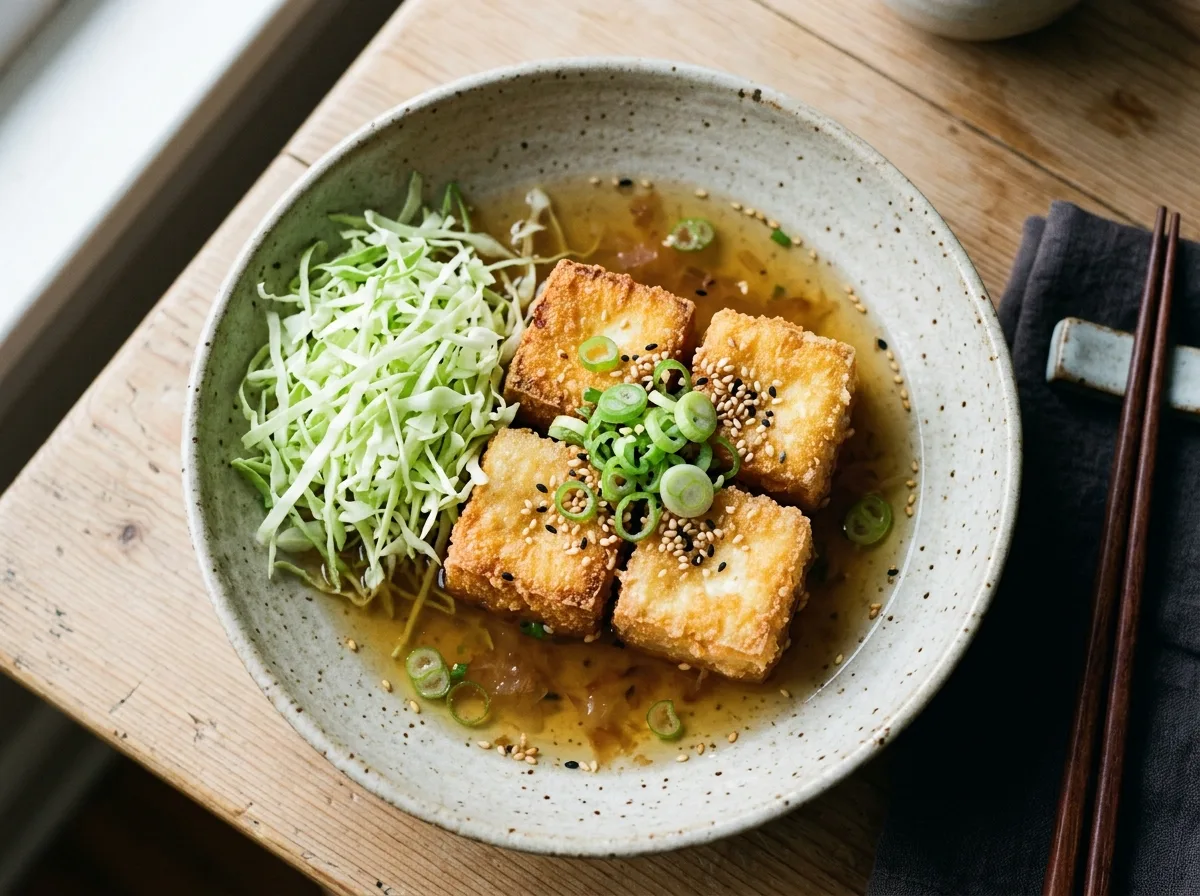
Agedashi-Style Crispy Tofu in Dashi Broth with Shredded Cabbage
Rate this recipe
~$3.20 CAD per serving (estimate)
Ingredients
- 900 gfirm tofu (Costco twin pack, one block) (pressed for at least 10 minutes)
- 3 tbsppotato starch (or cornstarch)
- 2 tbspolive oil
- 10 gdried kombu (one 10 cm piece)
- 600 mlcold water
- 3 tbspsoy sauce (use tamari for gluten-free)
- 1 tbspmirin
- 1 tsprice vinegar
- 1 tspsesame oil
- 200 ggreen cabbage (finely shredded)
- 3 stalksscallions (thinly sliced on the diagonal)
- 1 tsptoasted sesame seeds
- 1 tspfine salt
Nutrition / serving
- Calories210 kcal
- Protein14 g
- Carbs12 g
- Fat11 g
- Fiber2 g
Cost Estimate
~$3.20 CAD per serving (estimate)
This is the weeknight version of agedashi tofu — no deep-fryer, no fuss. A light crust of potato starch sets in a hot pan, and the tofu goes straight into a clean, savory broth built from kombu and soy. Shredded cabbage and scallion stay raw, adding cold crunch against the warm bowl. Twenty minutes, start to finish.
Instructions
Press the tofu
Wrap the tofu block in a clean kitchen towel and set a heavy pan on top for 10 minutes. This pulls out surface moisture so the starch coating adheres and crisps instead of steaming.
Build the cold-brew dashi
Combine the kombu and 600 ml cold water in a small saucepan. Bring to a bare simmer over medium heat — you want small bubbles at the edges, not a rolling boil. Pull the kombu out just before the water boils (around 60–65 °C), then stir in the soy sauce, mirin, and rice vinegar. Keep warm on the lowest heat.
Cut and coat the tofu
Cut the pressed tofu into 3 cm cubes. Season lightly with salt, then toss in the potato starch until each cube is evenly dusted. Shake off any excess.
Pan-fry until crusted
Heat the olive oil in a wide non-stick or cast-iron skillet over medium-high heat until it shimmers. Add the tofu in a single layer — do not crowd the pan. Cook undisturbed for 3 minutes per side until the crust is pale gold and pulls away cleanly from the pan. Turn each cube onto its remaining faces, about 1 minute each, so all sides are set.
Shred and season the cabbage
While the tofu fries, toss the shredded cabbage with a pinch of salt and the sesame oil. It should stay raw and crunchy — just enough seasoning to take the raw edge off.
Assemble the bowls
Ladle 150 ml of warm dashi broth into each bowl. Nestle the hot tofu cubes into the broth, then pile the shredded cabbage alongside. Scatter scallion slices and sesame seeds over the top and serve immediately.
Chef's Cool Facts
Why cold-start kombu?
Kombu releases glutamates — the compounds responsible for umami — most efficiently between 60 and 65 °C. Starting it in cold water and pulling it before the boil maximizes flavor extraction without the slippery, bitter compounds that leach out at higher temperatures.
Starch over flour
Potato starch (and cornstarch) form a thinner, more translucent crust than wheat flour because they have almost no protein. Protein browns and thickens; pure starch just sets into a glassy shell — which is exactly the texture agedashi tofu is known for.
Pressing tofu is not optional
Firm tofu from a water-packed block can be 80% water by weight. Even 10 minutes of pressing removes enough surface moisture that the starch coating stays dry long enough to make contact with hot oil rather than steaming off immediately.