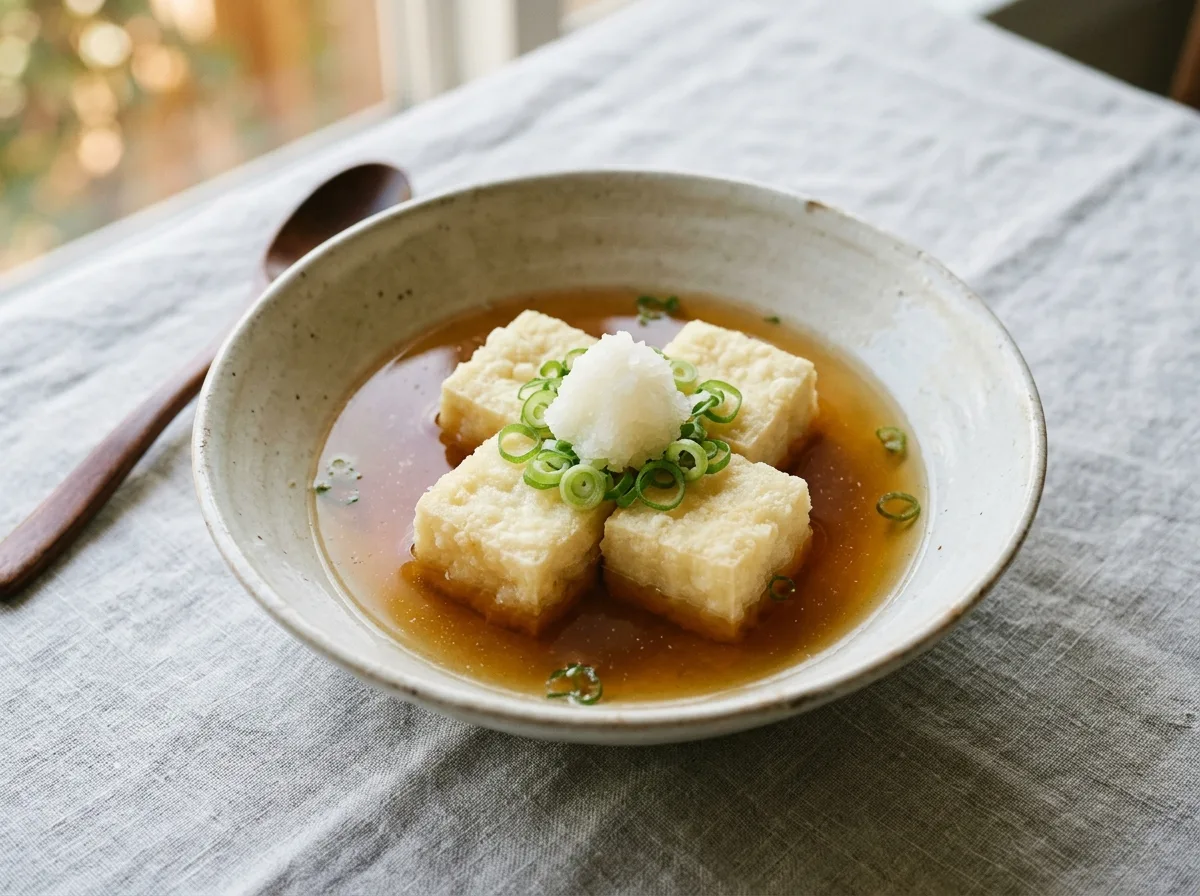
Agedashi-Style Crispy Tofu in Dashi-Spiced Broth
Rate this recipe
~$2.80 CAD per serving (estimate)
Ingredients
- 900 gfirm tofu (From the Costco 2-pack; pressed for at least 20 minutes)
- 5 gdried kombu (One 10 cm piece)
- 500 mlcold water
- 30 mlsoy sauce (Low-sodium if available)
- 15 mlmirin
- 5 mlrice vinegar
- 3 tbspcornstarch
- 0.5 tspfine sea salt
- 3 tbspolive oil
- 100 gdaikon radish (Peeled, for grating)
- 3scallions (Thinly sliced on the bias)
- 1 tsptoasted sesame seeds (Optional garnish)
Nutrition / serving
- Calories195 kcal
- Protein14 g
- Carbs11 g
- Fat11 g
- Fiber1 g
Cost Estimate
~$2.80 CAD per serving (estimate)
Agedashi tofu is one of those Japanese dishes that looks deceptively simple — and is. Cubes of firm tofu get a light cornstarch coat, then pan-fry in olive oil until the surface turns pale gold and faintly crackly. They land in a shallow kombu-and-soy broth that is more perfume than sauce, finished with cold-grated daikon and sliced scallion. The whole thing comes together in under 25 minutes and sits light on the stomach, which is exactly what this slot in the week calls for.
Instructions
Press the tofu
Drain the tofu and wrap it in a clean kitchen towel. Set a heavy pan or cutting board on top and leave for 20 minutes. Firm, dry tofu holds its shape in the pan and crisps rather than steams.
Steep the kombu broth
Combine the kombu and cold water in a small saucepan. Bring slowly to 60–65 °C over medium-low heat — you want a gentle simmer with small bubbles rising around the kombu, not a rolling boil, which turns the broth bitter. Hold at that temperature for 10 minutes, then remove the kombu. Stir in the soy sauce, mirin, and rice vinegar. Keep warm over the lowest heat.
Cut and dust the tofu
Cut the pressed tofu into 3 cm cubes. Toss them in a bowl with the cornstarch and salt until each cube has a thin, even coat — shake off any excess. The coating should look matte, not clumped.
Pan-fry until crisp
Heat the olive oil in a wide non-stick or cast-iron skillet over medium-high heat until shimmering. Add the tofu cubes in a single layer, leaving space between them. Fry undisturbed for 3 minutes per side until each face is pale gold and the crust feels set when you nudge a cube. Work in two batches if the pan is crowded.
Grate the daikon
While the tofu fries, grate the daikon on the fine side of a box grater. Gather it loosely — you want soft mounds, not a pressed puck. Daikon grated just before serving has a clean, faintly peppery bite that mellows if it sits.
Assemble and serve
Divide the warm broth among four shallow bowls — about 100 ml each. Arrange the hot tofu cubes in the centre, then top with a small mound of grated daikon, a scatter of scallion, and sesame seeds if using. Serve immediately; the crust stays crisp for about 3 minutes in the broth, so eat right away.
Chef's Cool Facts
Why cornstarch and not flour?
Cornstarch is nearly pure starch with almost no protein, so it forms a thinner, glassier crust than wheat flour. It also absorbs less oil during frying, which keeps the coating light rather than bready — exactly what agedashi calls for.
Kombu's umami chemistry
Dried kombu is one of the richest natural sources of glutamic acid, the amino acid that registers as umami on the palate. Keeping the water below 70 °C during steeping extracts glutamates efficiently while avoiding the alginic compounds that make the broth slimy and bitter at a boil.
Daikon as a digestive tool
Grated raw daikon contains diastase and other enzymes that help break down starches. In Japanese cuisine it is placed alongside fried foods deliberately — not just for contrast, but because it genuinely eases digestion of the oily crust.