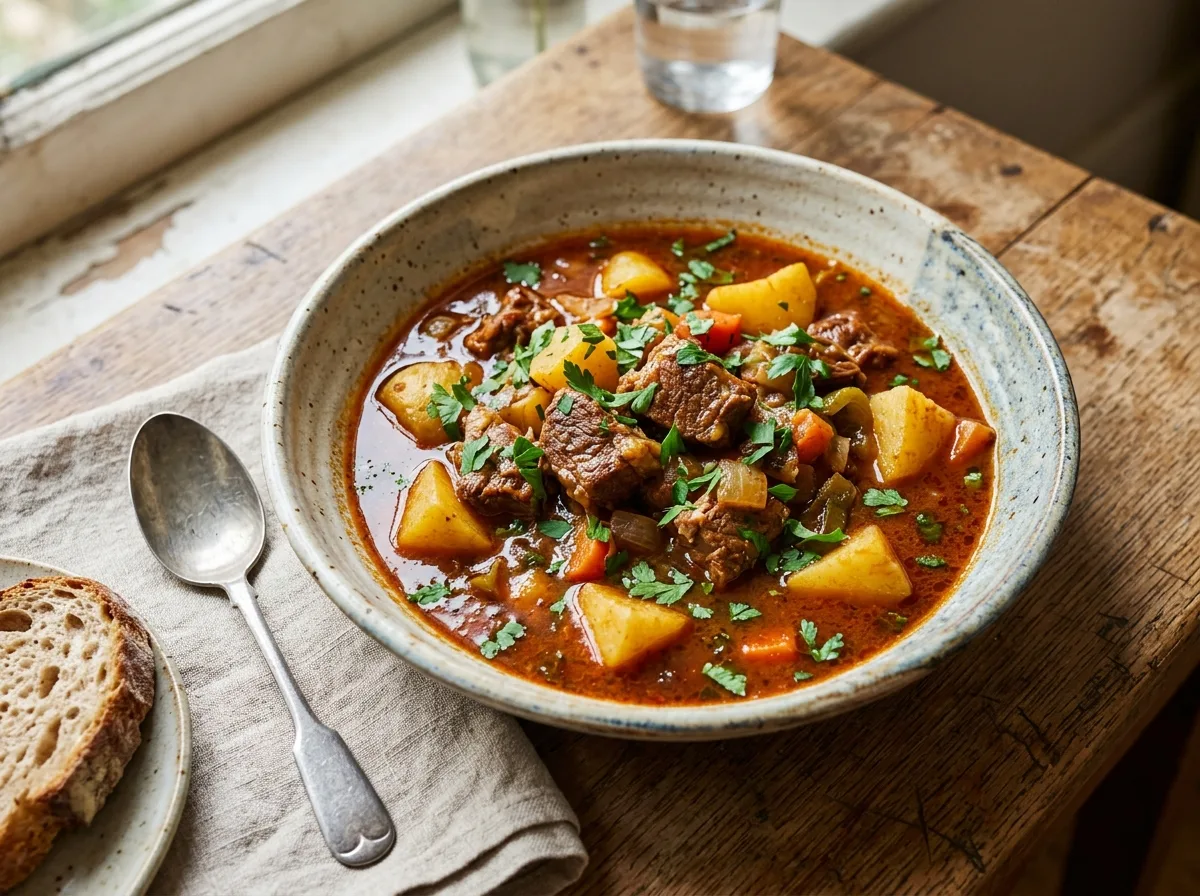
Argentine Veal Stew with Paprika and Potatoes
Rate this recipe
~$5.80 CAD per serving (estimate)
Ingredients
- 1.2 kgveal shoulder, cut into 4 cm cubes
- 2 tbspolive oil
- 2 mediumyellow onions, diced
- 2 mediumred bell peppers, diced
- 4 clovesgarlic, minced
- 2 tbspsmoked paprika
- 1 tspsweet paprika
- 1 tspdried oregano
- 1 tspground cumin
- 2 tbsptomato paste
- 400 gcanned crushed tomatoes
- 500 mllow-sodium beef or veal stock
- 900 gwaxy potatoes (e.g. Yukon Gold), peeled and cut into 3 cm chunks
- 2 tspsalt, plus more to taste
- 1 tspblack pepper
- 2 tbspflat-leaf parsley, roughly chopped (for serving)
Nutrition / serving
- Calories430 kcal
- Protein38 g
- Carbs32 g
- Fat12 g
- Fiber4 g
Cost Estimate
~$5.80 CAD per serving (estimate)
This is the kind of pot that rewards patience: veal shoulder braised low and slow with smoked paprika, red bell pepper, and waxy potatoes until the meat surrenders completely to the sauce. It draws on the Argentine tradition of estofado — a Spanish-rooted braise that became a weekday staple across the Pampas. Everything cooks in one pot, the potatoes absorb the paprika-stained broth, and no side dish is needed. Freeze two portions and the week's lunch lineup takes care of itself.
Instructions
Sear the veal
Pat the veal cubes dry with paper towel and season all over with 1 tsp salt and the black pepper. Heat the olive oil in a large heavy pot (5 L or more) over medium-high heat. Sear the veal in two batches, 3–4 minutes per side, until deeply browned. Transfer to a plate and set aside — do not crowd the pan or the meat will steam rather than colour.
Soften the aromatics
Reduce the heat to medium. Add the onions and red bell peppers to the same pot and cook, stirring occasionally, for 7–8 minutes until soft and the onion edges are lightly golden. Add the garlic and stir for 1 minute until fragrant.
Build the spice base
Push the vegetables to the sides and add the tomato paste to the centre of the pot. Cook the paste, stirring it against the hot surface, for 2 minutes until it darkens by a shade. Add the smoked paprika, sweet paprika, oregano, and cumin, stir everything together, and cook for 30 seconds more.
Pressure cook
Pour in the crushed tomatoes and stock, scraping up any browned bits from the bottom. Return the seared veal and any resting juices. Lock the lid and cook 20 min at high pressure, then let the pressure fall naturally for 10 min. Stovetop alternative: cover and braise on low for 45 minutes.
Add the potatoes
Nestle the potato chunks below the surface of the liquid and add the remaining 1 tsp salt. Lock the lid again and cook 5 min at high pressure, then quick release. Stovetop alternative: cover and cook on low for 25–30 minutes until the potatoes give completely and the veal pulls apart.
Adjust and serve
Taste the broth and adjust salt. If the sauce looks thin, simmer uncovered for 5 minutes to concentrate it slightly. Ladle into wide bowls and scatter parsley over each serving.
Freeze & Reheat
Cool the stew completely before portioning into airtight containers. It keeps in the freezer for up to 3 months. To reheat, thaw overnight in the refrigerator, then warm gently in a saucepan over medium-low heat with a splash of water or stock to loosen the sauce. The potatoes soften slightly after freezing but hold their shape well enough for a braise.
Pressure cooker method
Total, start to finish
About 1 hr 10 min, of which roughly 35 min is active. An electric pressure cooker with a sauté function does the whole stew in one pot.
Sear and build the base
On Sauté (high), sear the seasoned veal in two batches and lift it out. Soften the onions and peppers 7–8 min, add the garlic for 1 min, then the tomato paste for 2 min and the paprikas, oregano and cumin for 30 seconds.
Pressure cook the veal
Add the crushed tomatoes and stock and scrape the base clean so nothing catches and triggers a burn warning. Return the veal and cook 20 min at high pressure, then let the pressure fall naturally for 10 min.
Potatoes and finish
Add the potatoes, cook 5 min at high pressure and quick release. Taste, reduce on Sauté for a few minutes if the sauce is thin, and scatter the parsley.
Chef's Cool Facts
Why smoked paprika matters here
Smoked paprika (pimentón ahumado) is dried over oak smoke before grinding, which gives it a flavour that plain sweet paprika cannot replicate. In a braise, that smokiness deepens over cooking time rather than fading — it mimics the effect of an open fire, which is exactly the cooking tradition Argentine estofado descends from.
Veal shoulder over loin
Veal shoulder has a higher ratio of collagen-rich connective tissue than the more expensive loin cuts. During a long braise at low heat, that collagen converts to gelatin, which thickens the braising liquid and gives the finished sauce a silky, coating consistency you cannot achieve with a lean cut.
Waxy potatoes hold their shape
Waxy varieties like Yukon Gold have lower starch and higher moisture than floury types. They absorb the paprika broth without disintegrating, which is why they work in a braise while a russet would turn to mush within 20 minutes of simmering.
Argentine estofado roots
Estofado arrived in Argentina with 19th-century Spanish and Italian immigrants and adapted quickly to local ingredients — particularly the abundant beef and veal from Pampas cattle ranches. The dish is still a common midday meal in Argentine households, typically served without a separate starch because the potatoes cook inside the pot.