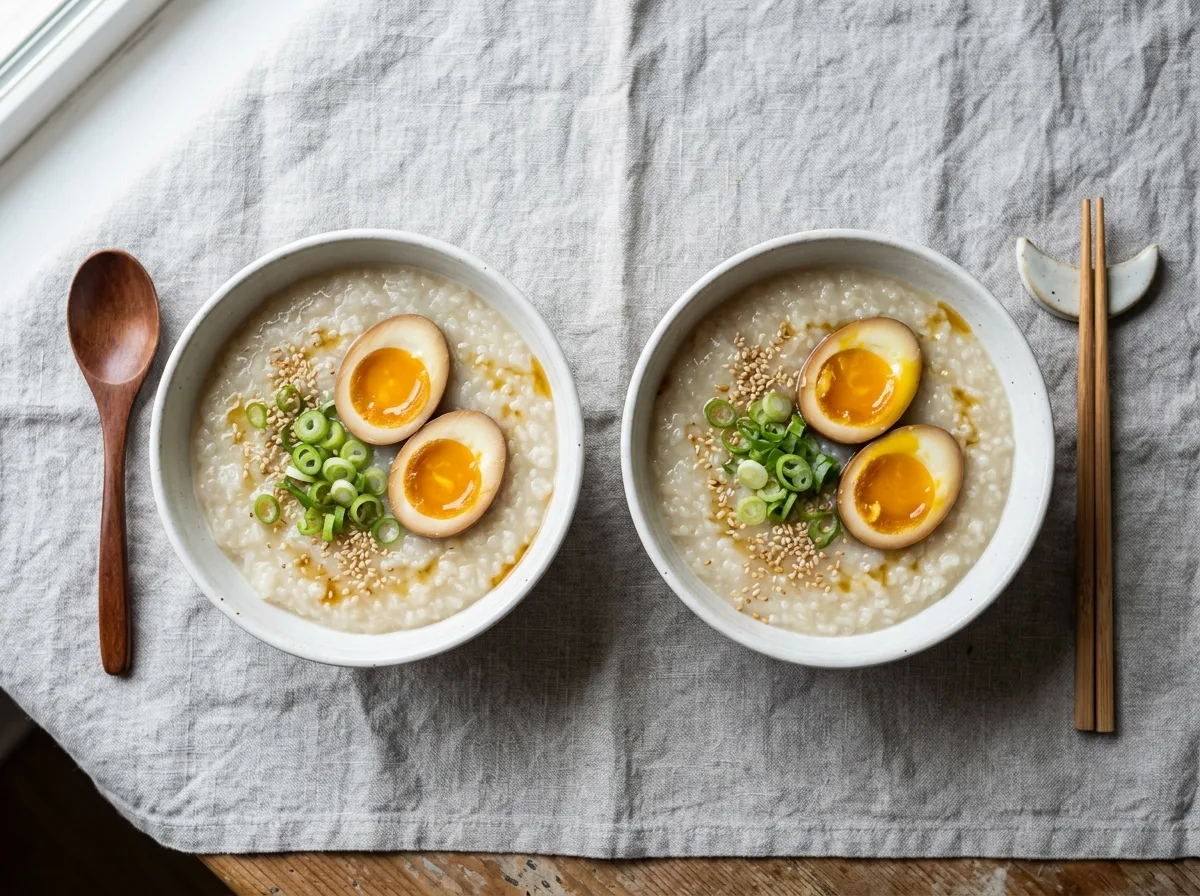
Chinese Congee with Ginger, Scallion and Soy-Cured Egg
Rate this recipe
~$4.20 CAD total · ~$2.10 CAD per serving (estimate)
Ingredients
- 100 gjasmine rice (rinsed once)
- 1000 mlwater
- 20 gfresh ginger (peeled and sliced into 4–5 coins)
- 2 stalksscallions (white and light-green parts bruised with the back of a knife, dark-green tops thinly sliced for garnish)
- 1 tspfine sea salt
- 2 largeeggs
- 60 mlsoy sauce (regular, not low-sodium)
- 60 mlwater (for the cure)
- 1 tsprice vinegar
- 1 tsptoasted sesame oil
- 1 tspwhite sesame seeds
Nutrition / serving
- Calories320 kcal
- Protein14 g
- Carbs42 g
- Fat9 g
- Fiber1 g
- Sodiumhigh — the soy cure is salty by design; most stays in the brine, but the egg whites absorb a good amount
Cost Estimate
~$4.20 CAD total · ~$2.10 CAD per serving (estimate)
Congee is what rice becomes when you give it time and water — the grains dissolve into something closer to silk than porridge, warming you from the inside out. This version keeps the base pure: ginger and scallion steep in from the start, building quiet depth without competing with the toppings. The soy-cured egg, made the night before, brings a jammy, savoury punch that turns a bowl of plain rice into a complete breakfast. It earns its place as the gentlest start of the week.
Kid-friendly tip: For younger eaters, reduce the soy cure to 30 minutes so the egg white is less salty, and skip the sesame oil drizzle — a small spoonful of plain soy sauce on the side lets them season to taste.
Instructions
Cure the eggs overnight
Bring a small saucepan of water to a boil. Lower the eggs in gently and cook for exactly 7 minutes, then transfer to an ice bath for 5 minutes. Peel carefully and place in a snug jar or container. Stir together the soy sauce, 60 ml water, and rice vinegar; pour over the eggs. Seal and refrigerate for at least 4 hours, ideally overnight — the whites will turn mahogany and the yolks will firm slightly at the edges while staying jammy at the centre.
Start the congee base
Combine the rinsed rice, 1 000 ml water, ginger coins, and bruised scallion stalks in a medium saucepan. Bring to a boil over high heat, then reduce to the lowest simmer your stove allows. Partially cover with a lid, leaving a gap for steam to escape.
Simmer low and slow
Cook for 45–55 minutes, stirring every 10 minutes to prevent the rice from sticking to the bottom. The congee is ready when the grains have fully dissolved and the texture is thick, creamy, and falls slowly off a spoon — if it thickens too much, stir in a splash of hot water.
Season and finish the base
Fish out and discard the ginger coins and scallion stalks. Stir in the salt, taste, and adjust. The base should be subtly savoury on its own, since the egg will add more salt at the table.
Halve the eggs and assemble
Remove the cured eggs from their brine and halve them lengthwise. Ladle the congee into two bowls, lay two egg halves on each, and drizzle with sesame oil. Scatter the sliced scallion greens and sesame seeds over the top. Serve immediately.
Freeze & Reheat
The plain congee base freezes well for up to 2 months. Portion it into 250 ml containers, cool completely, then freeze. Reheat from frozen in a small saucepan over medium-low heat with a splash of water, stirring until smooth. The soy-cured eggs do not freeze — make a fresh batch of brine and cure new eggs as needed.
Chef's Cool Facts
Why the grains disappear
Jasmine rice is a long-grain variety with relatively low amylose content. During the long, agitated simmer, the starch granules swell, burst, and leach amylopectin into the water — that released starch is what turns the liquid opaque and thick. Stirring accelerates the process by breaking up any clumps of swollen grains.
The soy cure is not just flavour
Soy sauce is roughly 18% salt by weight. When a peeled soft-boiled egg sits in it, osmosis draws moisture out of the white and pushes sodium and colour compounds in. The longer the cure, the deeper the penetration — four hours reaches the outer white; overnight reaches closer to the yolk.
Ginger's role here
Fresh ginger contains volatile aromatic compounds — primarily zingiberene and bisabolene — that are fat-soluble and relatively heat-sensitive. Simmering the coins in water for nearly an hour extracts the milder, sweeter notes while the sharpest compounds cook off, leaving a warm background flavour rather than a pungent one.