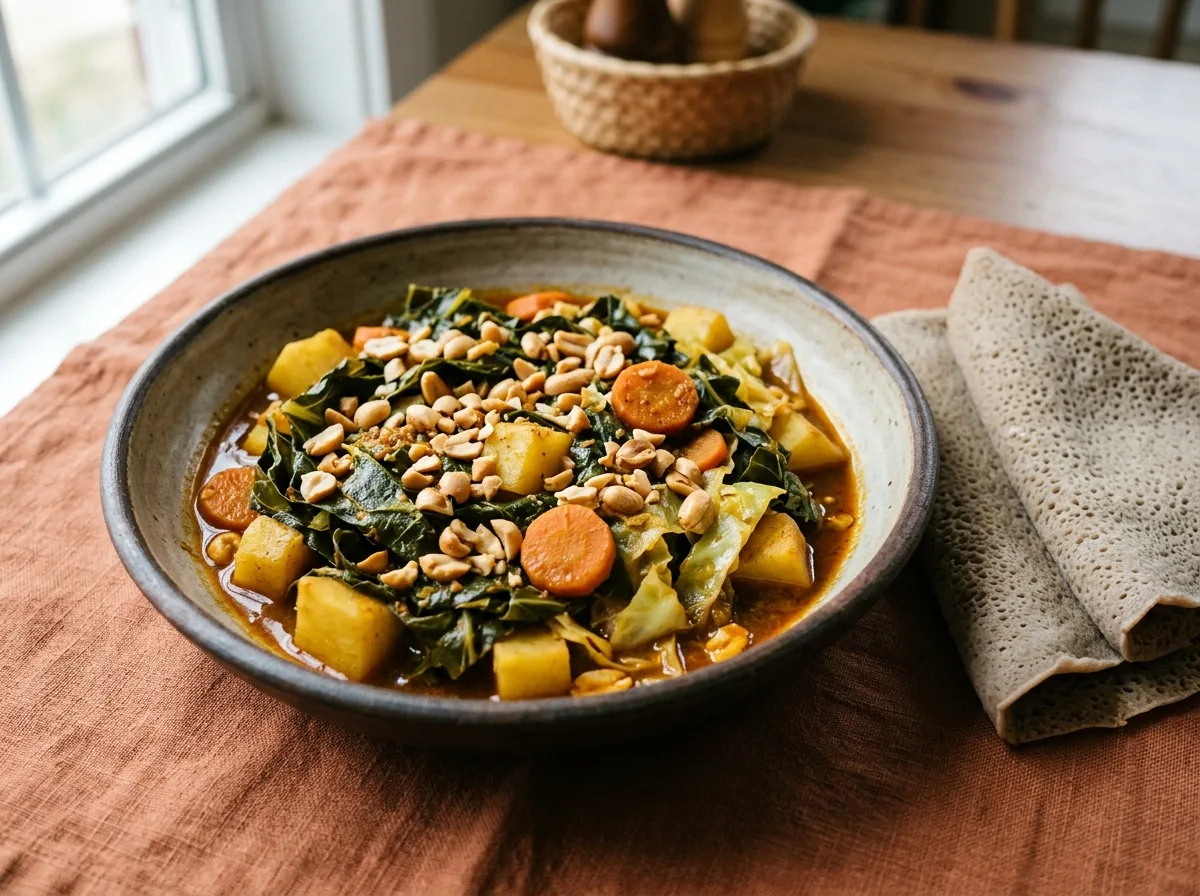
Ethiopian Gomen and Atkilt Wat — Collard Greens with Cabbage, Potato, Carrot and Toasted Peanuts
Rate this recipe
~$11.20 CAD total · ~$2.80 CAD per serving (estimate)
Ingredients
- 3 tbspolive oil
- 1 largeyellow onion, finely diced
- 4 clovesgarlic, minced
- 20 gfresh ginger root, peeled and grated
- 1 tbspberbere spice blend
- 1 tspground turmeric
- 1 tspfine sea salt, plus more to taste
- 400 gyellow-fleshed potatoes (about 3 medium), cut into 2 cm cubes
- 2 mediumcarrots, peeled and cut into 1 cm coins
- 120 mlwater
- 300 ggreen cabbage, cored and cut into 3 cm pieces
- 250 gcollard greens, stems removed, leaves sliced into 1 cm ribbons
- 80 graw peanuts, skin-on
- 1 tbspfresh lemon juice
Nutrition / serving
- Calories310 kcal
- Protein10 g
- Carbs32 g
- Fat17 g
- Fiber8 g
- Sodiummoderate — from the berbere and added salt; the dish contains no soy or processed condiments
Cost Estimate
~$11.20 CAD total · ~$2.80 CAD per serving (estimate)
Gomen wat and atkilt wat are two of the most common vegetables on an Ethiopian platter, and this recipe brings them together in a single pot. Spiced olive oil carries the aromatics — onion, garlic, ginger, a tablespoon of berbere — while the potato cubes do the starchy work that lentils would do in a heavier dish. Toasted peanuts go in at the very end, adding a quiet richness and enough protein to make the bowl a meal. Serve straight from the pot with injera or a good flatbread to scoop with.
Instructions
Toast the peanuts
Put the peanuts in a dry skillet over medium heat. Toast, shaking the pan every 30 seconds, for 4–5 minutes until the skins blister and the nuts smell nutty. Tip onto a cutting board, let cool for 2 minutes, then roughly chop. Set aside.
Build the spiced oil
Warm the olive oil in a large, heavy pot or Dutch oven over medium heat. Add the onion and cook, stirring occasionally, for 7–8 minutes until soft and translucent at the edges. Add the garlic and ginger and cook for 1 minute until fragrant. Stir in the berbere, turmeric, and salt; let the spices bloom in the oil for 30 seconds.
Add potatoes and carrots
Add the potato cubes and carrot coins to the pot and stir to coat them in the spiced oil. Pour in the water, scrape up any bits from the bottom, then cover and cook over medium-low heat for 12 minutes, until the potatoes are just barely tender when pierced with a knife tip.
Add cabbage
Uncover the pot, add the cabbage, and stir everything together. The cabbage will look like too much — it isn't. Cover again and cook for 5 minutes until it wilts and collapses into the pot.
Wilt the collard greens
Add the collard ribbons in two or three handfuls, stirring between additions. Cover and cook for 4–5 minutes until the greens are tender but still a deep, vivid green. If the pot looks dry at any point, add a splash of water — 2 tbsp at a time.
Finish and serve
Remove from heat. Stir in the lemon juice, then taste and adjust salt. Scatter the chopped toasted peanuts over the top and fold them in gently — you want them to stay in distinct pieces, not disappear into the stew. Serve immediately with injera or flatbread.
Chef's Cool Facts
Berbere is a spice blend, not a single spice
Most commercial berbere contains 10–15 ingredients — chili, fenugreek, coriander, black pepper, korarima (Ethiopian cardamom), rue, and ajwain among them. The fenugreek is what gives it that faintly bitter, maple-like undertone that distinguishes Ethiopian cooking from other chili-forward cuisines.
Collard greens are one of the oldest cultivated brassicas
Collards belong to the same species as kale, cabbage, and broccoli (Brassica oleracea), but they were cultivated in the eastern Mediterranean long before heading cabbages were developed. They reached East Africa via ancient trade routes and became a staple long before they became associated with American Southern cooking.
Why peanuts don't make this a nut dish
Stirring a small quantity of toasted, chopped peanuts into a vegetable stew at the end is a technique common across East African cooking. Because the nuts are added after cooking rather than blended in or used as a base, they function more like a textural garnish — contributing fat and protein without dominating the flavour the way a peanut sauce would.
The potato's role in Ethiopian fasting food
Much of Ethiopian vegetable cooking developed within the context of Orthodox Christian fasting days, when meat and dairy are avoided. Potatoes became a practical starch to add body and satiety to vegetable dishes — a relatively recent addition to the cuisine, since the potato only arrived in Ethiopia in the late 19th century via European missionaries and traders.