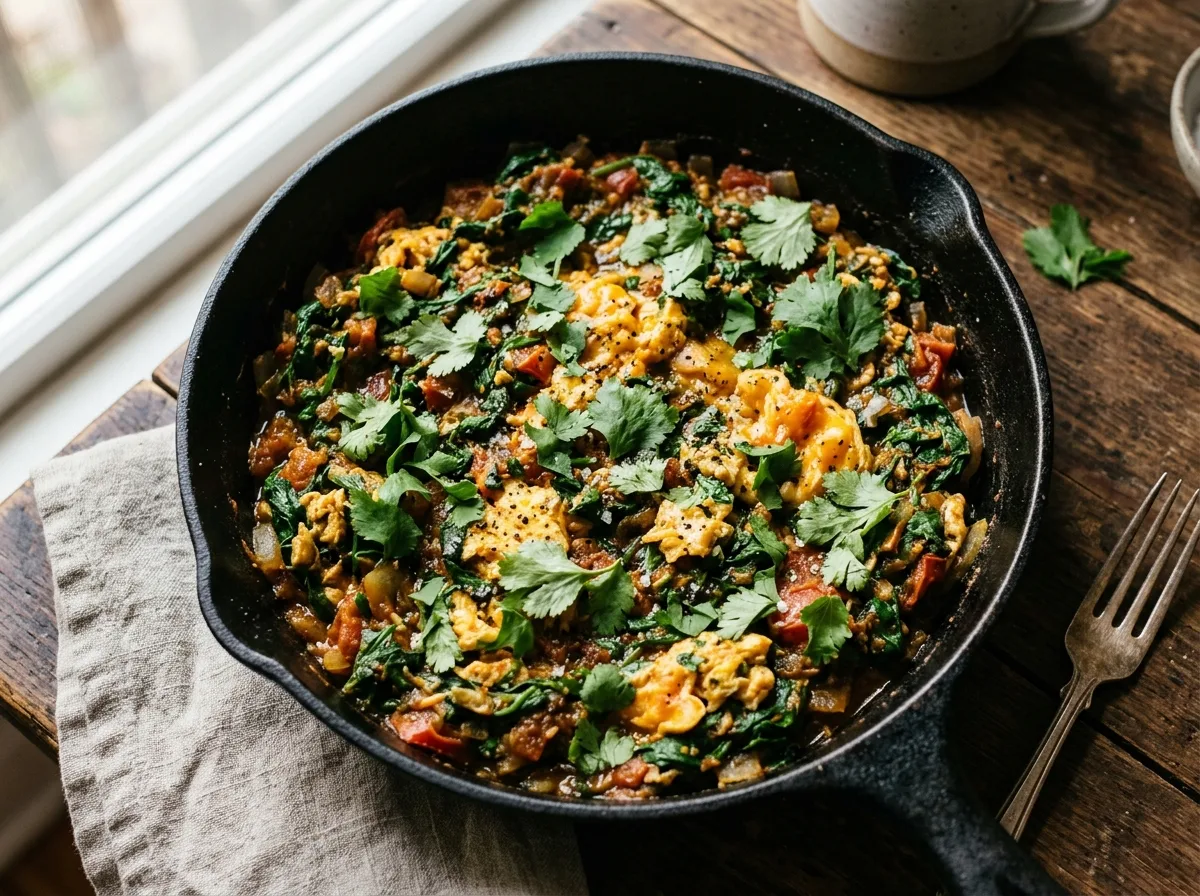
Indian Saag Paneer–Style Scrambled Eggs
Rate this recipe
~$2.80 CAD per serving (estimate)
Ingredients
- 30 gghee
- 1 tspcumin seeds
- 1 mediumyellow onion, finely diced
- 4 clovesgarlic, minced
- 1 tspfresh ginger, grated
- 1 mediumtomato, finely chopped
- 1 tspground coriander
- 0.5 tspground turmeric
- 0.5 tspgaram masala
- 0.25 tspcayenne pepper
- 0.75 tspfine sea salt, divided
- 150 gbaby spinach
- 8 largeeggs
- 2 tbspwater
- 1 tbspfresh lemon juice
- 2 tbspfresh cilantro, roughly chopped
Nutrition / serving
- Calories235 kcal
- Protein16 g
- Carbs7 g
- Fat16 g
- Fiber2 g
Cost Estimate
~$2.80 CAD per serving (estimate)
This is saag paneer's weeknight cousin: a quick spinach and tomato masala built on ghee, cumin, garlic, and garam masala, with soft-scrambled eggs folded in at the end instead of paneer. The spice base takes about eight minutes, the spinach wilts in two, and the eggs finish in another two — so dinner is on the table in under twenty minutes. The result is deeply aromatic without being hot, and it pairs cleanly with a roasted cauliflower bowl later in the week without repeating a single ingredient.
Instructions
Bloom the cumin
Melt the ghee in a large non-stick skillet over medium heat. Add the cumin seeds and let them sizzle for 30–45 seconds until they darken one shade and smell nutty — this is the flavour foundation, so don't rush past it.
Build the masala base
Add the diced onion and cook, stirring occasionally, for 4–5 minutes until softened and lightly golden at the edges. Stir in the garlic and ginger and cook for 1 minute more until fragrant.
Add tomato and dry spices
Add the chopped tomato, coriander, turmeric, garam masala, cayenne, and 0.5 tsp of the salt. Cook, stirring frequently, for 3–4 minutes until the tomato breaks down and the mixture looks jammy and the oil begins to separate at the edges.
Wilt the spinach
Add the baby spinach in two or three handfuls, turning it through the masala as each batch collapses. The whole lot should wilt in under 2 minutes. Spread the mixture evenly across the pan and reduce heat to medium-low.
Scramble the eggs in
Whisk the eggs with the water and remaining 0.25 tsp salt until just combined. Pour evenly over the spinach masala and let the edges set for 20 seconds before gently folding with a spatula, pulling cooked curds from the outside toward the centre. Stop while the eggs still look slightly underdone — residual heat will finish them.
Finish and serve
Remove the pan from heat, squeeze the lemon juice over the top, and scatter with cilantro. Serve immediately from the pan — eggs tighten quickly, so don't wait.
Chef's Cool Facts
Why ghee beats butter here
Ghee has had its milk solids removed, which raises its smoke point to around 250 °C versus butter's 175 °C. That headroom lets the cumin seeds bloom properly without the fat turning bitter — a small difference that shows up clearly in the finished dish.
Turmeric and heat
Curcumin, the compound that gives turmeric its colour, is fat-soluble. Cooking it briefly in ghee before adding liquid ingredients helps it disperse through the dish and makes its flavour more pronounced than if you stirred it in at the end.
The saag structure
Traditional saag paneer uses a long-cooked pureed spinach base; this recipe borrows only its spice architecture — cumin bloom, onion-garlic-ginger, tomato reduction, then leafy greens — and swaps the paneer for eggs, which cook in the residual heat of the same pan in under three minutes.