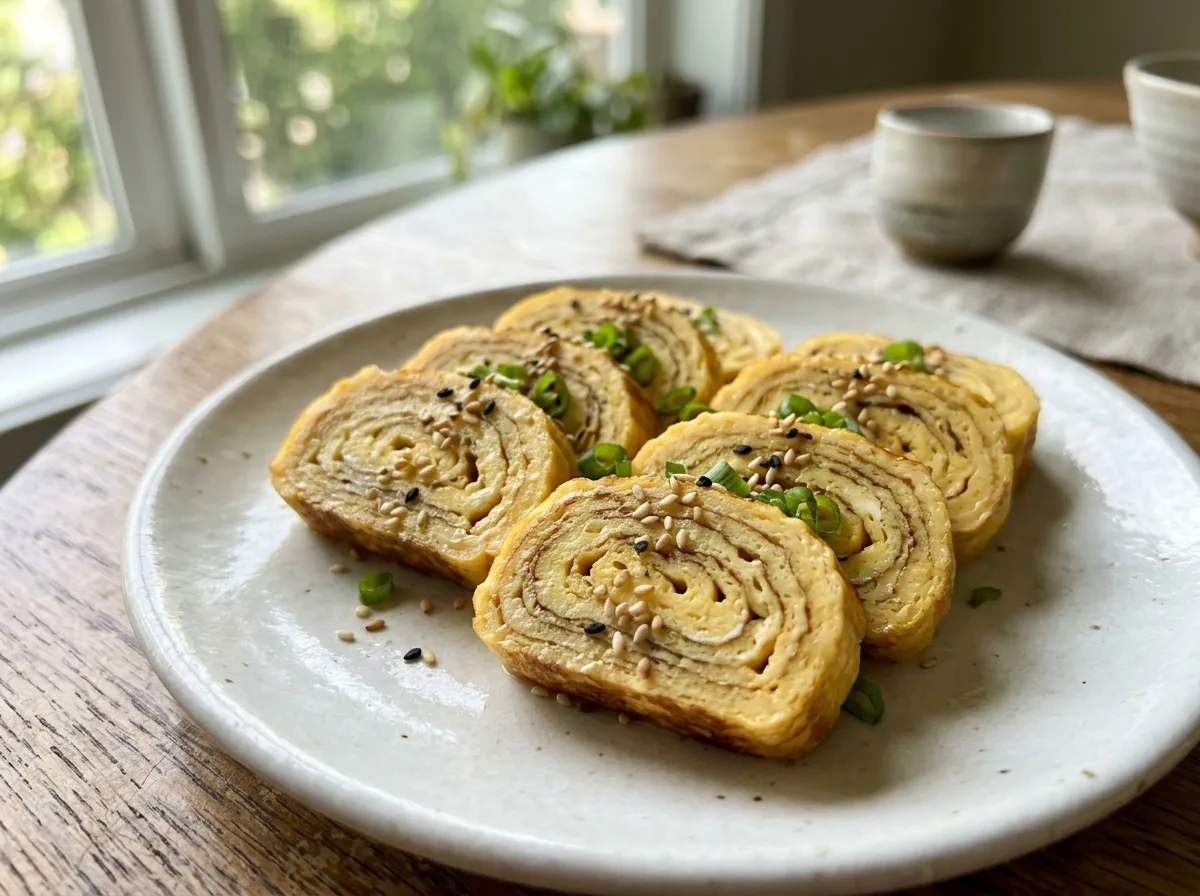
Japanese Tamagoyaki with Oat Milk and Toasted Sesame
Rate this recipe
~$1.85 CAD per serving (estimate)
Ingredients
- 3 largeeggs
- 30 mloat milk (unsweetened)
- 5 mlsoy sauce (low-sodium if preferred)
- 3 mlmirin (or ½ tsp sugar dissolved in ½ tsp water)
- 1 pinchfine sea salt
- 5 mlolive oil (for the pan)
- 10 gsesame seeds (white or mixed, toasted)
Nutrition / serving
- Calories185 kcal
- Protein13 g
- Carbs5 g
- Fat13 g
- Fiber0.5 g
Cost Estimate
~$1.85 CAD per serving (estimate)
Tamagoyaki is a Japanese rolled omelette built in thin, sequential layers — each one set just enough to hold its shape before the next pour folds over it. The result is a tight, golden log that slices into neat rounds with a soft, custardy interior. A small amount of oat milk keeps the egg mixture loose enough to roll cleanly, and a few drops of soy sauce give it that faint savoury-sweet balance that makes tamagoyaki so different from any Western omelette. Toasted sesame seeds finish it with a little crunch and enough fat to carry you through the morning.
Instructions
Mix the egg base
Crack the eggs into a small bowl and add the oat milk, soy sauce, mirin, and salt. Beat with a fork or chopsticks until fully combined and no streaks of white remain — about 30 seconds. Do not whisk aggressively; you want minimal foam.
Heat the pan
Set a 20–25 cm non-stick skillet (or a tamagoyaki rectangular pan if you have one) over medium heat. Add the olive oil and swirl to coat. The pan is ready when a drop of egg mixture sets within two seconds of hitting the surface.
Pour the first layer
Pour in one-third of the egg mixture and tilt the pan so it spreads into a thin, even sheet. Let it cook until the surface is just barely set — still slightly glossy on top, about 45 seconds.
Roll the first layer
Using a spatula or chopsticks, fold the egg from the far edge toward you in two or three folds, then push the roll back to the far end of the pan. The roll does not need to be perfect at this stage.
Add the second layer
Pour in half the remaining egg mixture, lifting the existing roll slightly so the raw egg flows underneath it. Cook until just set, then roll the existing log back over the new layer toward you. Push the roll to the far end again.
Add the third layer and finish rolling
Pour in the last of the egg mixture, again letting it flow under the roll. Cook until just set, then roll the log toward you one final time. The finished roll should be firm enough to hold its shape when pressed gently.
Rest and slice
Slide the tamagoyaki onto a cutting board and let it rest for one minute — this helps it hold its shape cleanly. Slice into rounds about 2 cm thick, arrange on a plate, and scatter the toasted sesame seeds over the top.
Chef's Cool Facts
Why layers beat a single pour
Each thin layer sets its proteins independently before the next one bonds to it. That layering creates the tamagoyaki's characteristic spiral cross-section and a texture that is simultaneously firm and custardy — something a single thick omelette cannot replicate.
Mirin's role is more than sweetness
Mirin contains sugars that caramelize at lower temperatures than sucrose, which is why even a few millilitres give tamagoyaki its characteristic golden colour without any browning of the exterior. The alcohol also slightly tenderizes the egg proteins as they set.
Oat milk as a dairy alternative here
Traditional tamagoyaki uses dashi — a light Japanese stock — to thin the eggs and add umami. Oat milk substitutes the liquid volume and contributes a mild, neutral sweetness that mimics the subtle flavour of dashi without any fish-based ingredients, making this version fully vegetarian.
Sesame seeds are mostly fat by weight
About 50% of a sesame seed's weight is fat, predominantly unsaturated oleic and linoleic acids. That fat content is why even a small scatter of seeds adds noticeable satiety to what is otherwise a lean egg dish.