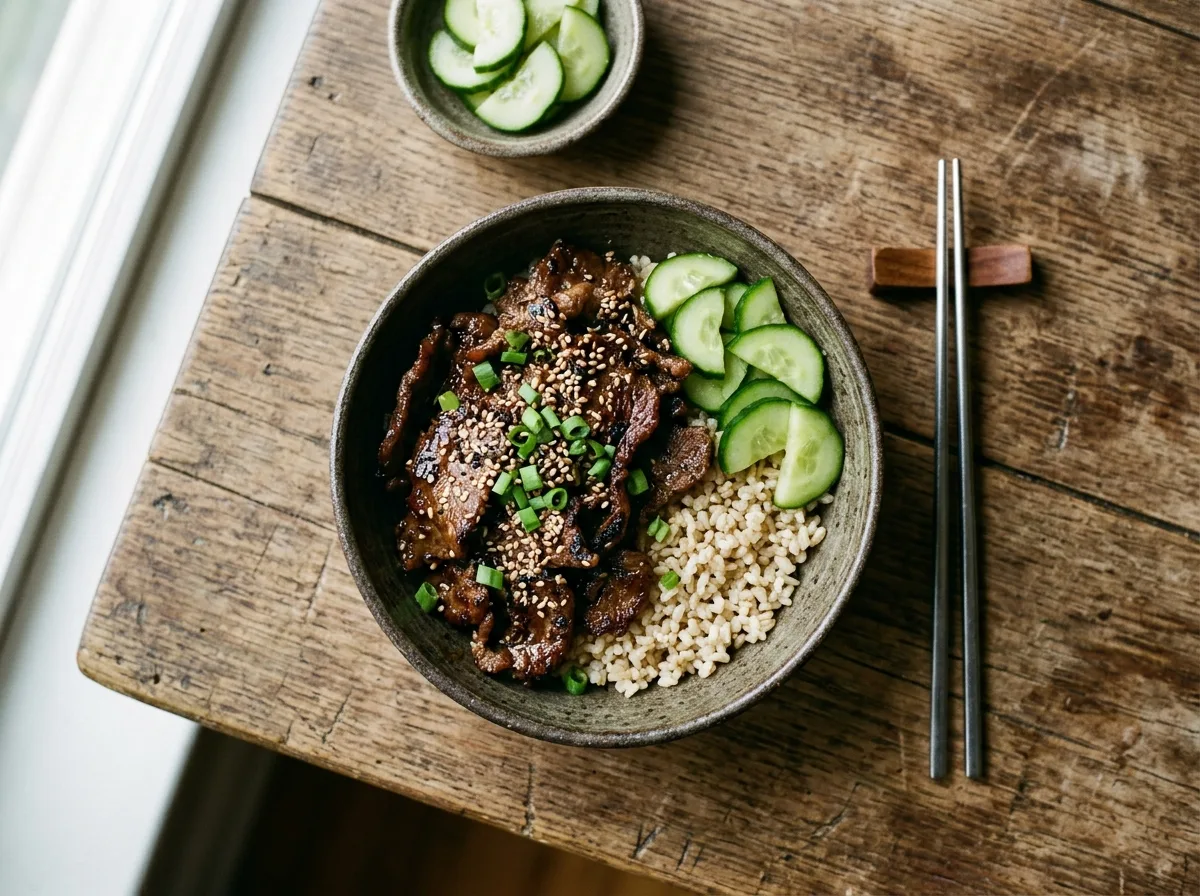
Korean Beef Bulgogi Bowl with Brown Rice and Pickled Cucumber
Rate this recipe
~$6.80 CAD per serving (estimate)
Ingredients
- 1 kgCostco thinly sliced beef ribeye (from the ~1.5 kg pack; remainder used by another dish this week)
- 4 tbspsoy sauce
- 2 tbspsesame oil
- 1 wholeAsian pear, peeled and grated
- 6 clovesgarlic, minced (divided: 5 for marinade, 1 for pickle)
- 1 tbspfresh ginger, grated
- 2 tbspbrown sugar
- 1 tspblack pepper, freshly ground
- 400 glong English cucumber (about 1 large)
- 2 tbsprice vinegar
- 1 tspgranulated sugar
- 1 tspfine salt
- 1 tspgochugaru or red chili flakes (optional; adjust to heat preference)
- 500 gshort-grain brown rice, dry (yields ~1.5 kg cooked)
- 1 tbspolive oil (for the pan if needed)
- 2 tbsptoasted sesame seeds
- 3 stalksgreen onions, thinly sliced
Nutrition / serving
- Calories545 kcal
- Protein38 g
- Carbs52 g
- Fat18 g
- Fiber4 g
Cost Estimate
~$6.80 CAD per serving (estimate)
Thinly sliced ribeye that has been sitting in a pear-and-soy marinade overnight needs about two minutes of fierce heat to become something genuinely good — caramelized edges, tender centre, a sauce that forms itself. The marinade is this week's make-ahead prep and does double duty elsewhere, so the actual cook-day effort here is minimal. Brown rice and a sharp, garlicky cucumber pickle cut through the richness and keep the bowl balanced.
Instructions
Make the marinade
In a large bowl, whisk together soy sauce, sesame oil, grated pear, 5 minced garlic cloves, ginger, brown sugar, and black pepper until the sugar dissolves. Add the sliced ribeye and turn every piece to coat. Cover and refrigerate for at least 4 hours and no more than 24 — the pear enzymes work fast and the texture turns mushy beyond that window.
Cook the brown rice
Rinse 500 g brown rice until the water runs mostly clear. Cook in a rice cooker or saucepan using a 1:2 ratio (rice to water) — about 40 minutes at a low simmer, covered, then rest off heat for 10 minutes. Fluff with a fork before serving.
Pickle the cucumber
Halve the cucumber lengthwise, scrape out the seeds with a spoon, and slice into 4 mm half-moons. Toss with salt and let sit 10 minutes, then squeeze out the water firmly with your hands. Dress with rice vinegar, granulated sugar, the remaining minced garlic clove, and gochugaru if using. Taste — it should be sharp and a little spicy. Refrigerate until assembly.
Sear the beef
Set a cast-iron skillet or heavy stainless pan over high heat until it begins to smoke. Add the beef in a single layer in two or three batches — do not crowd the pan or it will steam instead of sear. Cook 60–90 seconds per side; the marinade caramelizes quickly and becomes the sauce. Transfer each batch to a plate and tent loosely.
Assemble the bowls
Divide the brown rice among six bowls. Lay the bulgogi over one side and the cucumber pickle over the other. Scatter green onions and sesame seeds over the top and serve immediately.
Pack the freezer portions
For the two freezer servings, cool the beef completely, then portion into airtight containers with the rice. Do not add cucumber pickle — make it fresh when you reheat. Freeze for up to 2 months.
Freeze & Reheat
Freezing: Cool the beef and rice fully before portioning into airtight containers. Leave the cucumber pickle out — it does not freeze well. Freeze for up to 2 months.
Reheating: Thaw overnight in the refrigerator. Reheat in a covered skillet over medium heat with a splash of water (about 2 tbsp) until steaming, about 4–5 minutes. Make a fresh batch of cucumber pickle while it heats.
Chef's Cool Facts
Pear as a meat tenderizer
Asian pears contain cysteine proteases — enzymes that break down the muscle fibres in beef. A four-hour soak is enough to noticeably soften even lean cuts; beyond 24 hours the same enzymes that tenderize start to dissolve the texture entirely, which is why the time window matters.
Why the pan must be screaming hot
Bulgogi caramelizes rather than simply browning because the marinade is high in sugar. The Maillard reaction and caramelization both happen above 150 °C, but a crowded or insufficiently hot pan drops the surface temperature and the beef steams in its own liquid instead — you lose the crust and the concentrated sauce.
Brown rice and the bran layer
Brown rice keeps its outer bran layer intact, which is where most of the fibre, B vitamins, and magnesium sit. That same bran layer is also why it takes nearly twice as long to cook as white rice and why rinsing it matters less — the starch is sealed inside rather than coating the surface.
Gochugaru versus chili flakes
Gochugaru is a Korean sun-dried chili ground to a coarse, slightly sweet powder with moderate heat. Standard Western chili flakes are typically hotter and more acidic because they include the seeds and use different chili varieties. In this pickle, gochugaru gives colour and warmth without overwhelming the vinegar.