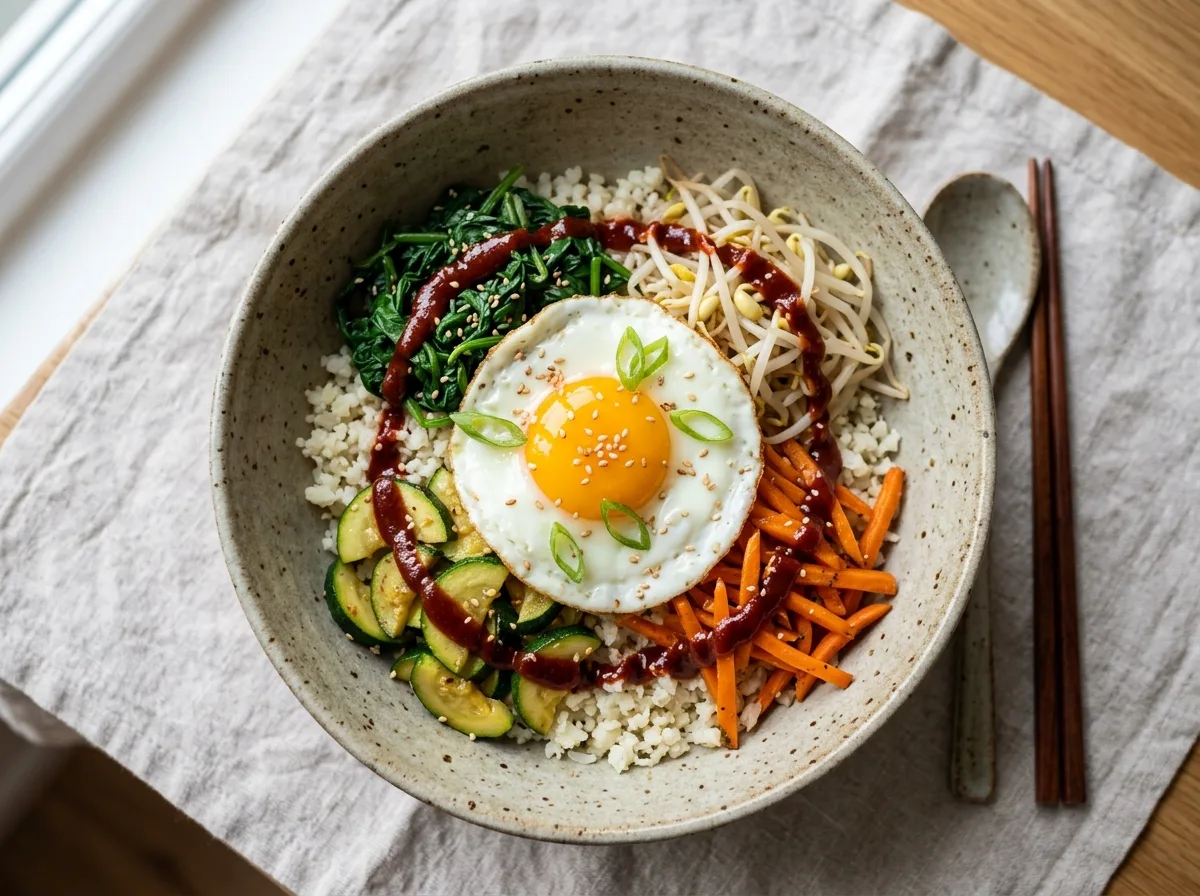
Korean Bibimbap with Seasonal Vegetables and Gochujang
Rate this recipe
~$18.00 CAD total · ~$4.50 CAD per serving (estimate)
Ingredients
- 1 large headcauliflower (about 900 g), cut into florets
- 200 gfresh baby spinach
- 200 gbean sprouts, rinsed
- 2 mediumcarrots (about 200 g), julienned
- 2 mediumcourgettes (about 300 g), julienned or cut into thin half-moons
- 4 largeeggs
- 3 tbspolive oil, divided
- 2 tbsptamari
- 1 tspsesame oil
- 2 clovesgarlic, minced
- 1 tsptoasted sesame seeds, for garnish
- 120 mltoasted sesame-gochujang sauce (make-this-first batch)
- 2 stalksspring onions, thinly sliced
Nutrition / serving
- Calories320 kcal
- Protein16 g
- Carbs22 g
- Fat18 g
- Fiber7 g
- Sodiummoderate — from the tamari and gochujang sauce; use reduced-sodium tamari if you are watching intake
Cost Estimate
~$18.00 CAD total · ~$4.50 CAD per serving (estimate)
Each vegetable in this bowl is seasoned and cooked on its own terms — a minute in the pan, a pinch of salt, a few drops of tamari — so the finished bowl has distinct flavours rather than a single blended mush. Cauliflower rice keeps it low-carb without pretending to be something it isn't; it holds the toppings and soaks up the sesame-gochujang sauce just as well as short-grain rice would. The make-this-first sauce does the heavy lifting, so the assembly is fast once your mise en place is set. This is a supper that rewards a little organisation.
Instructions
Rice the cauliflower
Pulse the cauliflower florets in a food processor in two batches until they resemble coarse grains — about 8–10 short pulses. Do not over-process or it turns to paste. Spread on a clean tea towel and press firmly to remove excess moisture.
Cook the cauliflower rice
Heat 1 tbsp olive oil in a large non-stick pan over medium-high heat. Add the cauliflower rice, season with a pinch of salt, and cook for 5–6 minutes, stirring every minute or so, until the grains are dry and just starting to colour at the edges. Divide among four bowls and keep warm.
Wilt the spinach
Wipe the pan, add a few drops of olive oil over medium heat, and add the spinach with a small pinch of salt. Toss for 60–90 seconds until just wilted but still bright green. Remove to a plate, squeeze out any liquid, and season with a few drops of tamari.
Blanche the bean sprouts
Return the pan to medium-high heat with a few drops of olive oil. Add the bean sprouts, a pinch of salt, and toss for 1–2 minutes — they should retain a slight crunch. Season with a few drops of tamari and transfer to a separate plate.
Sauté the carrots
Add another small splash of olive oil to the pan over medium-high heat. Add the julienned carrots and the minced garlic, season with salt, and cook for 2–3 minutes, tossing often, until the carrots are just tender but still have bite. Transfer to a plate.
Sauté the courgette
Add a splash of olive oil, raise the heat to high, and add the courgette in a single layer. Let it sit for 60 seconds without stirring so it gets a little colour, then toss and cook for another 1–2 minutes. Season with tamari and a few drops of sesame oil. Transfer to a plate.
Fry the eggs
Reduce the heat to medium-low and add the remaining olive oil to the pan. Crack in the eggs, season lightly with salt, and fry until the whites are fully set but the yolks are still runny, about 2–3 minutes. If you prefer a set yolk, cover the pan for the last minute.
Assemble and dress
Arrange the four vegetable portions in separate sections over each bowl of cauliflower rice — keep them distinct rather than mixed. Lay a fried egg in the centre. Drizzle 2–3 tbsp of the sesame-gochujang sauce over each bowl, then scatter with sesame seeds and spring onions. Serve immediately; the diner stirs everything together at the table.
Chef's Cool Facts
Why cook each vegetable separately?
Korean namul — the seasoned vegetable side dishes that form the base of bibimbap — are always prepared individually. Each vegetable releases moisture at a different rate and needs a different level of heat to cook properly. Crowding them together drops the pan temperature and causes steaming rather than sautéing, which collapses texture and muddles flavour.
Gochujang's slow fermentation
Gochujang is a fermented paste made from glutinous rice, red chilli powder, and meju (fermented soybean blocks). Traditional versions are aged in earthenware pots outdoors for months, sometimes years. The fermentation produces complex umami compounds that a fresh chilli sauce simply cannot replicate — which is why it tastes deeper than its ingredient list suggests.
Cauliflower rice and moisture
Cauliflower is about 92% water by weight. Pressing the riced florets in a tea towel before cooking removes enough moisture that the grains dry-fry rather than steam, giving you a texture that actually holds up under the vegetables and sauce instead of collapsing into a wet mass.
The runny yolk is functional
A fried egg with a liquid yolk isn't just tradition — the yolk acts as a secondary sauce when the bowl is stirred together at the table, enriching the gochujang dressing and binding the vegetables to the rice base. A fully set yolk doesn't do the same job.