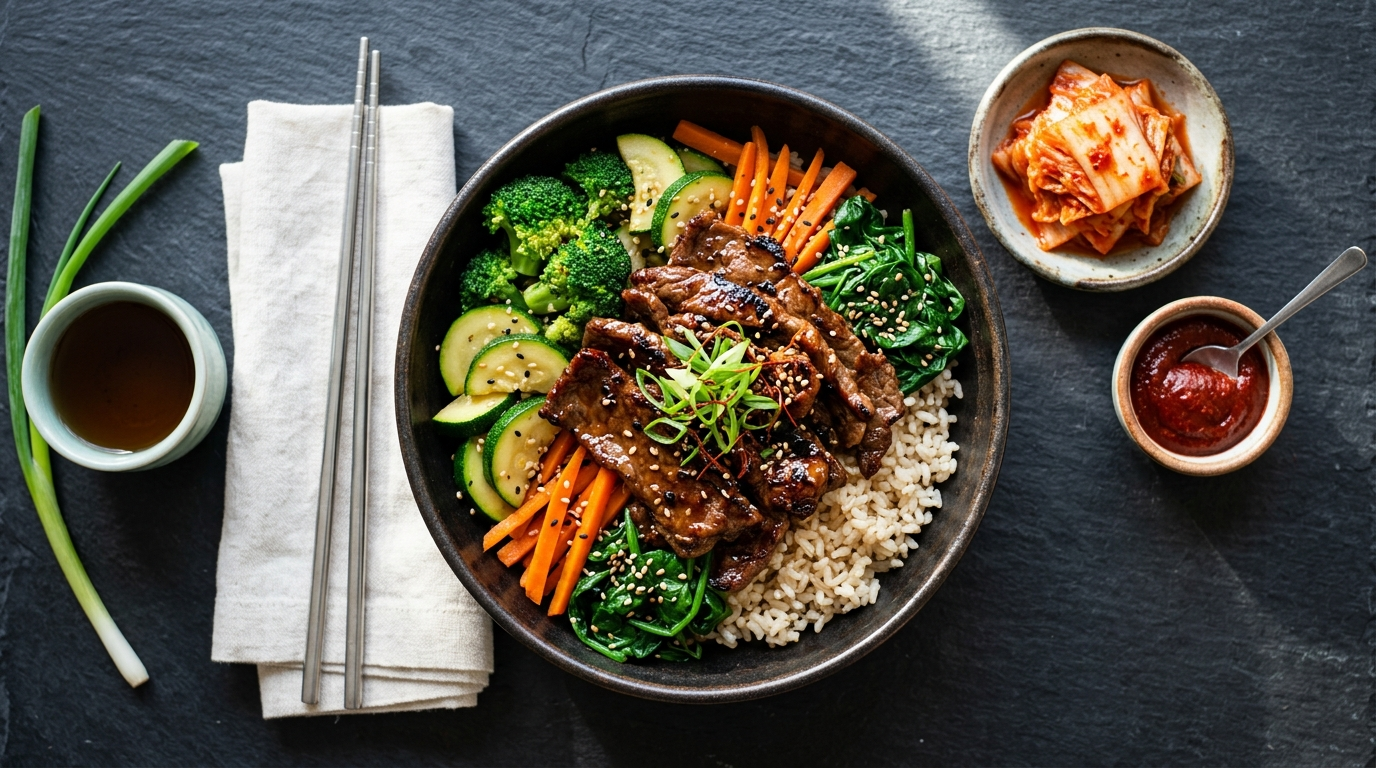
Korean Bulgogi Beef Bowl with Sesame Vegetables
Rate this recipe
~$6.00 CAD per serving (estimate)
Ingredients
- 1.3 kgBeef sirloin fillet (2–3 mm against grain)
- 1Ripe pear (grated, or ½ cup juice)
- 5 tbspSoy sauce
- 2 tbspMaple syrup
- 1 tbspSesame oil
- 4 clovesGarlic (minced)
- 1 tbspFresh ginger (grated)
- 1 tspBlack pepper
- 3Green onions (chopped)
- 2 tbspOlive oil (for searing)
- 400 gBrown rice (brown rice)
- 800 mlWater (brown rice)
- Salt (pinch; brown rice)
- 300 gBroccoli florets (sesame vegetables)
- 2 medium (~350 g)Zucchini (half-moons) (sesame vegetables)
- 2 mediumCarrots (julienned) (sesame vegetables)
- 200 gBaby spinach (sesame vegetables)
- 2 tbspOlive oil (sesame vegetables)
- 2 clovesGarlic (minced) (sesame vegetables)
- 1 tbspSoy sauce (sesame vegetables)
- 2 tspRice vinegar (sesame vegetables)
- 1 tbspSesame seeds (sesame vegetables)
- 4Green onions (sliced) (bowl toppings)
- 1 tbspSesame seeds (bowl toppings)
- Kimchi (optional) (to taste; bowl toppings)
- Sriracha or gochujang (optional) (to taste; bowl toppings)
Nutrition / serving
- Calories560 kcal
- Protein45 g
- Carbs49 g
- Fat18 g
- Fiber6 g
Cost Estimate
~$6.00 CAD per serving (estimate)
Instructions
Marinate the beef
Combine grated pear, soy sauce, maple syrup, sesame oil, garlic, ginger, black pepper, and green onions. Add sliced beef, toss. Marinate 20 min minimum (1–2 hr ideal — pear enzymes tenderize).
Cook the brown rice
Bring rice and water to a boil with salt. Reduce to low, cover, simmer 25–30 min until water absorbed. Fluff and reserve.
Stir-fry the sesame vegetables
Heat 1 tbsp olive oil in a wok over high heat. Stir-fry broccoli and carrots 3 min. Add zucchini, cook 2 min. Push aside; add spinach, wilt 1 min. Season with soy sauce and rice vinegar. Sprinkle sesame seeds. Reserve in a bowl.
Sear the bulgogi
Wipe pan. Heat 2 tbsp olive oil over high until smoking. Shake excess marinade off beef. Spread in a single layer; cook in 2–3 batches. Sear 2 min per side without moving until caramelized and slightly charred — pear and maple sugars create the browning.
Glaze the beef
After the last batch, pour any remaining marinade into the pan. Bubble 1–2 min until sticky. Return all beef and toss.
Assemble bowls
Brown rice base, bulgogi beef, sesame vegetables alongside. Top with sliced green onions, sesame seeds, and kimchi if desired. Drizzle sriracha or gochujang for heat.
Freeze & Reheat
Portion 2 servings: beef with glaze and rice in one container, sesame vegetables in another. Freeze up to 3 months. Thaw overnight. Reheat 70% microwave 3–4 min, adding 1 tbsp water to the rice. The pear-based marinade keeps the beef moist after freezing. Add green onions, sesame seeds, and kimchi fresh after reheating.
Chef's Cool Facts
Chef's Tip
For the brown rice: add 400 g rice, 800 ml water, and salt to TM bowl. Cook 25 min / 100°C / reverse speed 1. The bulgogi sear must be stovetop — wok-level direct heat is essential for the caramelized char.
The Pear Enzyme
Pears contain protease, an enzyme that breaks down proteins and tenderizes lean cuts naturally. The enzyme is most active at room temperature, which is why Korean cooks marinate at least 30 min before cooking.
Bulgogi = Fire Meat
Bul = fire, gogi = meat. Originated as the royal court dish maekjeok during the Goguryeo era (37 BC – 668 AD), skewered and grilled over open flame. The soy-sugar marinade we know today evolved during the Joseon dynasty.
5,000-Year-Old Seed
Sesame seeds are one of humanity's oldest condiment crops, domesticated 5,000+ years ago in the Indian subcontinent. Toasting releases sesamin and sesamolin, antioxidant compounds that also intensify the nutty aroma.