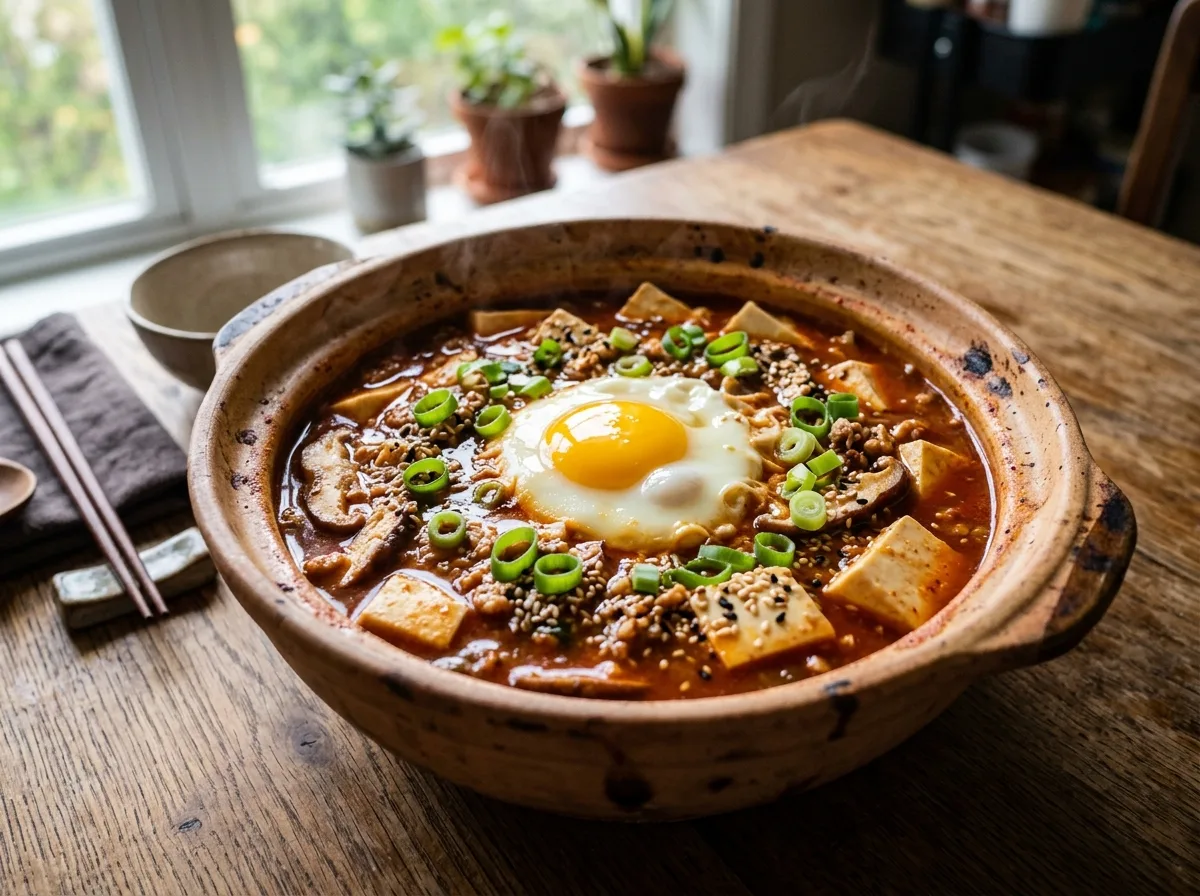
Korean Sundubu-Style Soft Tofu with Gochugaru and Egg
Rate this recipe
~$3.20 CAD per serving (estimate)
Ingredients
- 1 tbspghee
- 2 tbspGochugaru-Cumin Spice Paste (from weekly prep) (or 2 tbsp gochugaru + 1 clove minced garlic + pinch cumin if making from scratch)
- 3 clovesgarlic (thinly sliced)
- 4 gfresh ginger (about a 2 cm knob, peeled and grated)
- 600 mlvegetable stock (low-sodium)
- 15 mlsoy sauce or tamari (tamari for gluten-free)
- 5 mltoasted sesame oil
- 900 gsilken tofu (from the Costco pack; drained and cut into rough 4 cm cubes)
- 4 largeeggs
- 3 stalksgreen onions (thinly sliced, white and green parts separated)
- 1 tspfine sea salt (adjust to taste)
- 1 tsptoasted sesame seeds (to finish)
Nutrition / serving
- Calories215 kcal
- Protein16 g
- Carbs6 g
- Fat14 g
- Fiber1 g
Cost Estimate
~$3.20 CAD per serving (estimate)
This is the bowl you reach for when the evening calls for something hot and restorative without much effort. Silken tofu simmers in a gochugaru-and-garlic broth built on ghee, picking up a deep red warmth that is spicy but not punishing. One egg cracked in per person at the end poaches gently in the residual heat, turning the broth almost custardy where it meets the white. No rice needed — the tofu does that job.
Instructions
Build the aromatic base
Melt the ghee in a wide, deep sauté pan or a medium clay pot over medium heat. Add the sliced garlic and the white parts of the green onion and cook for 90 seconds, stirring, until softened and fragrant but not browned.
Bloom the spice paste
Add the Gochugaru-Cumin Spice Paste and the grated ginger. Stir constantly for about 60 seconds — the paste will darken slightly and smell toasty. This step is what gives the broth its backbone; do not rush it.
Add stock and season
Pour in the vegetable stock and soy sauce. Raise the heat to medium-high and bring to a lively simmer, scraping up any paste stuck to the pan. Taste and adjust salt — the broth should be boldly seasoned because the tofu will dilute it.
Simmer the tofu
Lower the heat to medium and gently slide in the silken tofu cubes. Simmer uncovered for 5 minutes, nudging the cubes occasionally with a spoon rather than stirring, to keep them intact. The broth will turn a deep brick-red.
Poach the eggs
Make four small wells in the tofu with the back of a spoon and crack one egg into each well. Cover the pan with a lid and cook for 3 to 4 minutes, until the whites are just set but the yolks are still runny. Remove from the heat immediately.
Finish and serve
Drizzle the sesame oil over the surface, scatter the green parts of the green onion and the sesame seeds, and bring the pan straight to the table. Serve directly from the pot into wide bowls.
Chef's Cool Facts
Why silken tofu turns custardy in hot broth
Silken tofu is coagulated with a calcium or magnesium salt at a very low protein concentration, which gives it a gel structure closer to panna cotta than to pressed curd. When it sits in hot liquid, the outer layer softens further and releases a small amount of whey-like liquid into the broth, slightly thickening it — the effect you taste as richness.
Gochugaru's two-part heat
Korean red pepper flakes carry both capsaicin (the compound that triggers heat receptors) and a significant amount of natural sugar, which is why gochugaru dishes taste warm and slightly sweet rather than sharp. The drying method — sun-drying rather than smoke-drying — preserves that sweetness and the characteristic brick-red colour.
The egg as a built-in sauce
Cracking a raw egg into a simmering broth is a technique found across Korean, Chinese, and Middle Eastern cooking. The white sets and traps pockets of broth; the yolk, if left runny, breaks when you eat and coats the tofu like a sauce. It adds protein without any extra prep.
Ghee in a Korean-style dish
Traditional sundubu-jjigae uses sesame oil or a neutral oil for the aromatics. Swapping in ghee adds a short-chain fatty acid profile and a faint nuttiness that complements the gochugaru without masking it — a small substitution that fits the household's cooking-fat pantry without changing the dish's character.