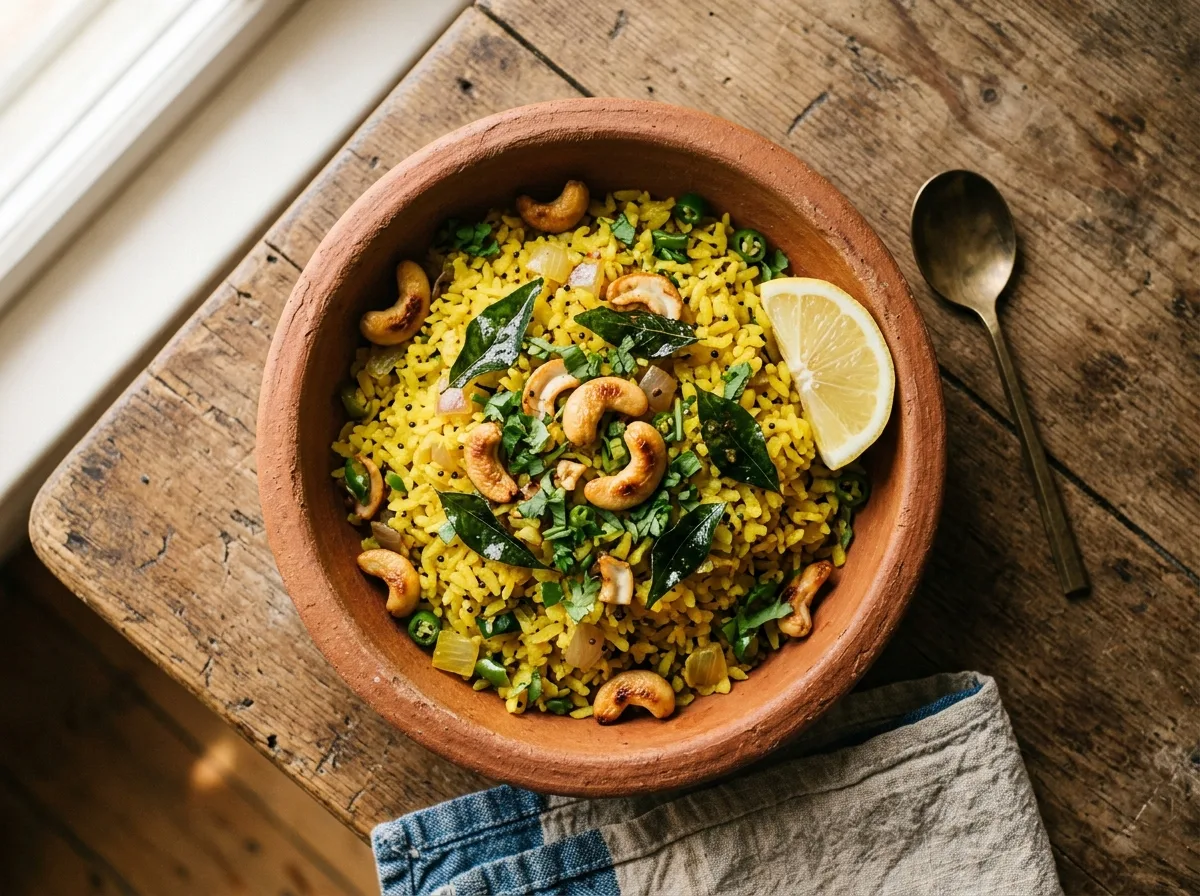
Maharashtrian Poha with Cashews and Curry Leaves
Rate this recipe
~$4.20 CAD total · ~$2.10 CAD per serving (estimate)
Ingredients
- 160 gthick-cut poha (flattened rice flakes, medium or thick variety)
- 2 tbspcoconut oil (from the shared jar)
- 1 tspblack mustard seeds
- 10 leavesfresh or frozen curry leaves (in addition to those in the tempering oil)
- 1 wholegreen chilli (serrano or Thai), finely sliced
- 0.5 tspground turmeric
- 0.5 tspfine sea salt, plus more to taste
- 1 tspsugar
- 3 tbspCurry-Leaf and Cashew Tempering Oil (solids and oil together) (from Make This First)
- 1 tbspfresh lemon juice
- 2 tbspfresh coriander (cilantro), roughly chopped
Nutrition / serving
- Calories415 kcal
- Protein8 g
- Carbs62 g
- Fat16 g
- Fiber2 g
- Sodiumlow — salt is added by hand and there is no soy or processed ingredient
Cost Estimate
~$4.20 CAD total · ~$2.10 CAD per serving (estimate)
Poha is the breakfast Maharashtra runs on — a bowl of flattened rice that goes from pantry to plate faster than toast. The rice flakes soften in seconds under cold water, then drink up a golden tempering of mustard seeds, turmeric, and green chilli the moment they hit the pan. This version draws its cashews and curry leaves straight from the week's shared tempering oil, so the hardest part is already done.
Kid-friendly tip: For younger palates, skip the green chilli and reduce the tempering oil to 1 tbsp — the dish is still fragrant and golden without the heat.
Instructions
Rinse and rest the poha
Place the poha in a fine-mesh sieve and run cold water over it for 20 seconds, tossing gently with your fingers. Shake off the excess water and leave it in the sieve for 5 minutes — the flakes will soften to a tender but not mushy texture. They should hold their shape when pressed lightly.
Build the tempering
Heat the coconut oil in a wide non-stick or stainless skillet over medium heat. Add the mustard seeds and cover loosely; when they pop (about 30 seconds), add the curry leaves and green chilli. Stand back — the leaves spit. Fry for 20 seconds until fragrant.
Add turmeric and season
Reduce the heat to low. Stir in the turmeric and let it bloom for 10 seconds — it will turn the oil a deep amber. Add the salt and sugar and stir to combine.
Fold in the poha
Add the rinsed poha to the pan and fold gently with a spatula, coating every flake in the turmeric oil. Keep the heat low; the goal is warming through, not frying. Stir for 2 minutes until the poha is heated and uniformly golden.
Finish with tempering oil and lemon
Spoon in the Curry-Leaf and Cashew Tempering Oil, making sure to include both the solids (cashews, fried curry leaves) and the infused oil. Squeeze the lemon juice over the pan, fold once more, and taste for salt. Serve immediately, scattered with fresh coriander.
Chef's Cool Facts
Why thick poha matters
Poha comes in thin, medium, and thick cuts. Thin flakes turn to mush the moment water touches them; thick-cut flakes absorb moisture evenly and hold their texture through the pan step. The thickness is determined by how much pressure the rollers apply when the parboiled rice is flattened — a small milling variable with a big textural consequence.
Mustard seeds pop for a reason
Black mustard seeds contain a volatile compound called allyl isothiocyanate. When the seeds hit hot oil, the heat ruptures the seed coat and the compound vaporizes — that is the pop. The brief frying also converts the sharp, raw pungency into a nuttier, mellower flavour before any other ingredient touches the pan.
Turmeric blooms in fat, not water
Curcumin, the pigment in turmeric, is fat-soluble. Adding it directly to the hot oil rather than to a water-based liquid gives the dish its vivid colour and makes the curcumin more bioavailable. Adding it to water would leave it largely inert and visually dull.
Poha's place in Maharashtra
In Pune and Mumbai, poha is the default breakfast of street stalls and home kitchens alike. The dish is sometimes called 'kanda poha' when onion is added, or 'batata poha' with potato — the base tempering technique is the same across all versions, which is why the shared tempering oil from this week's Make This First slots in without any adjustment.