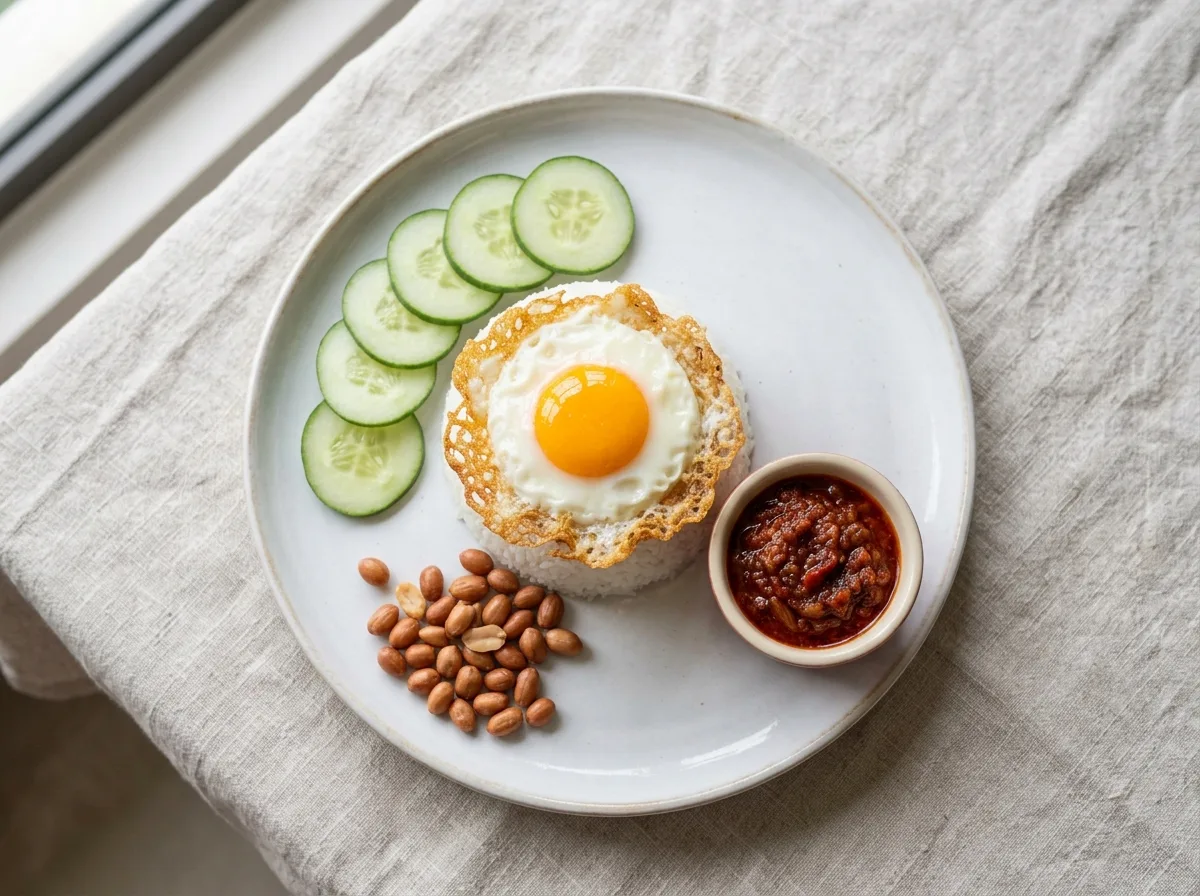
Malaysian Nasi Lemak-Style Coconut Rice with Sambal and Fried Egg
Rate this recipe
~$7.60 CAD total · ~$3.80 CAD per serving (estimate)
Ingredients
- 200 gjasmine rice
- 200 mlfull-fat coconut milk (from the bulk week's 400 ml can)
- 160 mlwater
- 1pandan leaf (tied in a knot; find in the freezer section of Asian grocery stores)
- 1/4 tspfine sea salt
- 8 gdried red chillies (about 6–8 whole chillies; stems removed, soaked in boiling water 10 minutes)
- 3shallots (peeled and roughly chopped)
- 2 clovesgarlic (from the bulk week's heads)
- 1 tbsppalm sugar (or light brown sugar as a substitute)
- 1 tbspolive oil (for the sambal; from the bulk week's bottle)
- 1 tsptamarind paste (loosened in 1 tbsp water)
- 2 tbspolive oil (for frying the eggs)
- 2large eggs
- 1/2Lebanese cucumber (sliced into thin rounds)
Nutrition / serving
- Calories620 kcal
- Protein16 g
- Carbs72 g
- Fat29 g
- Fiber3 g
- Sodiummoderate — from the sea salt and tamarind; palm sugar keeps the sambal balanced
Cost Estimate
~$7.60 CAD total · ~$3.80 CAD per serving (estimate)
Nasi lemak is Malaysia's most argued-over breakfast — every hawker stall has its own sambal, its own rice ratio, its own loyalists. This version strips it to its weekday core: jasmine rice simmered in coconut milk with a knotted pandan leaf, a quick blitz sambal built on dried chillies and palm sugar, cool cucumber, and a fried egg with crisp lace edges. Fifteen minutes of active work, and the plate earns every minute.
Kid-friendly tip: The sambal carries real heat. For younger eaters, set aside a spoonful of the blended paste before frying and stir in a teaspoon of ketchup instead of the tamarind — it reads as mildly spiced rather than hot.
Instructions
Soak the chillies
Cover the dried chillies with boiling water and leave them for 10 minutes. They should soften completely and turn a deep brick red. Drain, reserving 2 tablespoons of the soaking liquid.
Cook the coconut rice
Rinse the jasmine rice under cold water until the water runs mostly clear. Combine the rice, coconut milk, water, knotted pandan leaf, and salt in a small saucepan. Bring to a gentle boil over medium heat, stir once, then reduce to the lowest heat, cover tightly, and cook for 13 minutes. Remove from heat and rest, covered, for 5 minutes — do not lift the lid early.
Blend the sambal paste
Drain the softened chillies and add them to a small blender or food processor along with the shallots, garlic, and the reserved soaking liquid. Blitz to a coarse paste; it does not need to be perfectly smooth.
Fry the sambal
Heat 1 tablespoon of olive oil in a small skillet over medium heat. Add the chilli paste and fry, stirring frequently, for 4–5 minutes until the paste darkens slightly and the oil begins to separate around the edges. Stir in the palm sugar and tamarind water, cook for 1 more minute, then taste and adjust — it should be hot, slightly sweet, and sour in that order.
Fry the eggs
In a separate non-stick pan, heat 2 tablespoons of olive oil over medium-high heat until shimmering. Crack in the eggs and fry undisturbed for 2–3 minutes until the whites are fully set with crisp, golden lace edges and the yolks are still runny. Season with a pinch of salt.
Plate and serve
Discard the pandan leaf and mound the rice in the centre of each plate using a small bowl as a mould if you like. Spoon the sambal alongside, add the cucumber slices, and place the fried egg on top. Serve immediately.
Freeze & Reheat
The sambal freezes well in a small airtight container for up to 2 months — thaw overnight in the fridge and warm in a pan over low heat. The coconut rice does not freeze well (it turns grainy on reheating); cook it fresh each time, which takes only 20 minutes.
Chef's Cool Facts
Why pandan smells the way it does
Pandan's grassy, vanilla-adjacent aroma comes primarily from 2-acetyl-1-pyrroline — the same compound responsible for the fragrance in basmati rice and fresh bread crust. A single knotted leaf releases enough of it to perfume an entire pot of rice.
Palm sugar and the Maillard reaction in sambal
Palm sugar does more than sweeten: its lower sucrose content and higher proportion of free glucose mean it caramelises at a slightly lower temperature than refined white sugar, which helps the sambal develop colour and depth faster in a home pan.
The science of lace-edged fried eggs
Those crisp, bubbly white edges form when egg protein hits oil hot enough to generate rapid steam from the egg's own moisture. Olive oil's smoke point is high enough for this at medium-high heat, and the result is textural contrast that a lower-heat egg simply cannot produce.