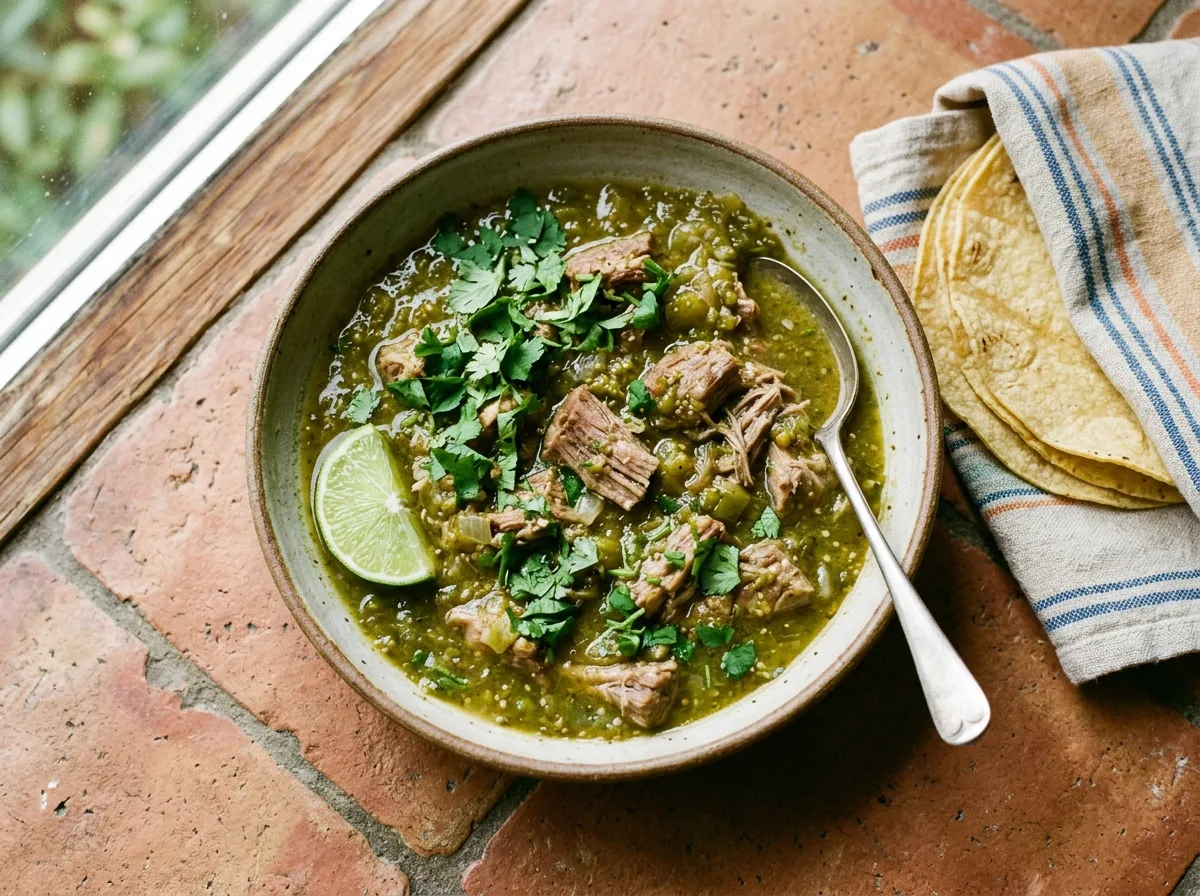
Mexican Pork Chile Verde with Tomatillo and Green Chilli
Rate this recipe
~$28.80 CAD total · ~$4.80 CAD per serving (estimate)
Ingredients
- 1.2 kgboneless pork shoulder, cut into 4 cm chunks
- 2 tbspolive oil
- 700 gfresh tomatillos, husks removed
- 2 wholepoblano chillies
- 2 wholejalapeños
- 1 largewhite onion, roughly chopped
- 5 clovesgarlic, peeled
- 1 tspground cumin
- 1 tspdried Mexican oregano
- 1 tspfine sea salt, plus more to taste
- 0.5 tspfreshly ground black pepper
- 400 mlchicken stock, low-sodium
- 15 gfresh cilantro, roughly chopped, to finish
- 1 tbspfresh lime juice
Nutrition / serving
- Calories390 kcal
- Protein38 g
- Carbs10 g
- Fat22 g
- Fiber2 g
- Sodiummoderate — keep stock low-sodium and taste before adding any extra salt
Cost Estimate
~$28.80 CAD total · ~$4.80 CAD per serving (estimate)
This is the stew that rewards patience: pork shoulder braised low and slow in a tart, smoky green sauce built from charred tomatillos, blistered poblanos, and jalapeños. No beans, no filler — just pork and the clean acidity of the tomatillo carrying everything. It tastes better the next day, and the batch freezes without losing any of its edge. Pull two portions from the freezer on a weeknight and you have dinner in ten minutes.
Instructions
Char the vegetables
Set your oven broiler to high. Halve the tomatillos and place them cut-side up on a foil-lined baking sheet alongside the whole poblanos and jalapeños. Broil 10–12 cm from the element for 10–12 minutes, until the tomatillos are soft and patched with black and the chilli skins are blistered and charred all over.
Peel and blend the sauce
Transfer the chillies to a bowl, cover tightly with a plate, and let them steam for 10 minutes — the skins will slip off easily. Peel, stem, and seed both poblanos; leave the jalapeños with their seeds for heat or remove half of them for a milder result. Blend the tomatillos (with all their juices), the peeled chillies, onion, and garlic until smooth. Taste — it should be bright, tart, and a little smoky.
Brown the pork
Pat the pork dry and season all over with salt and pepper. Heat 1 tbsp olive oil in a large heavy pot or Dutch oven over medium-high heat. Brown the pork in two or three batches, 3–4 minutes per side, until deeply golden. Transfer to a plate and do not crowd the pan — crowding steams the meat instead of searing it.
Build the braise
Add the remaining 1 tbsp olive oil to the pot and reduce heat to medium. Pour in the blended green sauce — it will sputter. Stir in the cumin and oregano, then return the browned pork and any resting juices to the pot. Pour in the chicken stock and stir to combine.
Pressure cook
Bring to a gentle boil, then lock the lid and cook 35 min at high pressure. Let the pressure fall naturally for 15 min. The pork is done when it pulls apart easily with two forks. Stovetop alternative: cover and simmer on low for 1 hour 30 minutes, stirring every 30 minutes.
Finish and season
Stir in the lime juice and half the cilantro. Taste and adjust salt. The lime brightens everything — add it just before serving, not during the braise. Scatter the remaining cilantro over the top and serve with warm corn tortillas or brown rice.
Freeze & Reheat
Cool the stew completely before portioning into airtight containers. Freeze for up to 3 months. To reheat, transfer to a saucepan over medium-low heat with a splash of water or stock (about 60 ml), stir occasionally, and heat through in 8–10 minutes. The sauce may look broken when it first thaws — a few stirs over heat brings it back together.
Pressure cooker method
Total, start to finish
About 1 hr 25 min, of which roughly 40 min is active. The broiler stage is unchanged — charring the tomatillos and chillies is where the flavour comes from and there is no shortcut for it.
Char and blend
Broil the halved tomatillos with the whole poblanos and jalapeños 10–12 min until blackened in patches. Steam the chillies covered for 10 min, peel and seed them, then blend with the tomatillos and their juices, the onion and the garlic until smooth.
Brown the pork
On Sauté (high), brown the seasoned pork in two or three batches, 3–4 min per side, and set aside. Crowding steams the meat instead of searing it.
Pressure cook and finish
Pour in the blended green sauce with the cumin and oregano, scrape the base clean, return the pork with the stock, and cook 35 min at high pressure. Let the pressure fall naturally for 15 min. Stir in the lime juice and half the cilantro off the heat.
Chef's Cool Facts
Tomatillos are not unripe tomatoes
Tomatillos belong to the same nightshade family as tomatoes but are a distinct species — Physalis philadelphica. The papery husk is a fused calyx unique to the Physalis genus. Their tartness comes from malic and citric acids, which survive the braise and keep the sauce bright even after two hours of cooking.
Charring tomatillos is a pre-Columbian technique
Roasting or charring tomatillos directly over flame or under a broiler — called tatemado in Mexican cooking — concentrates their sugars and adds a layer of bitterness that balances their acidity. Cooks in central Mexico have been doing this for at least 2,000 years; it predates Spanish contact by a long margin.
Why pork shoulder, specifically
Pork shoulder has a collagen content of roughly 6–8 % by weight. During a low, slow braise, that collagen converts to gelatin, which gives the sauce body and a silky mouthfeel without any added thickener. A leaner cut like loin would turn stringy and dry at the same temperature and time.
Poblanos and jalapeños play different roles
Poblanos are mild (1,000–2,000 Scoville units) and contribute a grassy, almost sweet depth. Jalapeños sit at 2,500–8,000 Scoville units and deliver the forward heat. Using both gives the sauce a layered heat profile — warmth that builds slowly rather than a single sharp spike.