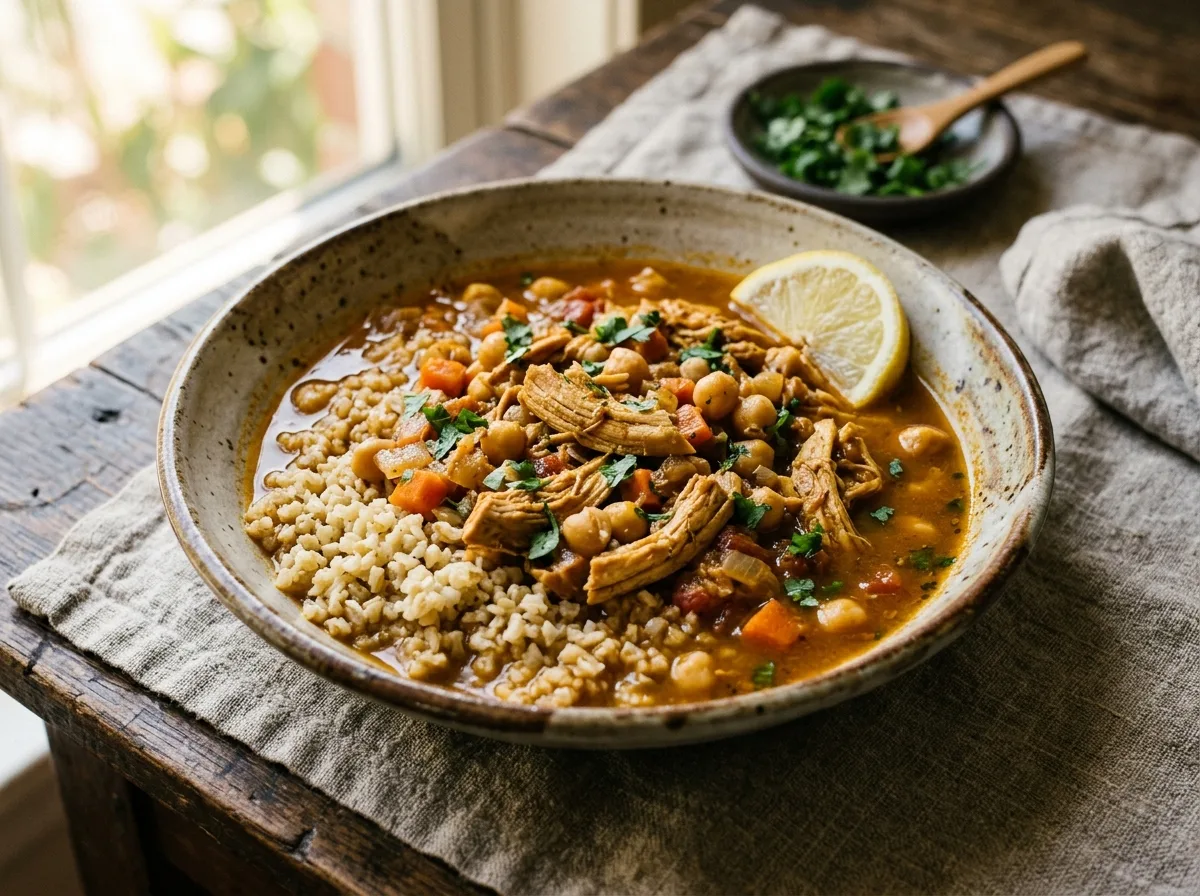
Moroccan Chicken and Chickpea Stew over Bulgur
Rate this recipe
~$4.80 CAD per serving (estimate)
Ingredients
- 30 mlolive oil
- 1.2 kgbone-in, skin-on chicken thighs (about 6 thighs from the Costco pack)
- 1 tspfine salt, divided
- 1 largeyellow onion, finely diced
- 4 clovesgarlic, minced
- 1 tbspfresh ginger, grated
- 1.5 tspground cumin
- 1.5 tspground coriander
- 1 tspsweet paprika
- 0.5 tspground cinnamon
- 0.25 tspground turmeric
- 0.25 tspcayenne pepper
- 400 gcanned crushed tomatoes
- 400 mllow-sodium chicken stock
- 240 gcanned chickpeas, drained and rinsed (about half a 540 ml can)
- 1 tsphoney
- 400 gcoarse bulgur
- 600 mlwater (for cooking the bulgur)
- 0.5 tspsalt (for the bulgur water)
- 20 gfresh cilantro, roughly chopped (for serving)
- 1 wholelemon, cut into wedges (for serving)
Nutrition / serving
- Calories520 kcal
- Protein38 g
- Carbs48 g
- Fat16 g
- Fiber7 g
Cost Estimate
~$4.80 CAD per serving (estimate)
Bone-in chicken thighs do most of the work here — they braise until the meat pulls cleanly from the bone, leaving behind a broth that smells like a spice market. Chickpeas stay in the background, thickening the sauce just enough without taking over. The bulgur underneath soaks up every drop. This is the kind of pot that tastes better the next day, and freezes without complaint.
Instructions
Sear the chicken
Pat the chicken thighs dry and season all over with half the salt. Heat the olive oil in a wide, heavy-bottomed pot or Dutch oven over medium-high heat. Add the thighs skin-side down and cook undisturbed for 6–7 minutes until the skin is deep golden and releases easily from the pan. Flip and cook 2 minutes more, then transfer to a plate.
Soften the aromatics
Reduce heat to medium. Pour off all but about 15 ml of fat from the pot. Add the onion and remaining salt and cook, stirring occasionally, for 5–6 minutes until soft and translucent at the edges. Add the garlic and ginger and stir for 1 minute until fragrant.
Bloom the spices
Add the cumin, coriander, paprika, cinnamon, turmeric, and cayenne directly to the onion mixture. Stir constantly for 60 seconds — the spices will darken slightly and smell toasty. This step fixes the spices into the fat and prevents a raw, dusty flavour in the finished stew.
Build the braise
Pour in the crushed tomatoes and chicken stock, scraping up any browned bits from the bottom of the pot. Stir in the chickpeas and honey. Nestle the seared chicken thighs back in, skin-side up, so the skin sits just above the liquid.
Braise until tender
Bring to a gentle boil, then reduce heat to low, cover with the lid slightly ajar, and simmer for 35–40 minutes. The chicken is done when the meat pulls away from the bone with light pressure and the broth has thickened to a loose, coating consistency.
Cook the bulgur
About 20 minutes before the stew is ready, bring the 600 ml of water to a boil in a saucepan with the salt. Stir in the bulgur, cover tightly, and remove from heat. Let it steam, undisturbed, for 15 minutes, then fluff with a fork.
Rest and finish the stew
Lift the chicken thighs out and pull the meat from the bones in large pieces, discarding the skin and bones. Return the meat to the pot and taste the broth for salt. If the broth seems thin, simmer uncovered for 3–4 minutes more — it tightens quickly.
Serve
Spoon a mound of bulgur into each bowl and ladle the stew generously over top. Scatter fresh cilantro over each portion and serve with a lemon wedge on the side for squeezing.
Freeze & Reheat
Freezing: Cool the stew completely before portioning into airtight containers. Freeze the stew and bulgur separately — bulgur can turn gummy if frozen in liquid. Keeps well for up to 3 months.
Reheating: Thaw overnight in the refrigerator. Reheat the stew in a small saucepan over medium-low heat, adding a splash of water or stock if needed — the broth actually tightens on reheating rather than splitting. Reheat the bulgur covered in the microwave with a tablespoon of water for 90 seconds, then fluff.
Chef's Cool Facts
Why bone-in thighs make better broth
Chicken bones release collagen as they simmer, which converts to gelatin in the liquid. That gelatin is what gives the broth its body and the slightly sticky quality that makes it cling to the bulgur. Boneless thighs skip this step entirely, and the difference in texture is noticeable.
Cinnamon in savoury cooking
In Moroccan cuisine, cinnamon has been used in meat dishes since at least the medieval period — manuscripts from the 13th-century Almohad court describe lamb tagines spiced with it. The compound cinnamaldehyde that gives cinnamon its warmth also suppresses certain bitter notes in tomato, which is why a small amount rounds out tomato-based braises without tasting sweet.
Bulgur's head start
Bulgur is wheat that has already been parboiled and dried, which means it needs only to rehydrate rather than fully cook. That off-heat steaming method works because the starch granules were already gelatinized during the factory parboiling — you are simply finishing the job with residual heat.
Chickpeas as a thickener
A modest quantity of chickpeas does more than add texture. As they simmer, their outer skins release starch into the broth, contributing to the sauce's body without any added flour or cornstarch. It is a quiet effect, but remove them and the broth stays noticeably thinner.