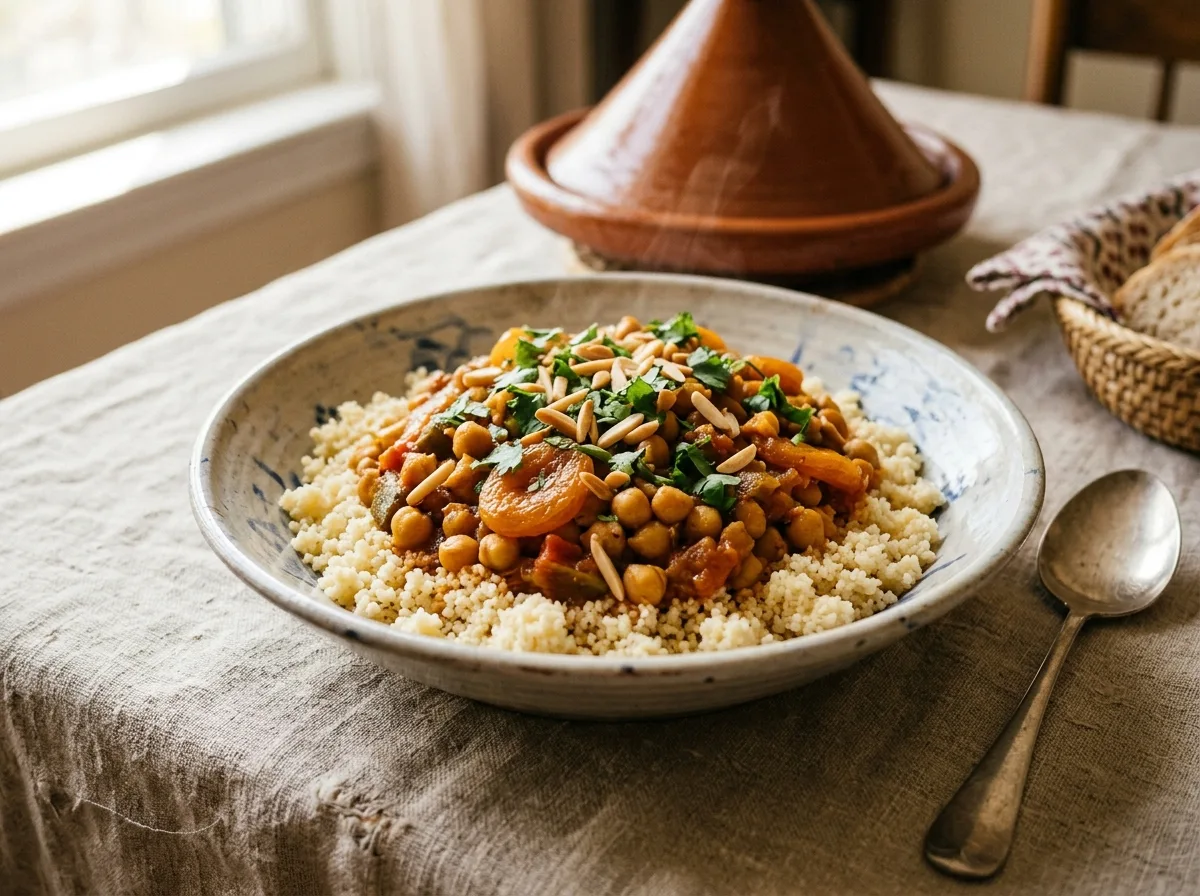
Moroccan Chickpea and Apricot Tagine
Rate this recipe
~$3.80 CAD per serving (estimate)
Ingredients
- 7.5 tbspolive oil
- 2 mediumyellow onions, finely diced
- 4 clovesgarlic, minced
- 1 tbspfresh ginger, grated
- 1.5 tspground cumin
- 1.5 tspground coriander
- 1 tspground cinnamon
- 1 tspsweet smoked paprika
- 0.5 tspground turmeric
- 0.25 tspcayenne pepper
- 1 tbsptomato paste
- 800 gcanned crushed tomatoes (one 796 ml can)
- 400 mlvegetable stock
- 2 cans (540 ml each)chickpeas, drained and rinsed
- 150 gdried apricots, halved (Use unsulphured Turkish apricots for a deeper, less-sweet flavour)
- 1 tsphoney
- 1 tspfine sea salt, plus more to taste
- 30 gfresh cilantro, roughly chopped
- 40 gtoasted slivered almonds
- 300 gdry couscous, for serving
- 1 tbspunsalted butter (For finishing the couscous)
Nutrition / serving
- Calories520 kcal
- Protein18 g
- Carbs78 g
- Fat14 g
- Fiber12 g
Cost Estimate
~$3.80 CAD per serving (estimate)
Sweet dried apricots, earthy chickpeas, and a bloom of warm spices come together in a sauce that deepens the longer it sits — which makes this tagine as good on day three as it is the night you make it. The balance of fruit and savory is classically Moroccan: neither cloying nor austere, just genuinely satisfying over a mound of fluffy couscous. It batch-cooks beautifully, and the frozen portions reheat with almost no effort on a weeknight when cooking feels like too much.
Instructions
Bloom the aromatics
Warm the olive oil in a large, heavy-bottomed pot or Dutch oven over medium heat. Add the onions and cook, stirring occasionally, for 8–10 minutes until soft and golden at the edges. Add the garlic and ginger and cook for 1 minute more until fragrant.
Toast the spices
Push the onion mixture to the sides of the pot and add the cumin, coriander, cinnamon, paprika, turmeric, and cayenne directly to the centre. Stir constantly for 30–45 seconds until the spices darken slightly and smell nutty — this step builds the backbone of the sauce.
Build the sauce
Stir in the tomato paste and cook for 1 minute, then pour in the crushed tomatoes and vegetable stock. Stir everything together, scraping up any bits from the bottom of the pot.
Simmer with chickpeas and apricots
Add the drained chickpeas, halved apricots, honey, and salt. Bring to a gentle boil, then reduce the heat to low, cover partially, and simmer for 35–40 minutes, stirring every 10 minutes. The sauce should thicken noticeably and the apricots will plump and soften into the broth.
Adjust and rest
Taste and adjust salt. Remove from heat and let the tagine rest, covered, for 5 minutes — the residual heat finishes the flavours and the sauce tightens further as it sits.
Cook the couscous
While the tagine rests, place the dry couscous in a large heatproof bowl with the butter and a pinch of salt. Pour over 360 ml of boiling water, cover tightly with a plate or plastic wrap, and leave for 5 minutes. Fluff with a fork.
Serve and garnish
Spoon the tagine over the couscous and top each bowl with fresh cilantro and a scatter of toasted slivered almonds for crunch.
Freeze & Reheat
Freezing: Cool the tagine completely, then portion into zip-lock freezer bags or airtight containers (without couscous). Lay bags flat to freeze — they stack efficiently and thaw faster. Keeps well for up to 3 months.
Reheating: Thaw overnight in the refrigerator, then reheat gently in a saucepan over medium-low heat with a splash of water or stock to loosen the sauce, stirring occasionally, until piping hot throughout (at least 74 °C / 165 °F). Cook fresh couscous to serve. Alternatively, reheat from frozen in a covered saucepan over low heat for 20–25 minutes, stirring periodically.
Chef's Cool Facts
Why fruit belongs in a savory pot
Moroccan cuisine inherited the sweet-savory combination from medieval Arab culinary tradition, which used dried fruit to balance the bitterness of spices and add body to slow-cooked sauces. Dried apricots are particularly effective because their tartaric and malic acids brighten the sauce even as their natural sugars mellow the heat of cayenne — a built-in flavour regulator.
The tagine's conical lid is a distillery
A traditional clay tagine's pointed lid is engineered to capture steam, condense it near the cooler tip, and drip it back down over the ingredients. This self-basting loop keeps the contents moist without added liquid — a technique that evolved in North African kitchens where water was scarce. A Dutch oven with a partially cracked lid approximates the same effect.
Chickpeas and resistant starch
Canned chickpeas that are cooled and reheated — exactly what happens when you freeze and reheat this tagine — develop higher levels of resistant starch than freshly cooked legumes. Resistant starch feeds beneficial gut bacteria and slows glucose absorption, which means the leftovers are, in a modest but genuine sense, better for you than the first serving.