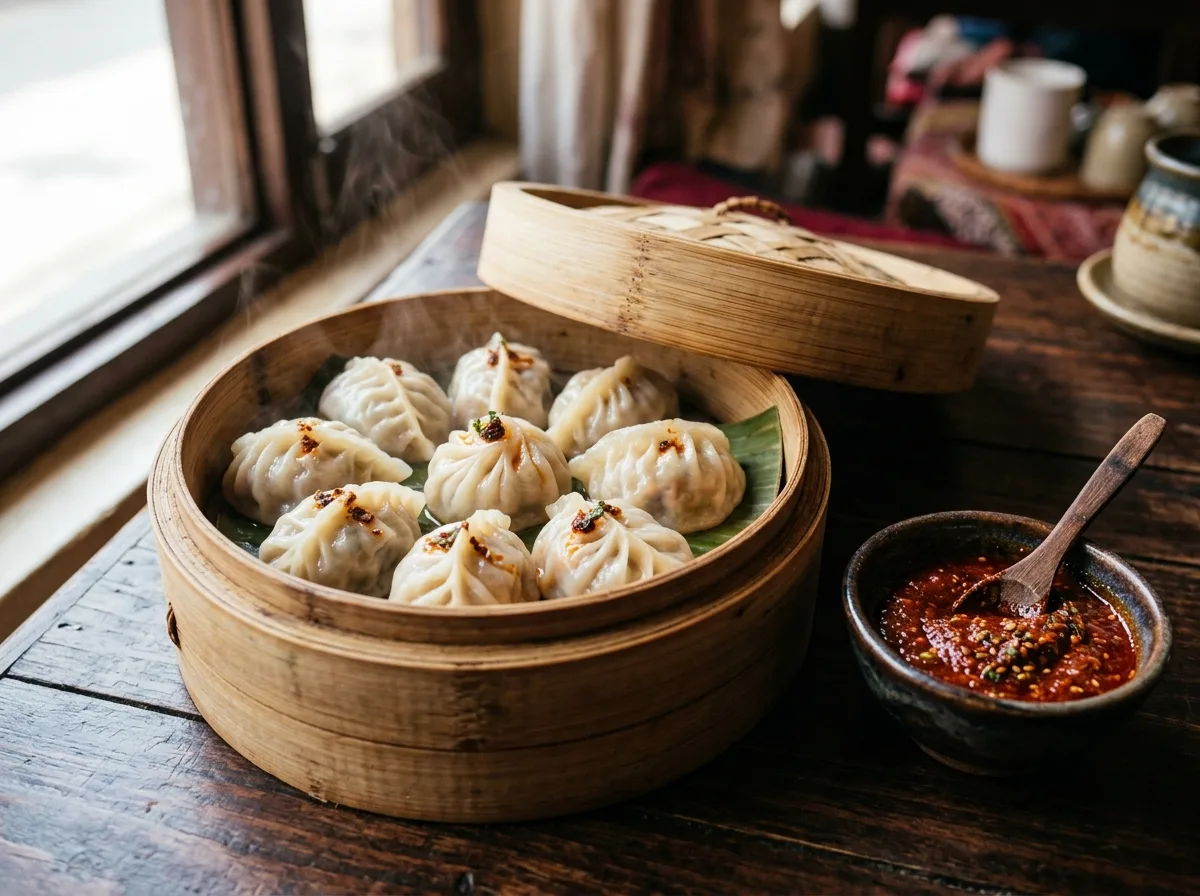
Nepali Vegetable Momos with Tomato and Sesame Achar
Rate this recipe
~$15.20 CAD total · ~$3.80 CAD per serving (estimate)
Ingredients
- 300 gfirm tofu (pressed for 15 minutes, then crumbled fine)
- 200 ggreen cabbage (finely shredded, then salted and squeezed dry)
- 4spring onions (white and green parts, finely sliced)
- 20 gfresh ginger (peeled and grated on a microplane)
- 3 clovesgarlic (minced)
- 2 tbsptamari
- 1 tbspsesame oil
- 1 tspground cumin
- 0.5 tspground coriander
- 0.25 tspground turmeric
- 1 tbspolive oil
- 240 gplain all-purpose flour (plus extra for dusting)
- 120 mlwarm water (just-boiled, cooled 2 minutes)
- 0.5 tspfine salt
- 2ripe tomatoes (charred whole under the broiler until blackened in spots, then peeled and blended — for the achar)
- 0.5portion sesame-gochujang base (the make-this-first sauce, approximately 120 ml)
- 1 tbsprice vinegar (for the achar)
Nutrition / serving
- Calories420 kcal
- Protein18 g
- Carbs52 g
- Fat14 g
- Fiber5 g
- Sodiummoderate — from the tamari in the filling and the gochujang base in the achar
Cost Estimate
~$15.20 CAD total · ~$3.80 CAD per serving (estimate)
Momos are Nepal's answer to the dumpling — steamed in a bamboo or metal basket, eaten fast, dipped hard. This version fills thin round wrappers with crumbled firm tofu, shredded cabbage, ginger, and spring onion, seasoned simply with tamari and a little sesame oil. The dipping sauce is already half-made: the week's sesame-gochujang base, extended with charred tomato and a splash of rice vinegar to land somewhere between a Nepali sesame achar and something you'll want on everything else in the fridge. The folding takes practice, but ten momos in you'll have a rhythm.
Instructions
Press and salt the veg
Wrap the crumbled tofu in a clean kitchen towel and press firmly for 15 minutes. Meanwhile, toss the shredded cabbage with a pinch of salt, let it sit 10 minutes, then squeeze out as much water as you can — this step keeps the filling from turning the wrappers soggy.
Mix the filling
Combine the pressed tofu, squeezed cabbage, spring onions, ginger, and garlic in a bowl. Add the tamari, sesame oil, cumin, coriander, turmeric, and olive oil. Mix thoroughly with your hands until the filling holds together when pinched. Taste — it should be savoury, lightly spiced, and smell of ginger. Adjust tamari if needed.
Make the dough
Stir the salt into the flour, then pour in the warm water gradually, mixing with a fork until a shaggy dough forms. Turn out and knead for 6–8 minutes until smooth and slightly elastic — it should feel like soft Play-Doh and not stick to your hands. Cover with a damp cloth and rest 20 minutes.
Make the achar
Char the tomatoes directly under a hot broiler, turning once, until the skins blister and blacken in spots, about 8–10 minutes total. Peel and blend them smooth, then stir into the sesame-gochujang base along with the extra tablespoon of rice vinegar. The sauce should be pourable but thick enough to coat a spoon. Set aside.
Roll and fill the wrappers
Divide the rested dough into 24 equal pieces (about 15 g each). Roll each piece into a thin circle roughly 9 cm across, keeping the edges slightly thinner than the centre. Place a heaped teaspoon (about 15 g) of filling in the middle.
Fold the momos
Hold the circle in one palm. Use the thumb and index finger of the other hand to pleat the edge in small folds, working around the dumpling and pinching each fold firmly to the last — aim for 8–10 pleats meeting at a central point. Pinch the top closed. Set on a lightly floured tray and cover with a damp cloth while you work through the rest.
Steam in batches
Line a steamer basket with a piece of lightly oiled parchment or cabbage leaves to prevent sticking. Arrange momos in a single layer with a centimetre of space between them. Steam over vigorously boiling water for 10–12 minutes, until the wrappers look translucent and feel firm but not rubbery when pressed gently. Repeat with remaining batches.
Serve immediately
Plate the momos straight from the steamer — they tighten as they cool. Serve the tomato-sesame achar alongside in a small bowl for dipping.
Freeze & Reheat
Freezing: Arrange unsteamed momos in a single layer on a parchment-lined tray and freeze until solid, about 2 hours. Transfer to a zip-lock bag; they keep for up to 2 months.
Reheating: Steam straight from frozen for 14–15 minutes over vigorously boiling water — no thawing needed. Do not microwave; the wrappers turn gummy.
Chef's Cool Facts
Why squeeze the cabbage?
Cabbage is roughly 92% water. Salt draws that water out through osmosis. Skip the squeeze and the filling releases steam inside the wrapper during cooking, making the dough wet and prone to tearing at the pleat.
The pleating is structural
The classic momo pleat isn't decorative — the multiple overlapping folds create a thicker seam at the top, which is the point most likely to split under steam pressure. More folds, tighter seal.
Momos arrived via Tibet
Momos are thought to have entered the Kathmandu Valley from Tibet, likely carried by traders along the Himalayan routes. The Newari community of the valley adapted them with local spices — cumin, coriander, turmeric — which is why Nepali momos taste noticeably different from their Tibetan cousins.
Charring tomatoes for achar
Charring tomatoes under a broiler does two things: it concentrates sugars through caramelisation and adds a mild smokiness that mimics the wood-fire flavour of traditional Nepali achar made over an open flame. The blackened skin comes off easily once the tomato cools slightly and is discarded.