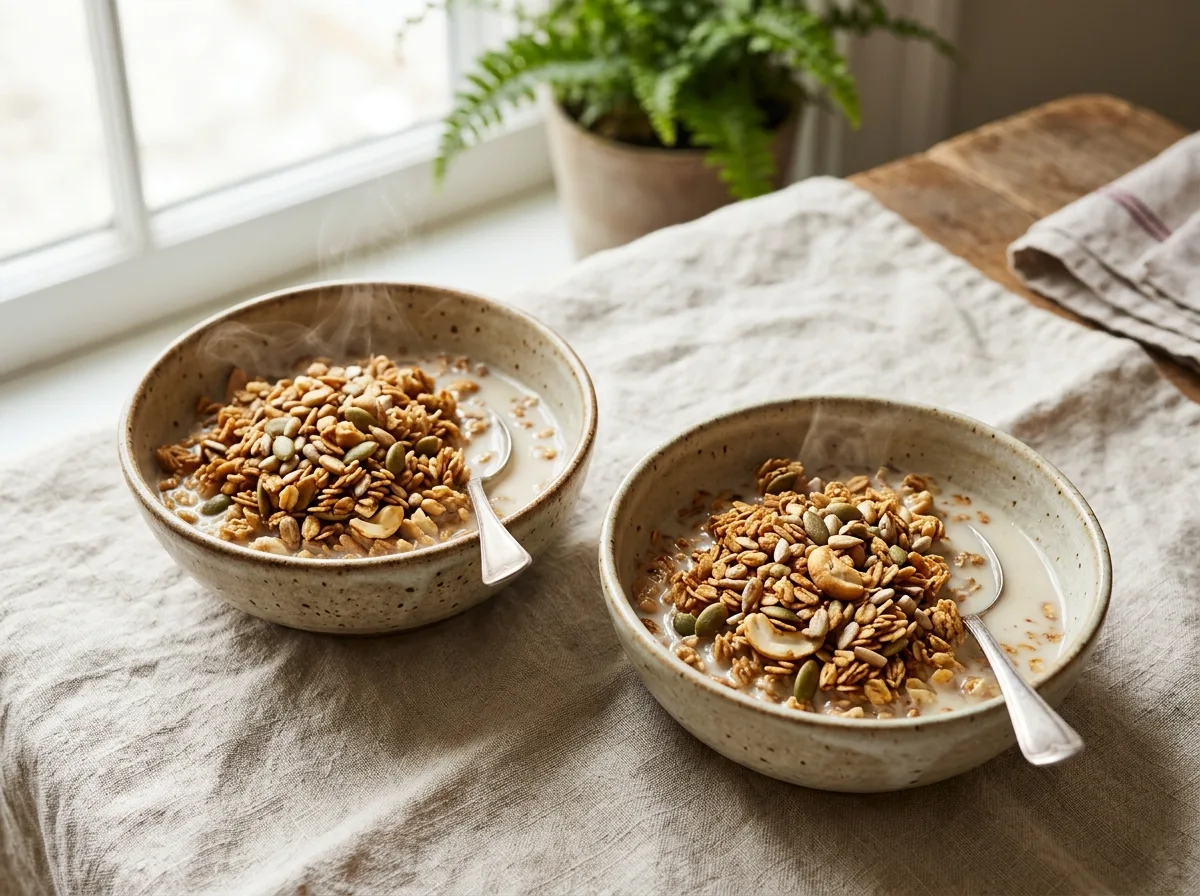
Nut and Seed Granola Bowls with Warm Oat Milk
Rate this recipe
~$2.80 CAD per serving (estimate)
Ingredients
- 80 grolled oats
- 30 graw pumpkin seeds
- 30 graw sunflower seeds
- 40 graw cashews (roughly chopped)
- 1 tbspmaple syrup
- 1 tbspolive oil
- 1 pinchfine sea salt
- ¼ tspground cinnamon
- 400 mloat milk (from the Costco carton pack, warmed to about 65 °C)
Nutrition / serving
- Calories420 kcal
- Protein12 g
- Carbs46 g
- Fat21 g
- Fiber5 g
Cost Estimate
~$2.80 CAD per serving (estimate)
Eight minutes in a dry skillet transforms raw oats, pumpkin seeds, sunflower seeds, and cashews into something that smells like a Scandinavian bakery. A drizzle of maple syrup goes in at the end so it caramelizes rather than burns. Pour warm oat milk over the top and breakfast is done — no oven, no baking sheet, no waiting.
Instructions
Heat the skillet
Set a large heavy skillet — cast iron or stainless — over medium heat for 90 seconds. No oil yet; you want the pan dry and hot so the oats toast rather than steam.
Toast oats and seeds
Add the rolled oats, pumpkin seeds, sunflower seeds, and cashews in a single layer. Stir constantly with a wooden spoon for 4–5 minutes until the oats turn pale gold and the seeds begin to pop. The kitchen should smell nutty, not raw.
Add oil, syrup, and spices
Drizzle in the olive oil and maple syrup, then add the salt and cinnamon. Stir vigorously for 90 seconds — the syrup will bubble, coat every piece, and darken to a light amber. Pull the pan off the heat the moment it smells like caramel; residual heat carries it the rest of the way.
Warm the oat milk
In a small saucepan, warm the oat milk over low heat to about 65 °C — hot enough to steam gently but not boil. Boiling breaks the emulsion and makes oat milk thin and watery.
Assemble and serve
Divide the granola between two bowls. Pour 200 ml of warm oat milk over each portion and serve immediately so the oats stay slightly crisp at the edges.
Chef's Cool Facts
Why dry-toast first, then add fat
Toasting oats in a dry pan drives off surface moisture quickly, which lets the Maillard reaction start at a lower overall temperature. Adding oil after the initial toast means the fat carries flavour compounds rather than blocking them — you get a deeper, nuttier result than if you tossed everything in oil from the start.
Maple syrup as a finishing glaze
Maple syrup is roughly 66% sugar by weight, mostly sucrose with a small fraction of glucose and fructose. Added at the end of toasting, the water flashes off in seconds and the sugars hit the pan at caramelization temperature (around 160 °C), forming the thin, glossy coat that holds the granola together without making it sticky.
Oat milk and heat
Commercial oat milk is stabilized with a small amount of rapeseed oil and sometimes a gum. Heating it past 80 °C breaks that emulsion, separating the liquid into a thin, starchy phase and an oily film. Keeping it at 60–65 °C preserves the creamy texture that makes it work as a warm cereal milk.
Seeds in Scandinavian cooking
Pumpkin and sunflower seeds became staples of Scandinavian baking and porridge culture in the mid-20th century, when Nordic health movements pushed whole grains and plant fats. Today they appear in everything from Danish rugbrød to Norwegian müsli, valued as much for their fat profile as for the crunch they add to otherwise soft, grain-heavy dishes.