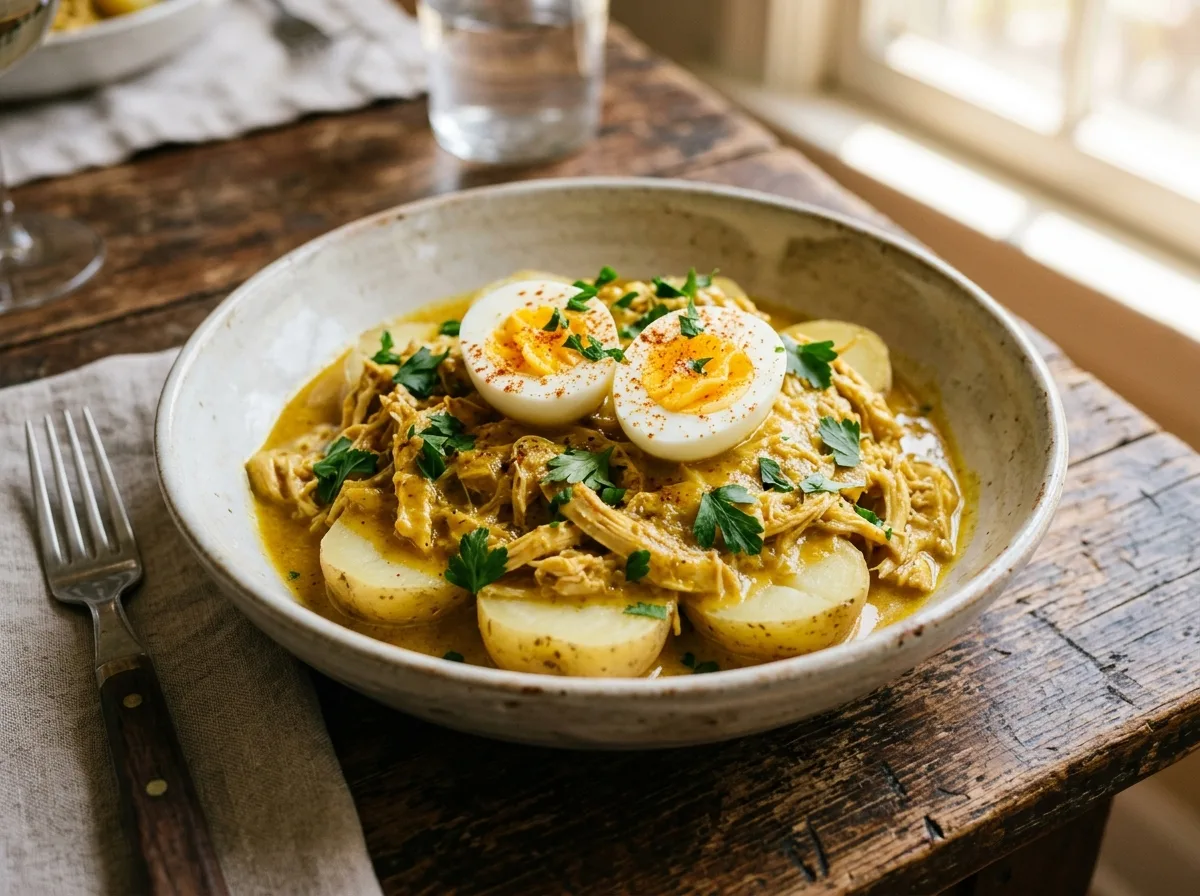
Peruvian Aji Amarillo Chicken Stew Built for the Freezer
Rate this recipe
~$4.75 CAD per serving (estimate)
Ingredients
- 1.4 kgchicken breast (about 6–7 thighs)
- 1 litrelow-sodium chicken stock
- 1 mediumyellow onion, halved (for poaching)
- 3 clovesgarlic, smashed (for poaching)
- 1 tspblack peppercorns
- 2 slicesday-old white sandwich bread, crusts removed (about 60 g total)
- 120 mlwhole milk
- 3 tbspneutral oil (such as sunflower or canola)
- 1 largeyellow onion, finely diced (for the sauce)
- 4 clovesgarlic, minced (for the sauce)
- 1 tspground cumin
- 1 tspground turmeric (for colour; traditional recipes use aji amarillo's natural pigment)
- 120 gaji amarillo paste (about 5–6 tbsp; adjust to heat preference)
- 80 graw walnuts (finely ground in a food processor or blender)
- 200 mlevaporated milk
- 1 tspfine sea salt, plus more to taste
- 0.5 tspfreshly ground black pepper
- 4 mediumyellow-fleshed potatoes (such as Yukon Gold, boiled and halved, to serve)
- 4 largeeggs, hard-boiled and halved, to serve
- 10 gflat-leaf parsley or Peruvian black olives, to garnish
Nutrition / serving
- Calories520 kcal
- Protein38 g
- Carbs28 g
- Fat28 g
- Fiber3 g
Cost Estimate
~$4.75 CAD per serving (estimate)
Aji amarillo paste — made from Peru's bright orange-yellow chiles — is the backbone of aji de gallina, a stew that's simultaneously creamy, nutty, and gently spiced. In Canada, you'll find it jarred at Latin American grocery stores, many T&T Supermarkets, and online at retailers like Amazon.ca or Peruvian specialty shops; a 212 ml jar runs about $6–8 CAD and keeps refrigerated for months. This batch-cook version poaches bone-in, skin-on chicken thighs rather than breast — thighs stay moist through freezing and reheating in a way breast meat rarely does. Make it once on a Sunday and you have four portions for the week and four more waiting in the freezer.
Instructions
Poach the chicken
Place the chicken thighs in a large pot with the stock, halved onion, smashed garlic, and peppercorns. Add enough cold water to just cover (about 500 ml). Bring to a gentle simmer over medium heat, then reduce to low and cook uncovered for 30 minutes, until the thighs are cooked through and register 74 °C at the thickest point. Skim any foam in the first 10 minutes.
Rest, shred, and strain
Transfer the thighs to a cutting board and let them cool for 10 minutes. Pull the meat from the bones, discard the skin and bones, and shred the chicken into generous strips. Strain the poaching liquid through a fine sieve and reserve 400 ml for the sauce; refrigerate or freeze the rest for another use.
Soak the bread
Tear the crustless bread into rough pieces and soak them in the milk for 5 minutes, then mash to a smooth paste with a fork. This paste is one of two traditional thickeners that give aji de gallina its characteristic body.
Build the sauce base
Warm the oil in a wide, heavy pot or Dutch oven over medium heat. Add the diced onion and cook, stirring occasionally, for 8–10 minutes until soft and translucent. Add the minced garlic, cumin, and turmeric and cook for 1 minute, until fragrant.
Add paste and thickeners
Stir in the aji amarillo paste and cook for 2 minutes, letting it fry briefly in the oil to deepen its flavour. Add the soaked bread paste and ground walnuts, stirring until fully incorporated.
Simmer the sauce
Pour in the reserved 400 ml poaching liquid and the evaporated milk. Stir well and bring to a gentle simmer over medium-low heat. Cook for 10 minutes, stirring often, until the sauce is thick enough to coat the back of a spoon. Season with salt and pepper.
Combine and portion
Fold the shredded chicken into the sauce and heat through for 3–4 minutes. Taste and adjust salt. For the portions you're freezing, ladle into containers or zip-lock bags while still warm, cool completely on the counter (no more than 30 minutes), then refrigerate overnight before freezing flat.
Serve the fresh portions
Spoon the stew over or alongside the boiled potato halves. Arrange the hard-boiled egg halves on top and scatter with parsley or black olives. The stew should be creamy and cling to the potatoes — if it looks too thick, loosen with a splash of hot water or stock.
Freeze & Reheat
Freezing: Cool the stew completely before portioning into 2-serving containers or flat zip-lock freezer bags (lay bags flat on a baking sheet to freeze — they stack neatly once solid). Freeze for up to 3 months. The potatoes and eggs are best cooked fresh when you reheat; freeze the stew alone.
Stovetop reheat: Transfer a frozen portion to the fridge the night before. Reheat in a small saucepan over medium-low heat with 2–3 tbsp of water or stock, stirring gently, for 8–10 minutes until steaming and loose. Do not boil — the evaporated milk can break at a hard boil.
Microwave reheat: From frozen, microwave in a covered microwave-safe bowl at 50% power for 4 minutes, break up any frozen chunks, then microwave at full power for 2–3 minutes, stirring once halfway through. Rest for 1 minute before serving.
Chef's Cool Facts
Bread as a sauce thickener
Using soaked, mashed bread to thicken sauces is a technique that dates to medieval European cooking — it arrived in Peru via Spanish colonizers in the 16th century. In aji de gallina, the bread absorbs the chile-infused liquid and swells into the sauce, giving it a smooth, almost velvety texture without any starch or flour.
Walnuts and the Moorish connection
Ground walnuts are the second thickener in aji de gallina, and their presence traces back to Moorish-influenced Spanish cuisine, where nut-thickened sauces called 'picadas' were common. Walnuts also add fat and a mild bitterness that balances the sweetness of aji amarillo paste.
Aji amarillo's heat level
Aji amarillo chiles sit at roughly 30,000–50,000 Scoville units — hotter than a jalapeño but cooler than a serrano. The jarred paste is milder than fresh chiles because the seeds and membranes (where most capsaicin concentrates) are removed during processing, so the paste delivers fruity, tropical flavour with a moderate, building heat.
Why chicken thighs freeze better than breast
Chicken thighs have roughly twice the fat content of breast meat (about 9 g per 100 g versus 4 g). That fat acts as a buffer during the freeze-thaw cycle, keeping the muscle fibres from drying out. Breast meat, lower in fat and with tighter, longer muscle fibres, tends to turn stringy and dry after freezing in a sauce.