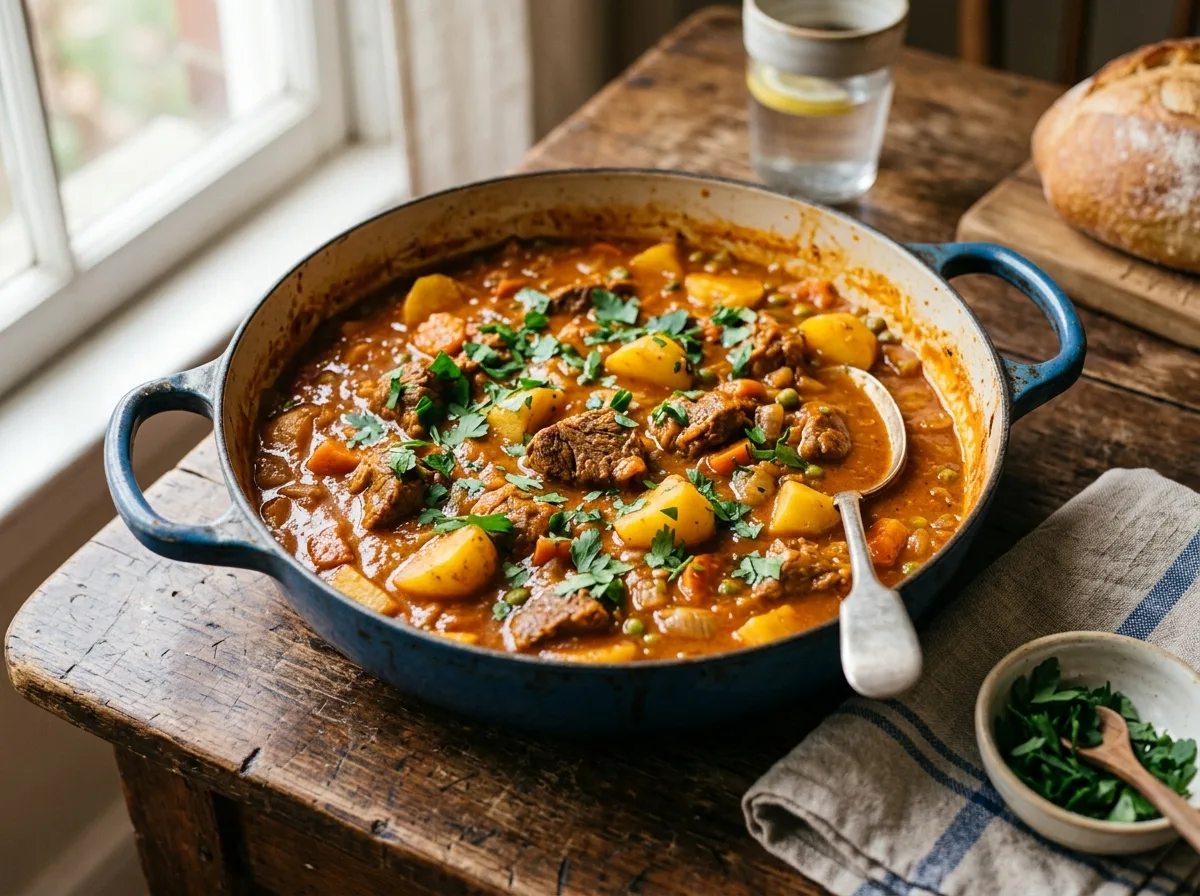
Peruvian Veal Stew with Potatoes and Aji Amarillo
Rate this recipe
~$5.80 CAD per serving (estimate)
Ingredients
- 1.2 kgveal shoulder, cut into 5 cm pieces
- 3 tbspolive oil
- 1 largeyellow onion, finely diced
- 6 clovesgarlic, minced
- 4 tbspaji amarillo paste (find it in the Latin foods aisle or a Latin grocery)
- 1.5 tspground cumin
- 1 tspsmoked paprika
- 0.5 tspfine sea salt, plus more to taste
- 0.5 tspblack pepper
- 2 tbsptomato paste
- 250 mldry white wine
- 600 mllow-sodium chicken or veal stock
- 800 gyellow-fleshed potatoes (Yukon Gold), peeled and cut into 4 cm chunks
- 2 tbspflat-leaf parsley, roughly chopped (for finishing)
Nutrition / serving
- Calories420 kcal
- Protein38 g
- Carbs28 g
- Fat14 g
- Fiber3 g
Cost Estimate
~$5.80 CAD per serving (estimate)
This is a braise built around aji amarillo — the bright, fruity Peruvian chili that turns the sauce a deep orange and gives it a warmth that sits at the back of the throat rather than on the tip of the tongue. Veal shoulder is the right cut here: it has enough collagen to keep the sauce silky through a long simmer, and it doesn't dry out the way leaner cuts do. The potatoes go in late so they hold their shape, and the whole pot reheats from frozen better than you'd expect.
Instructions
Season and sear the veal
Pat the veal pieces dry with paper towel and season all over with salt and pepper. Heat 2 tbsp olive oil in a large heavy pot or Dutch oven over medium-high heat until shimmering. Sear the veal in two batches, 3–4 minutes per side, until deep golden brown on at least two faces — do not crowd the pot or the meat steams instead of browns. Transfer to a plate.
Soften the aromatics
Reduce heat to medium and add the remaining 1 tbsp olive oil. Add the onion and cook, stirring occasionally, for 6–7 minutes until soft and translucent. Add the garlic and cook 1 minute more until fragrant.
Build the sauce base
Add the aji amarillo paste, tomato paste, cumin, and smoked paprika. Stir everything together and cook for 2 minutes, pressing the paste into the oil — the mixture will turn a vivid orange and smell toasty. This step deepens the flavor of the chili considerably.
Pressure cook the veal
Pour in the white wine and scrape up any browned bits, letting it bubble 2 minutes, then add the stock and return the seared veal with its resting juices. Lock the lid and cook 20 min at high pressure, then let the pressure fall naturally for 10 min. Stovetop alternative: cover with the lid slightly ajar and braise on low for 55 minutes.
Add the potatoes
Stir the potato chunks gently into the sauce until submerged. Lock the lid again and cook 5 min at high pressure, then quick release. Stovetop alternative: cover and cook a further 20–25 minutes until the potatoes are completely tender.
Adjust and finish
Taste the stew and adjust salt. If the sauce looks thin, remove the lid and simmer uncovered for 5 minutes. Scatter the chopped parsley over the top just before serving.
Freeze & Reheat
Freezing: Cool the stew completely, then portion into airtight containers. Freeze for up to 3 months. The veal collagen keeps the sauce from separating, and the Yukon Gold potatoes hold their texture better than waxy or russet varieties after freezing.
Reheating: Thaw overnight in the fridge. Reheat in a covered pot over medium-low heat, adding a splash of stock or water if the sauce has thickened too much. Stir gently every few minutes — about 12–15 minutes from cold to steaming.
Pressure cooker method
Total, start to finish
About 1 hr 10 min, of which roughly 35 min is active. One pot from sear to serve.
Sear and build the sauce
On Sauté (high), sear the seasoned veal in two batches and lift it out. Soften the onion 6–7 min, add the garlic 1 min, then the aji amarillo paste, tomato paste, cumin and smoked paprika for 2 min until vivid orange and toasty.
Pressure cook the veal
Deglaze with the white wine for 2 min, add the stock, scrape the base clean, and return the veal. Cook 20 min at high pressure, then let the pressure fall naturally for 10 min.
Potatoes and finish
Add the potatoes, cook 5 min at high pressure and quick release. Taste, reduce on Sauté briefly if the sauce is thin, and scatter the parsley.
Chef's Cool Facts
Why aji amarillo turns orange, not red
Aji amarillo gets its color from beta-carotene and capsanthin pigments rather than the lycopene that makes red chilies red. The fat in the olive oil pulls those pigments out of the paste during the toasting step, which is why the sauce turns such a deep, even orange.
Veal shoulder collagen and sauce texture
Veal shoulder has a high concentration of type-I and type-III collagen. During the braise, that collagen converts to gelatin, which gives the sauce body and a slightly lip-coating texture. It also acts as a stabilizer when the stew is frozen and reheated, preventing the sauce from breaking into a watery pool the way a lean-meat stew often does.
Aji amarillo's heat level
On the Scoville scale, aji amarillo sits between 30,000 and 50,000 SHU — roughly the same as a cayenne pepper. But its fruity, slightly tropical flavor means the heat reads as milder than a cayenne at the same concentration, which is why the finished stew feels warm rather than sharp.