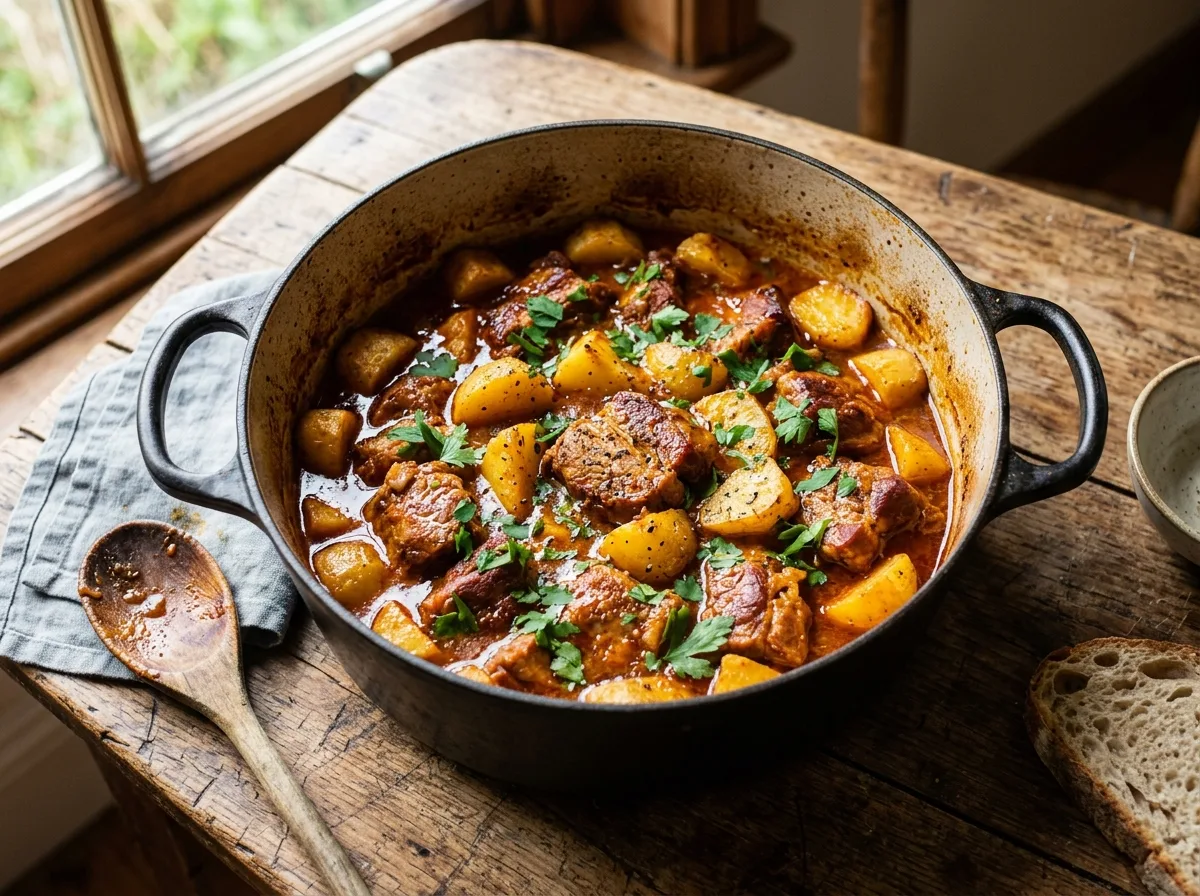
Portuguese Pork with Paprika and Potatoes
Rate this recipe
~$33.00 CAD total · ~$5.50 CAD per serving (estimate)
Ingredients
- 1.4 kgboneless pork shoulder, cut into 4 cm chunks
- 6 clovesgarlic, minced
- 2 tspsmoked paprika
- 1 tspsweet paprika
- 1 tspfine sea salt
- 1/2 tspfreshly ground black pepper
- 250 mldry white wine
- 3 tbspolive oil, divided
- 2 mediumyellow onions, diced
- 2 tbsptomato paste
- 300 mllow-sodium chicken stock
- 1 tspdried oregano
- 2 bay leavesbay leaves
- 900 gwaxy potatoes (e.g. Yukon Gold), cut into 3 cm chunks
- 1 small bunchflat-leaf parsley, roughly chopped
Nutrition / serving
- Calories510 kcal
- Protein38 g
- Carbs32 g
- Fat22 g
- Fiber4 g
- Sodiummoderate — from the stock and sea salt; use unsalted stock to keep it lower
Cost Estimate
~$33.00 CAD total · ~$5.50 CAD per serving (estimate)
This is Carne de Porco à Alentejana stripped of its clams and made honest for a weeknight batch cook. Pork shoulder marinates overnight in smoked paprika, garlic, and white wine, then braises low and slow until the liquid collapses into a rust-coloured sauce that clings to every chunk. Waxy potatoes go in partway through, soaking up the fat and the wine without turning to mush. It reheats better the next day than it tastes fresh.
Instructions
Marinate the pork
Combine the pork chunks, garlic, smoked paprika, sweet paprika, salt, pepper, and white wine in a large bowl or zip-lock bag. Toss well, cover, and refrigerate for at least 4 hours — overnight is better. The wine will begin to denature the surface proteins, which means a better sear later.
Sear in batches
Lift the pork from the marinade and pat each piece dry with paper towel; reserve the marinade. Heat 2 tbsp of the olive oil in a wide, heavy-bottomed pot or Dutch oven over medium-high heat until the oil shimmers. Sear the pork in two or three batches, turning once, until deeply browned on at least two sides — about 3 minutes per side. Transfer to a plate.
Soften the onions
Reduce the heat to medium and add the remaining 1 tbsp olive oil. Add the diced onions and cook, stirring occasionally, for 7–8 minutes until soft and translucent. Scrape up any browned bits from the bottom of the pot as the onions release moisture.
Build the sauce base
Push the onions to the sides and add the tomato paste to the centre of the pot. Cook the paste, stirring it against the hot surface, for 90 seconds until it darkens slightly and smells sweet rather than raw. Pour in the reserved marinade and the chicken stock, then add the oregano and bay leaves. Stir everything together and bring to a gentle simmer.
Pressure cook the pork
Return the seared pork and any resting juices to the pot; the liquid should come about halfway up the meat. Lock the lid and cook 35 min at high pressure, then let the pressure fall naturally for 10 min. Stovetop alternative: cover tightly and braise on low for 60 minutes.
Add the potatoes
Nestle the potato chunks into the braising liquid around the pork so they sit partly submerged. Lock the lid again and cook 5 min at high pressure, then quick release. Stovetop alternative: replace the lid and braise another 30–35 minutes until a knife slides into a potato with no resistance.
Reduce the sauce
Remove the lid and increase the heat to medium. Simmer uncovered for 10–12 minutes, stirring gently once or twice, until the sauce reduces and turns glossy and rust-coloured. It should coat the back of a spoon. Discard the bay leaves.
Finish and serve
Taste and adjust salt. Scatter the chopped parsley over the top and serve directly from the pot. For the two portions destined for the freezer, cool completely before transferring to airtight containers.
Freeze & Reheat
Freezing: Cool completely, then portion into airtight containers. Freeze for up to 3 months. The potatoes hold their texture better than expected because waxy varieties have less starch to break down during freezing.
Reheating: Thaw overnight in the refrigerator. Reheat gently in a covered saucepan over medium-low heat, adding 2–3 tbsp of water or stock to loosen the sauce. Stir occasionally and heat until the pork reaches 74 °C at the centre, about 12–15 minutes. Finish with a fresh pinch of parsley.
Pressure cooker method
Total, start to finish
About 1 hr 30 min once the pork is marinated, of which roughly 35 min is active. The marinade still wants 4 hours in the fridge, or overnight, and that time is entirely unattended.
Sear and soften
Lift the pork from the marinade and pat it dry, keeping the marinade. On Sauté (high), sear in two or three batches until browned on at least two sides and set aside. Soften the onions 7–8 min in the remaining oil, then cook the tomato paste in the centre of the pot for 90 seconds.
Pressure cook
Pour in the reserved marinade and the stock, add the oregano and bay, and scrape the base clean. Return the pork and cook 35 min at high pressure, then let the pressure fall naturally for 10 min.
Potatoes and reduce
Add the potatoes, cook 5 min at high pressure and quick release. Discard the bay, then reduce on Sauté about 10 min until the sauce is glossy and rust-coloured and coats the back of a spoon. Scatter the parsley.
Chef's Cool Facts
Why smoked paprika turns rust, not red
The Maillard reaction between the paprika's sugars and the pork's proteins during searing produces hundreds of new flavour compounds and deepens the colour from bright red to a brick-orange. The fat in the shoulder carries those pigments into the sauce as it renders, which is why the final liquid looks so saturated.
What the wine actually does overnight
The alcohol in the white wine doesn't tenderise meat — that's a persistent myth. What it does is dissolve fat-soluble flavour compounds from the garlic and paprika and carry them into the surface of the pork, so the marinade flavour penetrates a few millimetres deeper than it would with a water-based liquid alone.
Waxy vs. floury potatoes in a braise
Waxy potatoes (Yukon Gold, fingerling, red-skinned) hold their shape in liquid because they have more pectin and less free starch. Floury varieties like Russets would absorb the braising liquid and disintegrate, thickening the sauce but losing all their texture — fine for a stew, wrong for this dish.
Alentejo, the dish's home region
The Alentejo is Portugal's largest region by area and its driest, historically poor in fish but rich in pigs raised on acorns. The original dish, Carne de Porco à Alentejana, pairs pork with clams in what sounds like an odd combination but reflects the region's proximity to the coast. This version keeps the spice profile and drops the shellfish entirely without losing the dish's character.