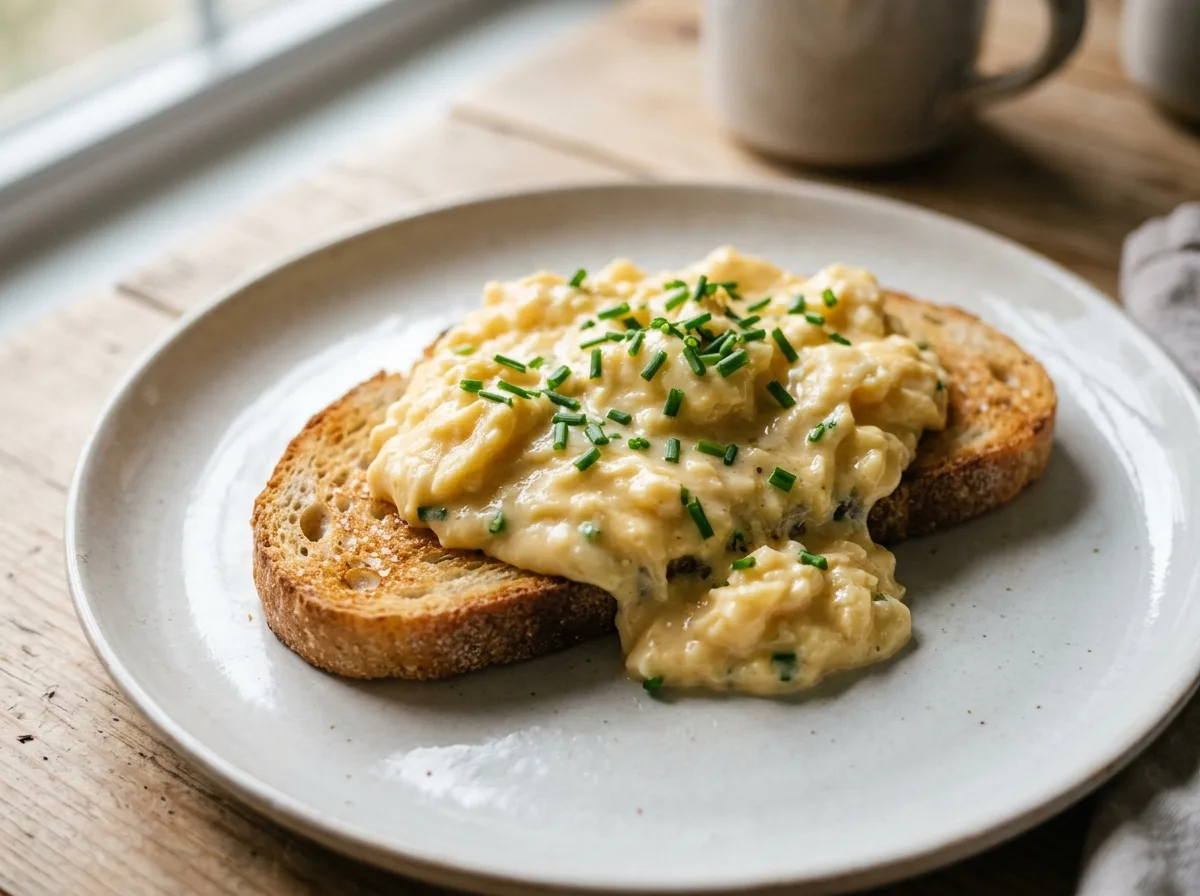
Soft Scrambled Eggs with Oat Milk and Chives
Rate this recipe
~$2.10 CAD per serving (estimate)
Ingredients
- 4 largeeggs
- 60 mloat milk (unsweetened, plain)
- 1 tspghee
- 1 pinchfine salt
- 1 pinchwhite pepper (or black pepper)
- 2 tbspfresh chives, snipped
- 2 slicesbread, toasted (sourdough or sandwich bread)
Nutrition / serving
- Calories280 kcal
- Protein16 g
- Carbs22 g
- Fat12 g
- Fiber1 g
Cost Estimate
~$2.10 CAD per serving (estimate)
Two eggs per person, scrambled over the lowest heat your stove can manage — that's the whole recipe. The oat milk adds just enough moisture to keep the curds silky without any dairy, and five patient minutes at the pan is the difference between creamy and rubbery. Snipped chives and a piece of toast round it out into a breakfast that kids eat without negotiation.
Instructions
Beat the eggs
Crack the eggs into a bowl, add the oat milk, salt, and pepper. Beat with a fork until the yolks and whites are fully combined and the mixture looks uniform — about 30 seconds. No need for a whisk.
Start cold in the pan
Place a small non-stick skillet over the lowest heat your stove allows. Add the ghee and let it melt slowly. Pour in the egg mixture before the pan gets hot — starting cold gives you more control over the final texture.
Scramble slowly
Using a silicone spatula, push the eggs gently from the edges toward the centre in long, slow strokes. Every 20–30 seconds is enough. The eggs will take 4–5 minutes to set; they're done when they form soft, glossy, barely-set curds that still look slightly underdone — residual heat will finish them.
Finish and serve
Pull the pan off the heat while the eggs still look a touch wet. Fold in the snipped chives, then spoon immediately onto the toast and serve.
Chef's Cool Facts
Why low heat matters
Egg proteins begin to coagulate around 70 °C and turn tough above 80 °C. Keeping the pan below that upper threshold — which low heat and constant motion help achieve — means the proteins set loosely, trapping moisture rather than squeezing it out.
What oat milk actually does here
Oat milk is mostly water with a small amount of oat starch. That starch gelatinizes gently during cooking and helps the egg curds hold onto liquid, which is why the result stays creamy even without butter or cream.
The cold-pan trick
Starting eggs in a cold pan rather than a hot one extends the window before proteins seize. You get a longer, more forgiving cook — useful when you're also making toast and pouring coffee at the same time.