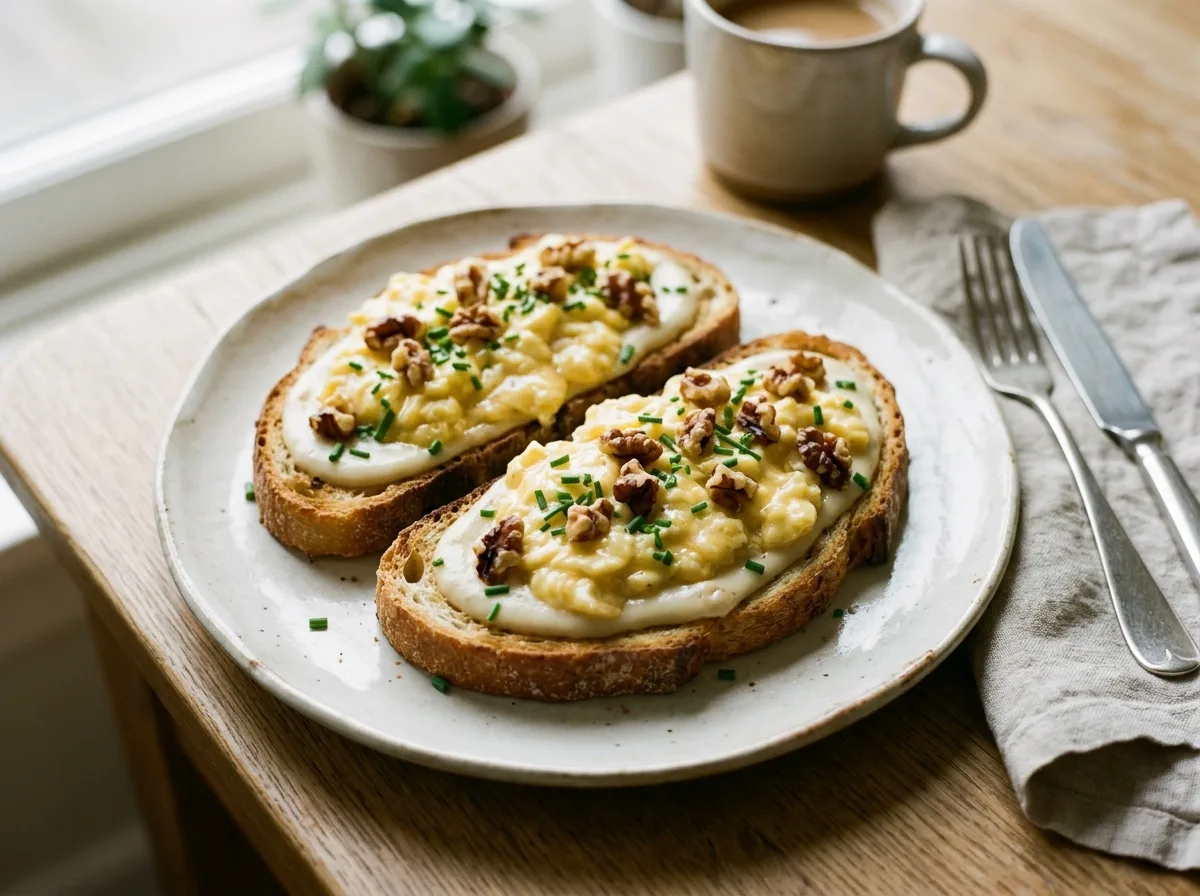
Soft Scrambled Eggs with Toasted Walnuts and Oat Milk Béchamel Toast
Rate this recipe
~$3.20 CAD per serving (estimate)
Ingredients
- 30 gwalnut halves
- 1 tbspghee (divided)
- 1 tbspall-purpose flour
- 150 mloat milk (unsweetened, from the Costco carton pack)
- 1 pinchground nutmeg
- 2 thick slicessourdough or country bread (about 2 cm thick)
- 4 wholelarge eggs
- 1 tbspoat milk (for the eggs)
- 1 pinchfine sea salt
- 1 pinchwhite pepper
- 2 gfresh chives (finely snipped, optional)
Nutrition / serving
- Calories420 kcal
- Protein19 g
- Carbs28 g
- Fat26 g
- Fiber2 g
Cost Estimate
~$3.20 CAD per serving (estimate)
Low-and-slow scrambled eggs are one of those techniques that sounds fussy until you do it once and realize it just means stirring over gentle heat for three extra minutes. The payoff is eggs that are barely set, almost custardy, with no rubbery edges. They land on thick toast spread with a quick oat-milk béchamel — a white sauce that takes less time than waiting for the toaster — and a handful of toasted walnuts finishes everything with crunch and a faint bitterness that cuts the richness.
Instructions
Toast the walnuts
Set a small dry skillet over medium heat. Add the walnut halves and toast, shaking the pan every 30 seconds, until they smell nutty and the edges deepen slightly, about 3 minutes. Tip them onto a cutting board and roughly chop. Set aside.
Make the béchamel
In a small saucepan over medium heat, melt half the ghee (about 1½ tsp). Whisk in the flour and cook for 30 seconds — it should look like a pale paste and smell faintly biscuity. Pour in the 150 ml oat milk in one go and whisk constantly until the sauce thickens and coats the back of a spoon, about 2 minutes. Season with the nutmeg and a pinch of salt. Remove from heat and cover to keep warm.
Toast the bread
Toast the bread slices until golden and sturdy enough to hold the sauce without going soggy. While the bread toasts, beat the eggs with the 1 tbsp oat milk, a pinch of salt, and white pepper until the yolks and whites are fully combined.
Scramble the eggs low and slow
Melt the remaining ghee in a small nonstick pan over the lowest heat your stove allows. Pour in the egg mixture and stir continuously with a silicone spatula, moving it in slow figure-eights and pulling the curds from the edges toward the centre. After about 3–4 minutes the eggs will be just barely set — glossy, soft, and slightly underdone-looking. Pull the pan off the heat immediately; residual heat will finish them.
Assemble and serve
Spread the warm béchamel generously over each toast slice. Spoon the soft scrambled eggs on top, scatter the toasted walnuts, and finish with snipped chives if using. Serve at once.
Chef's Cool Facts
Why low heat makes better eggs
Egg proteins begin to set around 70 °C. High heat drives the temperature well past that in seconds, squeezing moisture out of the proteins and producing that rubbery, weeping texture. Keeping the pan below 80 °C lets the proteins bond gently, trapping moisture inside the curds instead of expelling it.
Oat milk in a roux
Traditional béchamel uses whole milk, whose fat and casein proteins help the sauce stay smooth. Oat milk has almost no protein but its starch content — from the oats themselves — actually reinforces the gelatinization of the flour, giving a sauce that thickens cleanly and holds its texture without breaking.
Walnuts and bitterness as a foil
Walnuts contain ellagitannins, the same class of polyphenols responsible for their slight astringency. That bitterness is not a flaw — it contrasts the fat of the eggs and the mild sweetness of the oat-milk sauce, making the whole dish taste less heavy than it would without them.