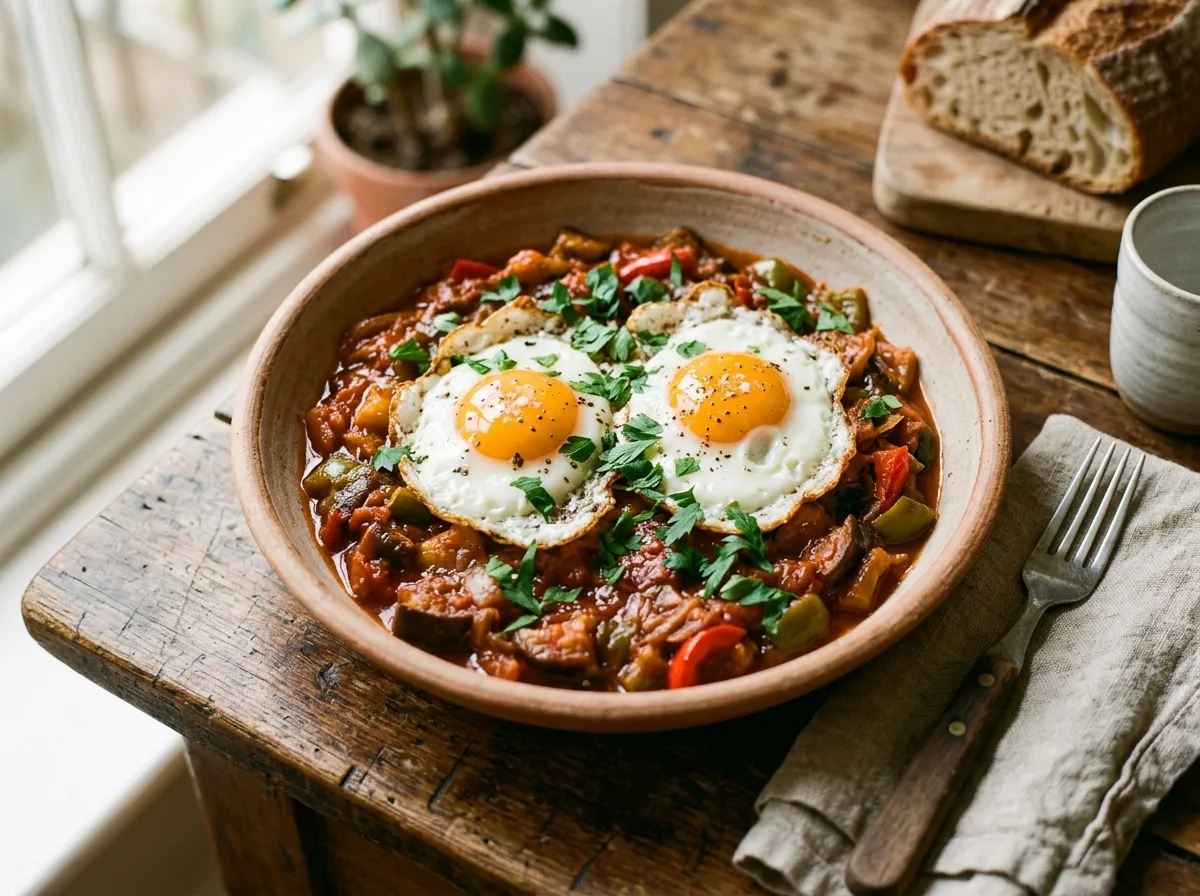
Spanish Pisto with a Fried Egg
Rate this recipe
~$15.20 CAD total · ~$3.80 CAD per serving (estimate)
Ingredients
- 80 mlolive oil
- 1 largewhite onion, diced 1 cm
- 1 largered bell pepper, diced 1 cm
- 1 mediumgreen bell pepper, diced 1 cm
- 3 clovesgarlic, thinly sliced
- 1 mediumaubergine (about 350 g), diced 2 cm
- 2 mediumcourgettes (about 400 g total), diced 1.5 cm
- 600 gripe tomatoes, roughly chopped (or 1 × 400 g can whole peeled tomatoes, crushed by hand)
- 1 tspsweet smoked paprika (pimentón dulce)
- ½ tspfine sea salt, plus more to taste
- ½ tspfreshly ground black pepper
- 1 tspsugar (optional, to balance acidic tomatoes)
- 8 largeeggs
- 1 tbspolive oil, for frying the eggs
- 1 small handfulflat-leaf parsley, roughly chopped
Nutrition / serving
- Calories380 kcal
- Protein18 g
- Carbs18 g
- Fat26 g
- Fiber6 g
- Sodiumlow to moderate — from the salt added during cooking only
Cost Estimate
~$15.20 CAD total · ~$3.80 CAD per serving (estimate)
Pisto is Spain's answer to ratatouille — and the long, unhurried cook in olive oil is what separates it from a vegetable stir-fry. The aubergine softens into silk, the peppers sweeten, and the tomatoes collapse into a glossy, brick-red sauce that binds everything together. Two fried eggs per person go on top at the last minute, yolks still runny, so they break into the vegetables as you eat. Low-carb by nature, deeply satisfying without it.
Instructions
Sweat the onion and peppers
Warm 80 ml olive oil in a wide, heavy-based pan or deep skillet over medium-low heat. Add the onion and both peppers with a pinch of salt and cook, stirring occasionally, for 12–15 minutes until fully softened and beginning to turn golden at the edges. Do not rush this step — it builds the sweet base the whole dish depends on.
Add the garlic and paprika
Stir in the sliced garlic and smoked paprika and cook for 1 minute until fragrant. The oil should turn a deep orange-red.
Cook the aubergine
Add the aubergine and stir to coat in the oil. Cook over medium heat for 8–10 minutes, stirring every couple of minutes, until the cubes are golden on the outside and starting to collapse. Aubergine absorbs oil quickly at first — resist adding more; it will release it again as it cooks.
Add the courgette
Stir in the courgette and cook for a further 5 minutes until just beginning to soften but not yet collapsing.
Add the tomatoes and simmer
Pour in the tomatoes, crushing any large pieces. Season with salt, pepper, and the sugar if your tomatoes are sharp. Stir everything together, reduce the heat to low, and simmer uncovered for 15–20 minutes, stirring occasionally, until the sauce has thickened and the vegetables are completely tender and jammy. Taste and adjust seasoning.
Fry the eggs
When the pisto is nearly ready, heat 1 tbsp olive oil in a non-stick frying pan over medium heat. Crack in the eggs two at a time and fry until the whites are just set and the yolks are still runny, about 2–3 minutes. Season lightly with salt.
Serve immediately
Divide the pisto among four wide bowls or plates. Lay two fried eggs on top of each portion, scatter with parsley, and serve at once so the yolks stay runny.
Freeze & Reheat
Freezing the pisto base: Cool completely, then portion into airtight containers or zip-lock bags. Freeze for up to 3 months. Thaw overnight in the fridge.
Reheating: Warm gently in a pan over medium-low heat, adding a splash of water if it has thickened too much. Fry fresh eggs to order and place on top — eggs do not freeze or reheat well, so always cook them fresh.
Chef's Cool Facts
Pisto predates ratatouille
Pisto manchego from La Mancha is documented in Spanish cookbooks from the 17th century, making it older than the Provençal ratatouille it is so often compared to. Both dishes share the same slow-cook logic but arrived there independently.
Why aubergine absorbs then releases oil
Raw aubergine cells contain air pockets that act like sponges, pulling in fat on contact. Heat collapses those cells and the oil is pushed back out into the pan — which is why adding extra oil early just makes the finished dish greasy rather than richer.
Smoked paprika is a Spanish original
Pimentón de la Vera, the smoked paprika used here, is made from peppers dried over oak-wood fires in Extremadura. The EU granted it Protected Designation of Origin status in 1999. A small amount added early in the cook, bloomed in oil, gives the pisto its characteristic brick-red colour and faint smokiness.
Runny yolks as a built-in sauce
The yolk of a large egg is about 30% fat and 16% protein. When it breaks over the hot pisto, it emulsifies with the olive oil already in the vegetables, creating a brief, silky coating that ties the whole dish together — a technique Spanish cooks have used for centuries without needing a name for it.