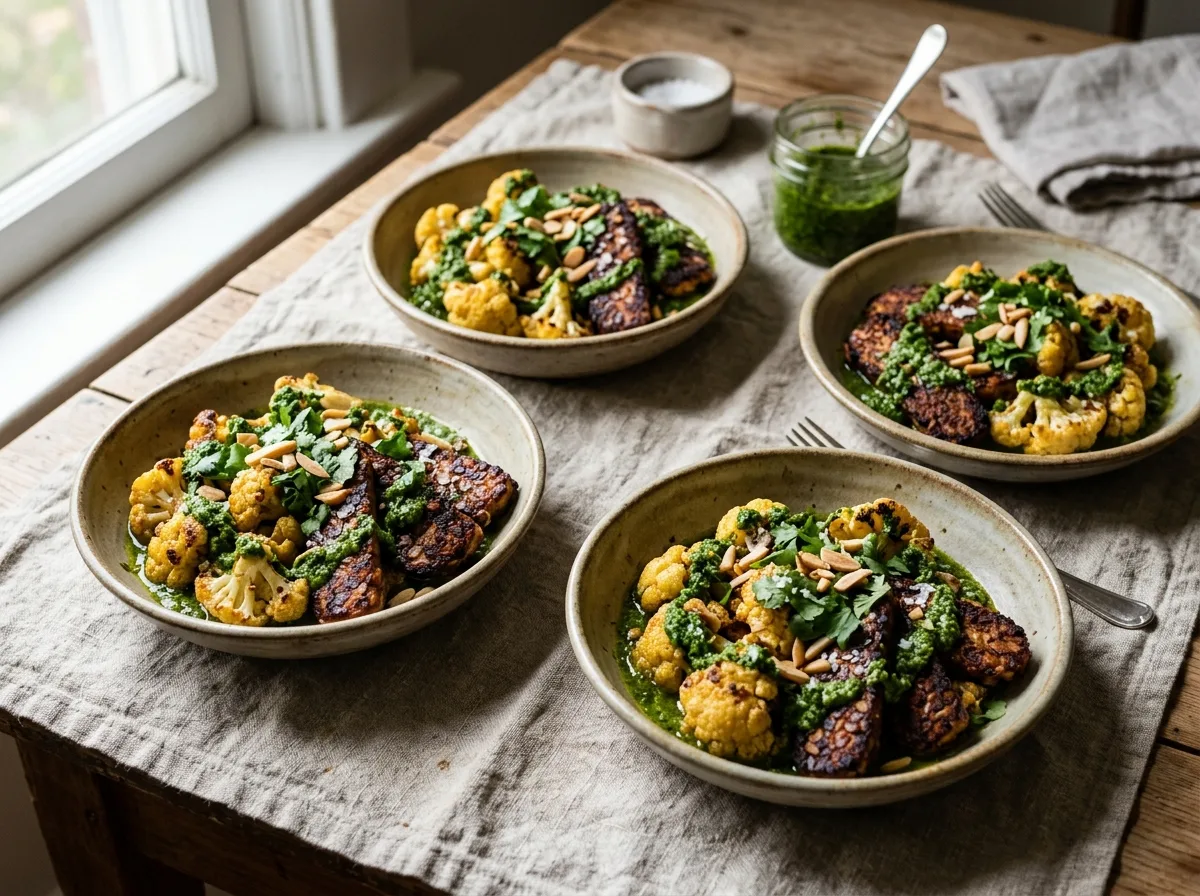
Spiced Cauliflower and Tempeh Bowl with Zhug
Rate this recipe
~$4.80 CAD per serving (estimate)
Ingredients
- 1 large headcauliflower, cut into medium florets (about 700 g)
- 3 tbspolive oil, divided
- 1 tspsmoked paprika
- 0.5 tspground cumin
- 0.75 tspfine sea salt, divided
- 400 gtempeh, sliced 5 mm thick
- 2 tbspGochugaru-Cumin Spice Paste (from the week's shared paste)
- 1 tbspsoy sauce (tamari for gluten-free)
- 30 gfresh flat-leaf parsley, leaves and tender stems
- 1 mediumjalapeño, roughly chopped (seeds in for heat, out for mild)
- 2 clovesgarlic
- 2 tbspfresh lemon juice (about 1 lemon)
- 0.5 tspground coriander
- 4 tbspolive oil (for zhug)
- 2 tbspwater
- 1 pinchfine sea salt (for zhug)
Nutrition / serving
- Calories390 kcal
- Protein22 g
- Carbs18 g
- Fat27 g
- Fiber7 g
Cost Estimate
~$4.80 CAD per serving (estimate)
This bowl gets its backbone from two things working in parallel: a hot oven turning cauliflower florets golden at the edges, and a cast-iron pan building a proper crust on thin-sliced tempeh. The zhug — a Yemeni green sauce made in five minutes — ties it together with heat, brightness, and enough olive oil to make the whole thing feel substantial. No grains, no apology for it.
Instructions
Roast the cauliflower
Heat the oven to 220 °C (425 °F) with a large rimmed baking sheet inside. Toss the cauliflower florets with 2 tbsp olive oil, the smoked paprika, cumin, and ½ tsp salt. Spread onto the hot sheet in a single layer and roast 22–25 minutes, flipping once halfway, until the edges are deep gold and the stems are just tender.
Marinate the tempeh
While the cauliflower roasts, combine the Gochugaru-Cumin Spice Paste, soy sauce, and remaining 1 tbsp olive oil in a wide bowl. Add the tempeh slices and turn to coat; let them sit at least 10 minutes — longer is fine.
Make the zhug
Blitz the parsley, jalapeño, garlic, lemon juice, ground coriander, 4 tbsp olive oil, water, and a pinch of salt in a small food processor or with a stick blender until you have a loose, slightly chunky green sauce. Taste and adjust lemon or salt. Set aside at room temperature.
Sear the tempeh
Heat a cast-iron or heavy non-stick skillet over medium-high until it just starts to smoke. Lay the tempeh slices in a single layer — work in two batches if needed — and cook 2–3 minutes per side until a dark, lacquered crust forms. The paste will caramelize quickly, so keep the heat steady and don't move the slices early.
Assemble and serve
Divide the roasted cauliflower among four bowls. Lay the seared tempeh slices on top and spoon the zhug generously over everything. Serve immediately while the tempeh is still crisp.
Chef's Cool Facts
Tempeh's fermentation advantage
Unlike tofu, tempeh is a whole-soybean product fermented with Rhizopus mold. That fermentation partially breaks down the phytic acid in soybeans, making minerals like zinc and iron more bioavailable than they are in unfermented soy.
Why zhug is Yemeni, not Israeli
Zhug (also spelled schug or zhoug) originated in Yemen and traveled to Israel with Yemeni Jewish immigrants in the late 1940s and 1950s. It became so embedded in Israeli street food that many people assume it's native to the region — but the recipe, the name, and the technique all trace back to Sana'a.
The Maillard crust on cauliflower
Roasting cauliflower at 220 °C drives off surface moisture fast enough for Maillard browning to happen before the interior turns mushy. A cold baking sheet slows that process; preheating the sheet gives the florets an immediate burst of bottom heat that kickstarts browning in the first few minutes.