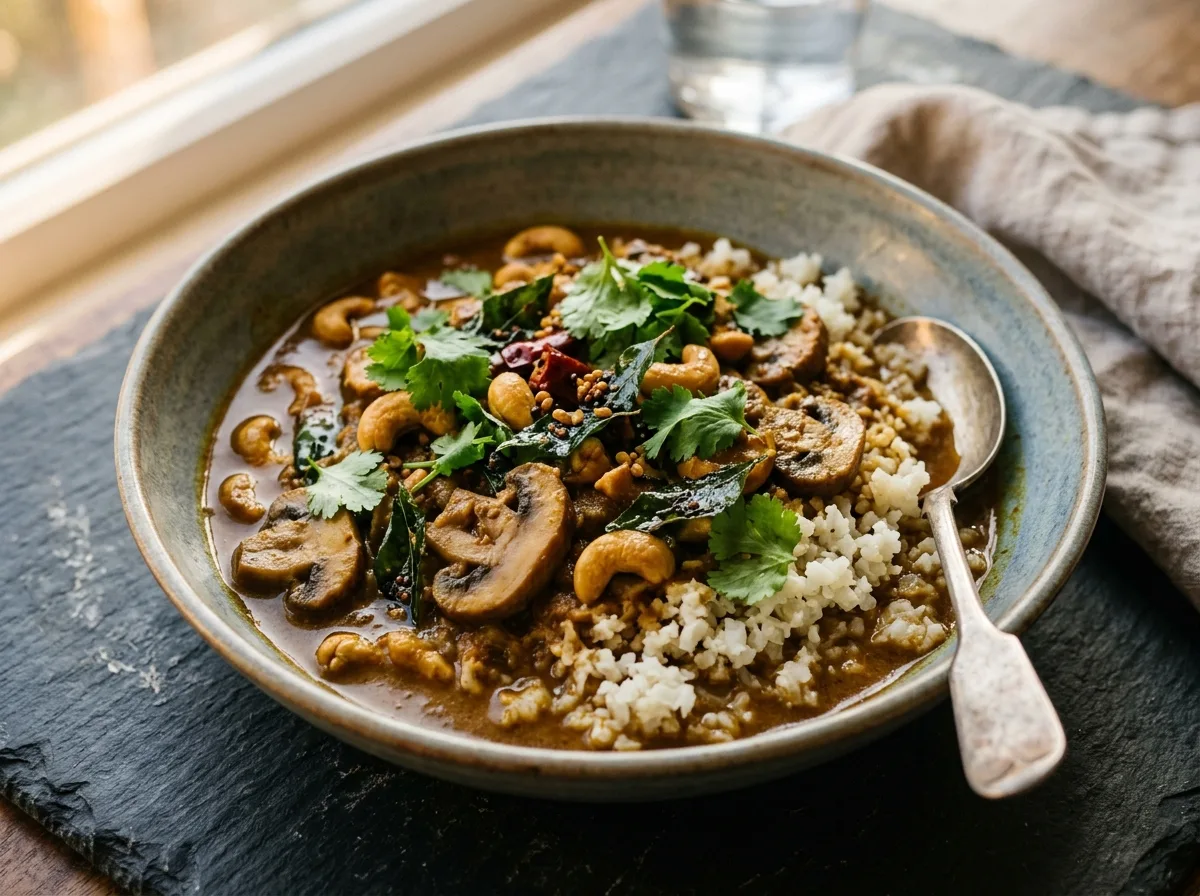
Sri Lankan Cashew and Mushroom Curry
Rate this recipe
~$19.20 CAD total · ~$4.80 CAD per serving (estimate)
Ingredients
- 200 graw cashews (soaked in cold water for 30 minutes, then drained)
- 400 gcremini or button mushrooms (sliced 5 mm thick)
- 1 mediumyellow onion (finely diced)
- 3 clovesgarlic (minced)
- 1 thumbfresh ginger (about 15 g, grated)
- 2 wholefresh green chillies (sliced into rounds; deseed for less heat)
- 1 stalkpandan leaf (tied into a knot)
- 2 tbspcoconut oil
- 2 tbspSri Lankan roasted curry powder (also labelled 'dark curry powder')
- 1 tspground turmeric
- 1 tspfine sea salt (plus more to taste)
- 400 mlfull-fat coconut milk (1 can)
- 120 mlwater
- 3 tbspcurry-leaf and cashew tempering oil (solids and oil together, from the shared Make-This-First jar)
- 1 medium headcauliflower (riced (grated or pulsed in a food processor))
- 1 tbspolive oil
- 10 gfresh coriander (leaves only, to finish)
Nutrition / serving
- Calories485 kcal
- Protein13 g
- Carbs22 g
- Fat39 g
- Fiber6 g
- Sodiummoderate — from the salt and curry powder only; no soy or fish sauce in this dish
Cost Estimate
~$19.20 CAD total · ~$4.80 CAD per serving (estimate)
Whole cashews and earthy mushrooms cooked low and slow in coconut milk — this is the kind of curry that tastes like it took all afternoon but comes together in under 25 minutes of actual work. Sri Lankan curry powder brings a darker, more roasted heat than its Indian cousins, and pandan leaf threads a faint vanilla-like sweetness through the sauce. The dish finishes with a generous spoonful of the shared curry-leaf tempering oil, which is the whole reason to make that jar once and use it twice.
Instructions
Soak the cashews
Cover the raw cashews with cold water and soak for 30 minutes. Drain and set aside. This brief soak lets them absorb enough moisture to stay tender through cooking without turning to paste.
Sweat the aromatics
Heat the coconut oil in a wide, heavy pan over medium heat. Add the diced onion and cook, stirring occasionally, for 5–6 minutes until soft and translucent at the edges. Add the garlic, ginger, and green chillies and stir for 90 seconds until fragrant.
Bloom the spices
Add the Sri Lankan curry powder and turmeric directly to the pan. Stir constantly for 60 seconds — the spices will darken slightly and smell toasty. This step is what gives the sauce its depth; do not skip or rush it.
Build the sauce
Pour in the coconut milk and water, then add the pandan knot and salt. Stir to lift any spice from the bottom of the pan and bring to a gentle simmer over medium-low heat.
Add cashews and mushrooms
Add the drained cashews and sliced mushrooms. Stir to coat everything in the sauce, then cover and cook for 12–14 minutes, stirring once halfway through, until the cashews are just tender and the mushrooms have released their liquid and softened. The sauce should be thick enough to coat a spoon.
Cook the cauliflower rice
While the curry simmers, heat the olive oil in a separate non-stick pan over medium-high heat. Add the riced cauliflower, season with a pinch of salt, and toss for 4–5 minutes until the raw smell is gone and the edges just begin to colour. Keep it slightly firm — it will steam itself if left too long.
Finish with tempering oil
Remove the pandan leaf from the curry and discard. Spoon the 3 tablespoons of curry-leaf tempering oil — solids and all — over the curry and stir through gently. Taste for salt. The oil carries the mustard seeds, crisp curry leaves, and toasted cashew pieces that tie this dish to the breakfast poha.
Plate and serve
Divide the cauliflower rice between four bowls and ladle the curry alongside or on top. Scatter fresh coriander leaves over each bowl and serve immediately.
Chef's Cool Facts
Sri Lankan vs. Indian curry powder
Sri Lankan 'dark' or roasted curry powder is made with spices dry-roasted before grinding — coriander, cumin, fennel, and black pepper among them. The roasting drives off moisture and deepens the colour, producing a smokier, more bitter-edged heat than the raw-ground blends common in North Indian cooking. The difference is immediately obvious in the sauce colour: it goes a deeper, almost chocolate brown.
Why pandan works in a savoury curry
Pandan (Pandanus amaryllifolius) contains 2-acetyl-1-pyrroline, the same aromatic compound responsible for the fragrance of basmati rice and fresh bread crust. In a coconut-milk curry, it contributes a faint floral-vanilla note that softens the roasted bitterness of the spice blend without adding sweetness. Tying the leaf in a knot bruises it gently, releasing the volatile compounds into the liquid.
The cashew soak — what it actually does
A 30-minute cold soak hydrates the outer layer of the cashew without pre-cooking it. When the nut then simmers in the curry, it softens evenly from the outside in rather than staying hard at the core while the surface overcooks. The result is a tender, slightly yielding bite — not crunchy, not mushy — which is what makes cashew curry texturally distinct from a nut-thickened sauce.
Cauliflower rice and the Maillard reaction
Riced cauliflower is mostly water. Cook it in a covered pan and it steams into a pale, wet mash. Cook it uncovered in hot oil over medium-high heat and the surface moisture evaporates fast enough for the Maillard reaction to begin, producing faint golden patches and a nuttier flavour that stands up to a rich curry sauce rather than disappearing under it.