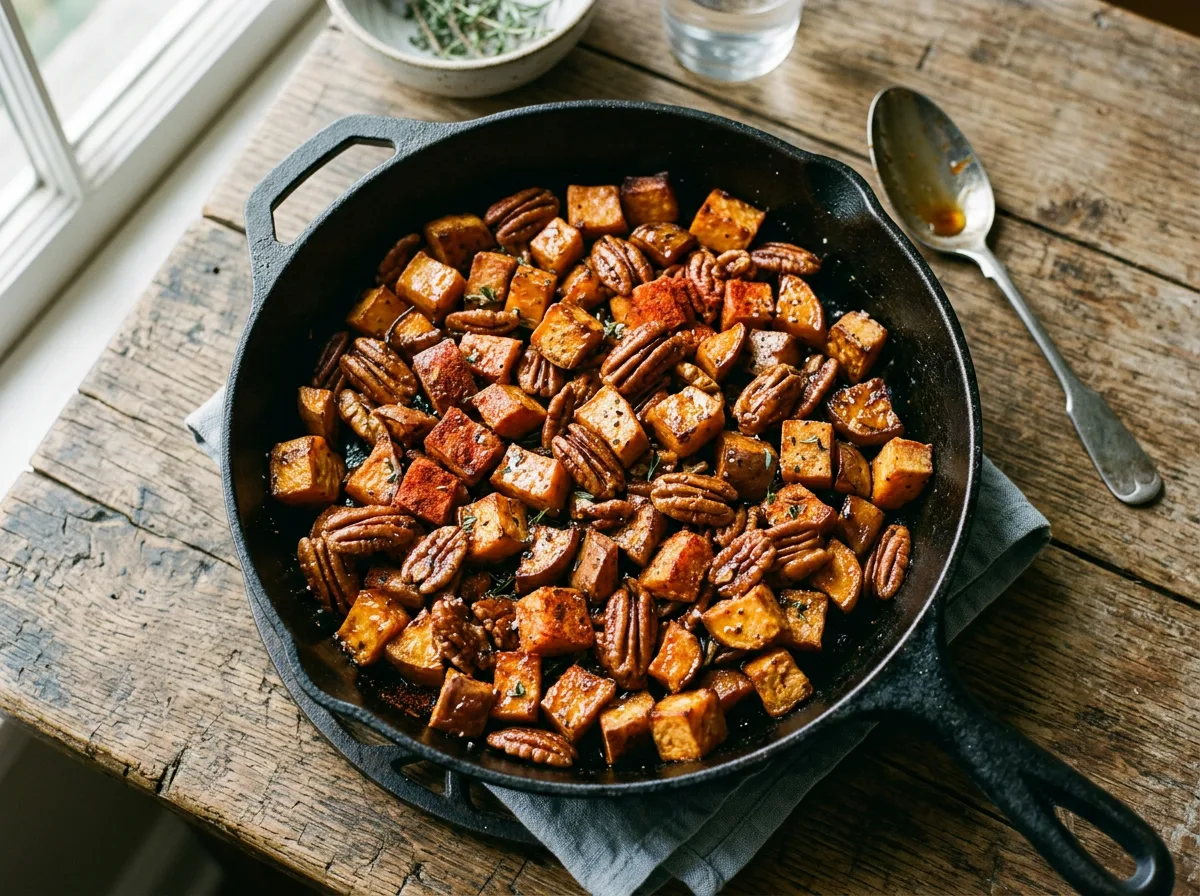
Sweet Potato, Pecan and Maple Breakfast Hash
Rate this recipe
~$5.60 CAD total · ~$2.80 CAD per serving (estimate)
Ingredients
- 400 gsweet potato (about 1 medium), peeled and cut into 1.5 cm dice
- 2 tbspcoconut oil
- 1 tspsmoked paprika
- 0.5 tspfine sea salt
- 1 pinchblack pepper, freshly ground
- 50 graw pecan halves
- 1 tbsppure maple syrup
- 1 tspapple cider vinegar
Nutrition / serving
- Calories390 kcal
- Protein4 g
- Carbs48 g
- Fat22 g
- Fiber6 g
- Sodiumlow — only from the added salt
Cost Estimate
~$5.60 CAD total · ~$2.80 CAD per serving (estimate)
Crisp-edged sweet potato cubes, toasted pecans, and a last-minute hit of maple syrup — this skillet hash is done in under 20 minutes and needs no oven. The coconut oil gives the potato edges a faint sweetness that the smoked paprika cuts right through. It's the kind of breakfast that feels like a treat without requiring much thought at 7 a.m.
Kid-friendly tip: For younger kids, skip the smoked paprika or halve it — the maple syrup and coconut oil already make this plenty appealing without the smoky edge. You can also swap pecans for pumpkin seeds if there's a nut allergy at the table.
Instructions
Heat the skillet
Place a 28–30 cm cast-iron or heavy non-stick skillet over medium-high heat. Add the coconut oil and let it melt and shimmer — about 60 seconds. The pan should be genuinely hot before the potato goes in.
Fry the sweet potato
Add the diced sweet potato in a single layer. Do not stir for 4 minutes; you want the cut faces to develop a deep golden crust. Flip the cubes, reduce heat to medium, and cook a further 4–5 minutes, stirring occasionally, until the potato is tender when pierced and caramelised on most sides.
Season and add pecans
Sprinkle the smoked paprika, salt, and pepper directly over the potato and toss to coat. Push the potato to the edges of the pan and add the pecans to the centre. Toast them for 60–90 seconds, stirring, until they smell nutty and deepen in colour.
Glaze and finish
Pour the maple syrup and apple cider vinegar over everything and toss quickly for 30 seconds — the syrup will bubble, coat the potato and pecans, and reduce to a light glaze. Pull the pan off the heat the moment it looks sticky and glossy.
Serve immediately
Divide between two warm bowls or plates. The hash holds its texture for about 5 minutes before the crust softens, so eat it straight from the pan.
Chef's Cool Facts
Why coconut oil crisps better here
Coconut oil is about 90% saturated fat, which means it stays stable at the medium-high temperatures needed to caramelise sweet potato without smoking or breaking down. Olive oil would oxidise and turn bitter before the crust forms.
The Maillard reaction vs. caramelisation
Both are happening in this pan at once. The Maillard reaction browns the starchy surface of the potato through a reaction between amino acids and sugars; caramelisation is the thermal breakdown of the sugars themselves. Together they produce dozens of flavour compounds — which is why a properly crusted cube tastes so much more complex than a steamed one.
Pecans and their fat profile
Pecans are the most calorie-dense tree nut, but roughly 60% of that fat is oleic acid — the same monounsaturated fat dominant in olive oil. Toasting them briefly in a dry or lightly oiled pan drives off surface moisture and intensifies the flavour without adding anything.
Maple syrup's smoke-signal chemistry
Pure maple syrup contains small amounts of furanones — the same family of compounds responsible for the characteristic aroma of caramel and some roasted foods. When it hits a hot pan, those compounds concentrate quickly, which is why even one tablespoon transforms the smell of the whole dish in under a minute.