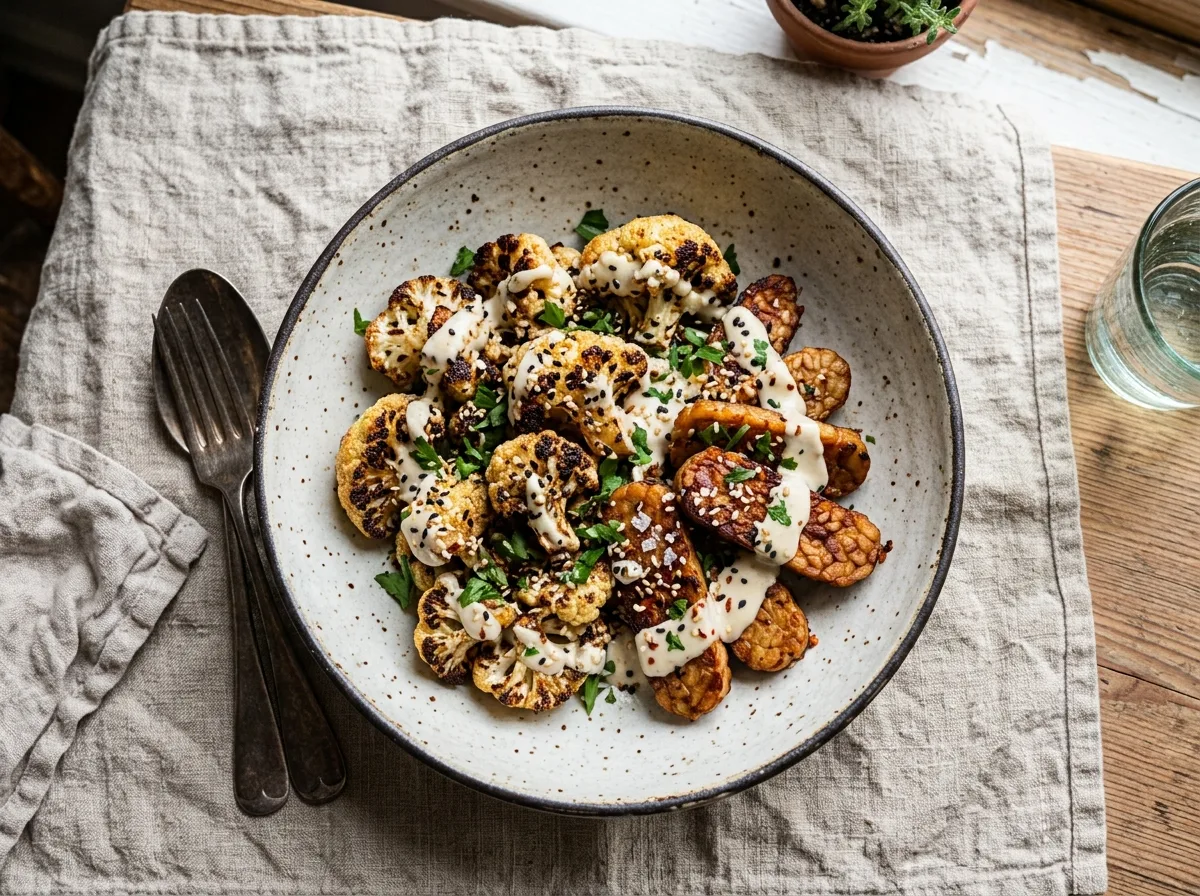
Tempeh and Roasted Cauliflower Bowl with Tahini
Rate this recipe
~$4.80 CAD per serving (estimate)
Ingredients
- 700 gcauliflower florets (cut into even 4–5 cm pieces)
- 400 gtempeh (sliced 5 mm thin)
- 4 tbspolive oil (divided)
- 1 tspsmoked paprika
- 0.5 tspground cumin
- 0.75 tspfine salt (divided)
- 90 gtahini (well-stirred)
- 3 tbsplemon juice (freshly squeezed, about 1 large lemon)
- 1 clovegarlic (finely grated)
- 60 mlcold water (to thin the tahini sauce)
- 2 tbspsesame seeds (toasted)
- 10 gfresh flat-leaf parsley (roughly chopped, optional)
Nutrition / serving
- Calories415 kcal
- Protein22 g
- Carbs18 g
- Fat30 g
- Fiber7 g
Cost Estimate
~$4.80 CAD per serving (estimate)
Two things cooked well and a sauce that ties them together — that's the whole idea. Cauliflower goes into a hot oven until the edges char and the florets turn sweet; tempeh hits a hot pan in olive oil until each slice is bronze and caramelized. The tahini-lemon drizzle is sharp and nutty, and the sesame seeds on top are not decoration — they add a dry crunch that the bowl needs.
Instructions
Preheat and season cauliflower
Heat your oven to 220 °C (fan 200 °C). Toss the cauliflower florets with 2 tbsp olive oil, the smoked paprika, cumin, and 0.5 tsp salt until evenly coated. Spread in a single layer on a large baking sheet — crowding steams instead of roasts.
Roast until charred
Roast for 22–25 minutes, flipping once at the 12-minute mark, until the florets are tender inside and dark gold at the edges. Pull from the oven and keep warm.
Make the tahini sauce
While the cauliflower roasts, whisk together the tahini, lemon juice, grated garlic, and 0.25 tsp salt. Add the cold water a tablespoon at a time, whisking until the sauce is pourable but still thick enough to coat a spoon. It will seize before it loosens — keep whisking.
Fry the tempeh
Heat the remaining 2 tbsp olive oil in a wide non-stick or cast-iron skillet over medium-high heat. Lay the tempeh slices in a single layer and cook undisturbed for 3–4 minutes until deep golden. Flip and cook another 2–3 minutes. The edges should look caramelized, not just browned.
Assemble and serve
Divide the roasted cauliflower among four bowls. Arrange the tempeh slices on top, drizzle generously with tahini sauce, and scatter sesame seeds and parsley over everything. Serve immediately.
Freeze & Reheat
This bowl is best fresh — the tempeh softens and the cauliflower loses its char on reheating. If you have leftovers, store the components separately in the fridge for up to 3 days. Reheat the tempeh in a dry skillet over medium heat for 2–3 minutes to revive some crispness; reheat the cauliflower in the oven at 200 °C for 8 minutes. Keep the tahini sauce at room temperature and re-whisk with a splash of water if it has thickened.
Chef's Cool Facts
Why tempeh browns faster than tofu
Tempeh is a fermented soybean cake with a denser, drier surface than tofu. Less surface moisture means the Maillard reaction starts almost immediately in hot oil, giving you caramelized edges in under four minutes — something tofu, with its higher water content, needs much longer to achieve.
Tahini's seizing trick
When you first add water or lemon juice to tahini, the paste seizes into a thick, almost paste-like clump before it loosens. This happens because the water causes the sesame proteins to tighten around the oil droplets. Keep whisking and adding liquid slowly — the emulsion breaks through and the sauce becomes smooth and pourable.
Cauliflower and the Maillard reaction
Cauliflower is about 92% water, which means the first job of a hot oven is to drive off surface moisture. Once that's gone, the natural sugars and amino acids in the florets can brown. That's why 220 °C matters — a lower temperature just steams the vegetable in its own vapour and you never get the char that makes roasted cauliflower taste different from boiled.