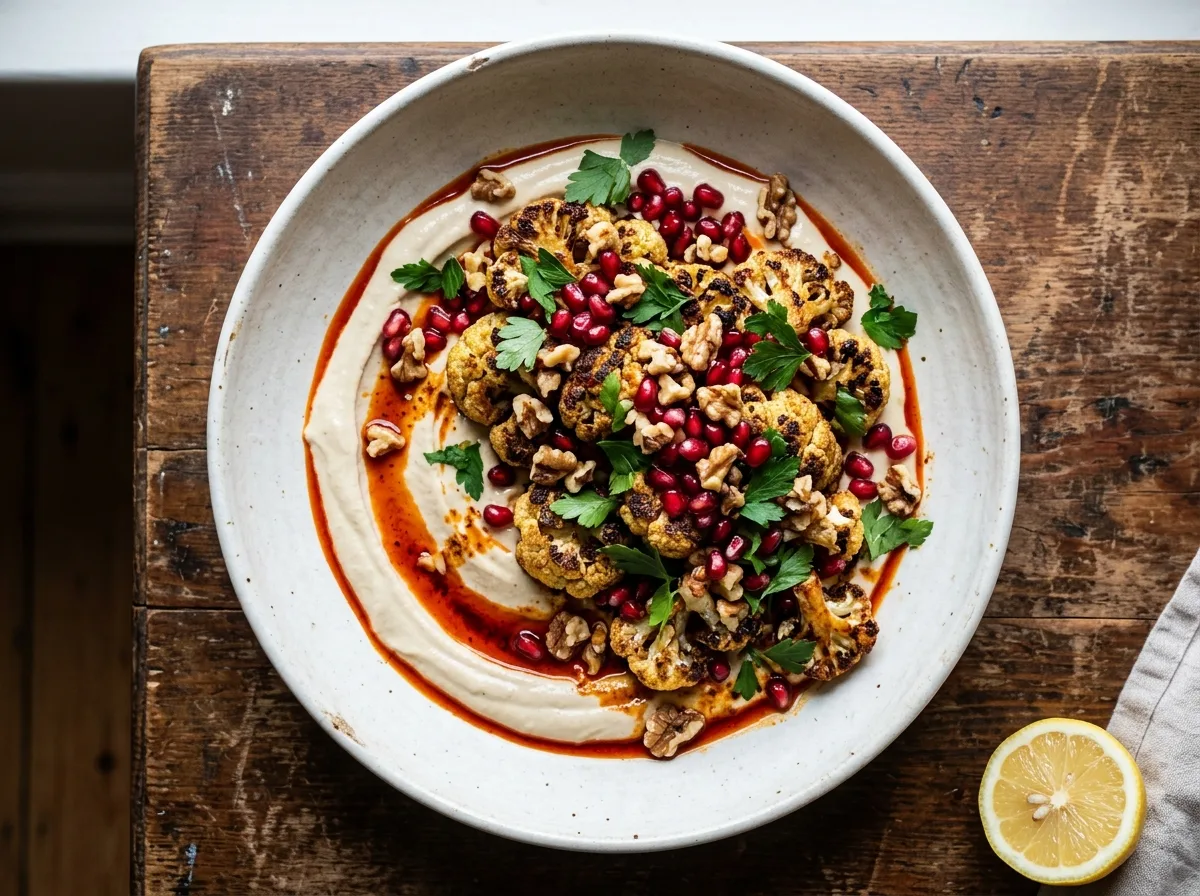
Turkish Walnut and Roasted Cauliflower Bowl with Tahini
Rate this recipe
~$4.50 CAD per serving (estimate)
Ingredients
- 1 large headcauliflower (cut into medium florets, about 700 g trimmed)
- 45 mlolive oil
- 1 tspground cumin
- 1 tspsmoked paprika
- 0.5 tspground coriander
- 0.75 tspfine salt
- 0.25 tspblack pepper
- 90 graw walnuts (roughly chopped)
- 120 gtahini (well-stirred)
- 60 mlfresh lemon juice (about 2 lemons)
- 1 clovegarlic (finely grated or minced)
- 60 mlcold water (plus more to thin)
- 80 mlquick smoked paprika oil (from the week's make-ahead batch, or see note)
- 60 gpomegranate seeds (fresh or from a 100 g pack)
- 20 gfresh flat-leaf parsley (leaves roughly torn)
Nutrition / serving
- Calories420 kcal
- Protein12 g
- Carbs18 g
- Fat35 g
- Fiber6 g
Cost Estimate
~$4.50 CAD per serving (estimate)
Cauliflower has a talent for char. Roasted at high heat until the edges go deep brown and the cut faces caramelize, it becomes something worth building a meal around. A wide smear of tahini-lemon sauce goes down first, then the hot florets land on top, and toasted walnuts, pomegranate seeds, and fresh parsley finish it. A drizzle of the week's smoked paprika oil ties the whole bowl together in about thirty seconds of effort.
Instructions
Heat the oven
Set the oven to 230 °C (210 °C fan). Line a large rimmed baking sheet with parchment. A hot oven is the difference between roasted and steamed cauliflower — don't rush the preheat.
Season and roast the cauliflower
Toss the florets on the lined sheet with the olive oil, cumin, smoked paprika, coriander, salt, and pepper. Spread them in a single layer, cut-side down where possible. Roast for 22–25 minutes, flipping once at the 15-minute mark, until the edges are deep brown and the cut faces are charred in spots.
Toast the walnuts
While the cauliflower roasts, spread the chopped walnuts in a dry skillet over medium heat. Stir every 30 seconds for 3–4 minutes until they smell nutty and turn a shade darker. Tip onto a plate immediately so they don't carry-cook in the hot pan.
Make the tahini sauce
Whisk together the tahini, lemon juice, grated garlic, and cold water until smooth — the mixture will seize up at first, then loosen into a creamy, pourable consistency. Season with a pinch of salt and thin with a splash more water if needed; it should fall off a spoon in a slow ribbon.
Warm the paprika oil
If the week's smoked paprika oil has been sitting in the fridge, warm it briefly in a small saucepan over low heat for 60 seconds. If you haven't made it, whisk 80 ml olive oil with 2 tsp smoked paprika, 1 tsp garlic powder, and a pinch of salt in a warm pan for 30 seconds.
Assemble and serve
Spoon the tahini sauce generously across each bowl or a large serving platter, spreading it with the back of the spoon. Pile the hot cauliflower on top, then scatter the toasted walnuts and pomegranate seeds. Tear the parsley over everything and finish with a drizzle of the warm paprika oil. Serve immediately.
Chef's Cool Facts
Why tahini seizes before it smooths
Tahini is an emulsion of ground sesame solids and oil. When you add an acidic liquid like lemon juice, the proteins briefly clump — the paste looks broken and thick. Keep whisking and add water gradually; the extra liquid dilutes the electrolytes enough for the emulsion to re-form into a smooth, glossy sauce.
Cauliflower's browning chemistry
The deep colour on a properly roasted floret comes from two reactions at once: Maillard browning of the proteins and amino acids on the cut surface, and caramelization of the natural sugars. Both need dry, high heat — which is why crowding the pan (trapping steam) keeps the cauliflower pale and soft instead of charred and sweet.
Walnuts in Turkish cooking
Turkey is one of the world's largest walnut producers, and the nut appears across the cuisine in ways that go well beyond dessert — ground into muhammara, folded into stuffings, and scattered over roasted vegetables exactly as here. The variety grown in the Aegean and Black Sea regions has a thinner shell and a milder bitterness than many North American commercial types.
Pomegranate seeds as seasoning
In Turkish and broader Levantine cooking, pomegranate seeds function less as a garnish and more as a souring agent — the same role that sumac or lemon plays. Each seed delivers a small burst of tartness and juice that cuts through the richness of the tahini and the oil, keeping the bowl from feeling heavy.