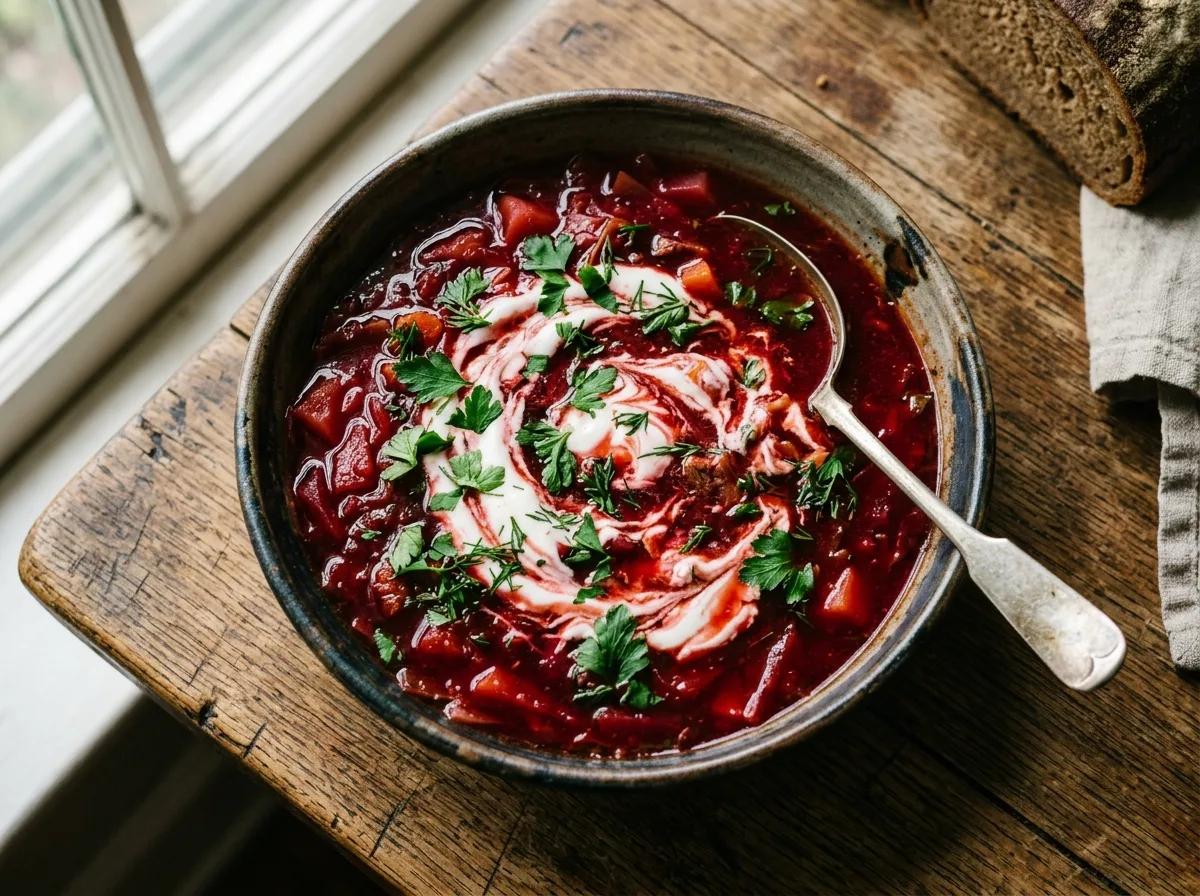
Ukrainian Vegetarian Borscht
Rate this recipe
~$12.80 CAD total · ~$3.20 CAD per serving (estimate)
Ingredients
- 30 mlolive oil
- 1 mediumyellow onion, finely diced
- 2 mediumcarrots, peeled and cut into 5 mm coins
- 2 clovesgarlic, minced
- 500 graw beetroot (about 3 medium), peeled and cut into 4 cm matchsticks
- 200 ggreen cabbage, thinly shredded
- 2 mediumwaxy potatoes (about 300 g), peeled and cut into 2 cm cubes
- 2 tbsptomato paste
- 30 mlred wine vinegar
- 1.2 Lvegetable stock, low-sodium
- 2 wholebay leaves
- 1 tspfine sea salt, plus more to taste
- ½ tspblack pepper, freshly ground
- 1 tspgranulated sugar (optional, to balance)
- 20 gfresh flat-leaf parsley, roughly chopped
- 120 gsoy yoghurt, to serve
Nutrition / serving
- Calories195 kcal
- Protein5 g
- Carbs30 g
- Fat7 g
- Fiber6 g
- Sodiummoderate — depends on your stock; use low-sodium stock to keep it in check
Cost Estimate
~$12.80 CAD total · ~$3.20 CAD per serving (estimate)
This is borscht stripped to what it actually is: a sweet-sour beetroot soup with enough body to carry a meal. The colour holds because the acid goes in early, the cabbage adds texture without bulk, and the whole pot comes together in under an hour. A spoonful of soy yoghurt stirred in at the table is not a garnish — it changes the soup, rounding the vinegar and softening the beet's earthiness into something genuinely satisfying.
Instructions
Sweat the aromatics
Warm the olive oil in a large heavy pot over medium heat. Add the onion and carrot and cook, stirring occasionally, for 7–8 minutes until the onion is translucent and the carrot has softened slightly at the edges. Add the garlic and cook for 1 minute more until fragrant.
Add tomato paste and vinegar
Push the vegetables to one side and drop the tomato paste into the cleared space. Let it fry undisturbed for 90 seconds until it darkens slightly and smells sweet-sharp. Stir it through the vegetables, then pour in the red wine vinegar. This is the moment the beetroot's colour is locked — the acid goes in now, not later.
Build the soup
Add the beetroot, cabbage, potatoes, bay leaves, salt, and pepper. Pour in the stock. Bring to a boil over high heat, then reduce to a steady simmer. The liquid should be a deep ruby red; if it looks pale, the beetroot needs more time.
Simmer until tender
Cook uncovered for 25–30 minutes, until the beetroot and potato are completely tender when pierced with a knife and the cabbage has wilted into the broth. Skim any foam that rises in the first 10 minutes.
Taste and balance
Remove the bay leaves. Taste the soup carefully: it should be distinctly sour and distinctly sweet, with neither overpowering the other. Add the sugar only if the vinegar dominates; add a splash more vinegar if the beet sweetness is flat. Adjust salt.
Finish and serve
Ladle into bowls and scatter parsley over each. Bring the soy yoghurt to the table and let each person stir in a generous spoonful — about 30 g per bowl. The yoghurt will swirl into the broth rather than dissolve, which is correct.
Freeze & Reheat
Cool the soup completely before portioning into freezer containers. Freeze without the parsley and yoghurt — add both fresh when reheating. Reheat from frozen in a saucepan over medium-low heat, adding a splash of water if the soup has thickened. The colour may deepen slightly after freezing; a few drops of extra red wine vinegar on reheating will brighten it.
Chef's Cool Facts
Acid and anthocyanins
Beetroot's red colour comes from betacyanins, a class of pigments that behave differently from the anthocyanins in red cabbage. They are relatively stable in acid but degrade quickly in alkaline conditions and with prolonged heat. Adding the vinegar before the beet goes into a hot pot — rather than at the end — gives the pigments the best chance of surviving a 30-minute simmer.
Why no meat in this version
Borscht exists in dozens of regional forms across Ukraine, Poland, and Russia. The meatless version is not a modern substitution — it has been made during Orthodox fasting periods (called 'pist' in Ukrainian) for centuries, when animal products were restricted on certain days. The vegetable stock base is historically accurate, not a compromise.
Soy yoghurt as a stand-in
Traditional borscht is finished with smetana, a cultured sour cream with around 20% fat and a pronounced tang. Soy yoghurt replicates the acidity better than oat-based alternatives because its protein structure is closer to dairy, which means it swirls into the hot broth without breaking as quickly.