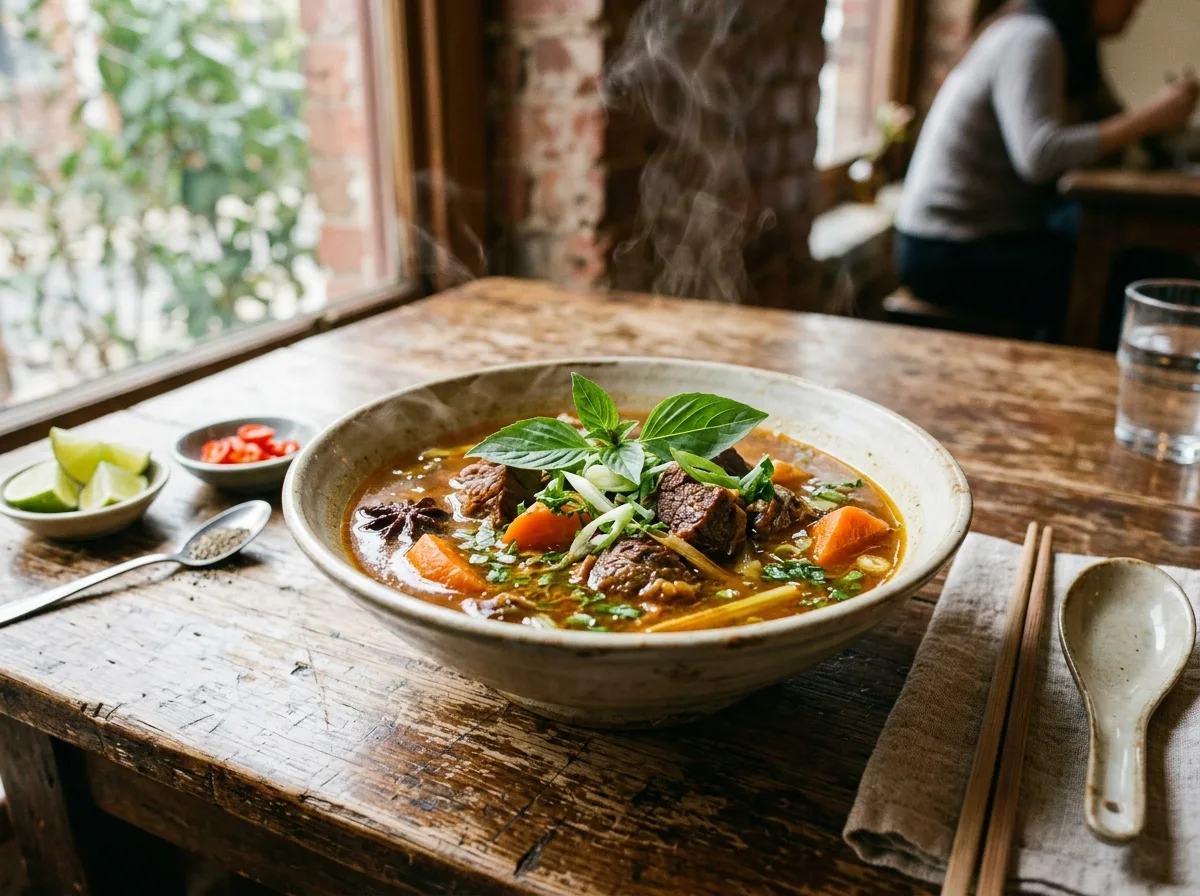
Vietnamese Bò Kho — Beef Stew with Lemongrass and Star Anise
Rate this recipe
~$34.80 CAD total · ~$5.80 CAD per serving (estimate)
Ingredients
- 1.4 kgbeef chuck, cut into 5 cm cubes
- 3 tbspolive oil
- 2 tspfine sea salt
- 1 tspground black pepper
- 3 stalkslemongrass, outer layers removed, bruised and cut into 8 cm pieces
- 5 clovesgarlic, minced
- 30 gfresh ginger, peeled and sliced into coins
- 2 tbsptomato paste
- 400 gcanned crushed tomatoes
- 3 wholestar anise
- 1 stickcinnamon (about 8 cm)
- 2 tbsptamari
- 1 tbspbrown sugar
- 750 mlbeef stock, low-sodium
- 3 mediumcarrots, peeled and cut into 4 cm chunks
- 2 stalksgreen onions, sliced, for serving
- 1 small handfulfresh Thai basil or regular basil leaves, for serving
Nutrition / serving
- Calories415 kcal
- Protein42 g
- Carbs14 g
- Fat21 g
- Fiber2.5 g
- Sodiummoderate — tamari and stock contribute; use low-sodium stock to keep it in check
Cost Estimate
~$34.80 CAD total · ~$5.80 CAD per serving (estimate)
Bò kho is the kind of braise that rewards patience: beef chuck slowly surrenders its collagen to a broth scented with lemongrass, star anise, and cinnamon until the liquid turns glossy and the meat pulls apart at the edge of a spoon. Tamari stands in for fish sauce here, keeping the dish within the week's pantry without losing any of the depth. Make it on a Sunday and the two portions headed for the freezer will be noticeably better by the following weekend — the spices keep working.
Instructions
Season and sear the beef
Pat the beef cubes dry with paper towel, then season all over with the salt and pepper. Heat 2 tbsp olive oil in a large heavy pot or Dutch oven over high heat until shimmering. Sear the beef in two batches — do not crowd the pan — for 3–4 minutes per side until deeply browned. Transfer to a plate.
Build the aromatics
Reduce heat to medium and add the remaining 1 tbsp olive oil. Add the lemongrass, garlic, and ginger and cook for 2 minutes, stirring, until fragrant and just beginning to colour. Add the tomato paste and stir it into the aromatics for 1 minute until it darkens slightly.
Add the tomatoes and spices
Pour in the crushed tomatoes and stir to lift any browned bits from the bottom of the pot. Add the star anise, cinnamon stick, tamari, and brown sugar. Stir to combine.
Return the beef and add stock
Nestle the seared beef back into the pot along with any resting juices. Pour in the beef stock — the liquid should come about three-quarters of the way up the meat. Bring to a gentle boil.
Pressure cook
Lock the lid and cook 30 min at high pressure, then let the pressure fall naturally for 15 min. Stovetop alternative: reduce to the lowest setting that keeps a lazy simmer, cover with the lid slightly ajar, and braise for 75 minutes.
Add the carrots
Press the carrot chunks into the broth. Lock the lid again and cook 5 min at high pressure, then quick release. Stovetop alternative: replace the lid ajar and braise another 30–35 minutes until the carrots are tender and the beef yields with no resistance at the centre.
Finish and degrease
Remove the lemongrass pieces, star anise, and cinnamon stick. Tilt the pot and skim any visible fat from the surface with a large spoon, or use a ladle. Taste the broth and adjust with a few drops more tamari if it needs salt. The broth should be glossy and coat a spoon lightly.
Serve
Ladle into bowls over steamed jasmine rice, crusty baguette, or rice noodles. Scatter sliced green onions and basil leaves over each bowl. Cool the two freezer portions completely before transferring to airtight containers.
Freeze & Reheat
Freezing: Cool completely, then portion into airtight containers or zip-lock bags. Freeze for up to 3 months. The broth deepens in flavour after a week in the freezer as the spices continue to infuse.
Reheating: Thaw overnight in the refrigerator. Reheat in a covered pot over medium-low heat for 12–15 minutes, adding a splash of water or stock if the broth has thickened too much. Do not boil hard — it toughens the beef.
Pressure cooker method
Total, start to finish
About 1 hr 25 min, of which roughly 35 min is active.
Sear and build
On Sauté (high), sear the seasoned beef in two batches and lift it out. Cook the lemongrass, garlic and ginger 2 min in the remaining oil, then the tomato paste for 1 min.
Pressure cook
Add the crushed tomatoes, star anise, cinnamon, tamari and sugar, scrape the base clean, and return the beef with the stock — it should come three-quarters up the meat. Cook 30 min at high pressure and let the pressure fall naturally for 15 min.
Carrots, degrease, serve
Add the carrots, cook 5 min at high pressure and quick release. Remove the lemongrass, star anise and cinnamon, skim the fat from the surface, and adjust with a few drops more tamari. Scatter the green onions and basil.
Chef's Cool Facts
Collagen and the glossy broth
Beef chuck is loaded with collagen — the structural protein in connective tissue. Above about 70 °C and held there long enough, collagen hydrolyses into gelatin, which is what gives a good bò kho broth its lip-coating body. A hard boil actually works against you here: it breaks the gelatin back into smaller fragments and makes the broth cloudy and thin.
Why lemongrass doesn't dissolve
Lemongrass stalks are woody because their cell walls are reinforced with lignocellulose, the same material that makes bamboo tough. No amount of cooking will soften them to the point of eating, which is why they're always removed or left whole for the diner to push aside. Their volatile aromatic compounds — mainly citral — leach into the fat and broth within the first 30 minutes.
Star anise and anethole
The dominant flavour compound in star anise is anethole, the same molecule responsible for the anise note in French pastis and Italian sambuca. In bò kho it works at low concentration — three whole pods for nearly 1.5 kg of beef — giving the broth a faint warmth rather than a liquorice hit. Fat is anethole's best solvent, which is why searing the beef in oil before the spices go in helps distribute the flavour evenly.
Tamari as a fish sauce substitute
Traditional bò kho uses fish sauce for its umami and salinity. Tamari — a Japanese soy sauce brewed with little or no wheat — delivers comparable glutamate levels and a similarly dark, savoury depth without any seafood character. The fermentation process in both cases produces free glutamates through protein breakdown, so the flavour mechanism is genuinely parallel, not just a workaround.