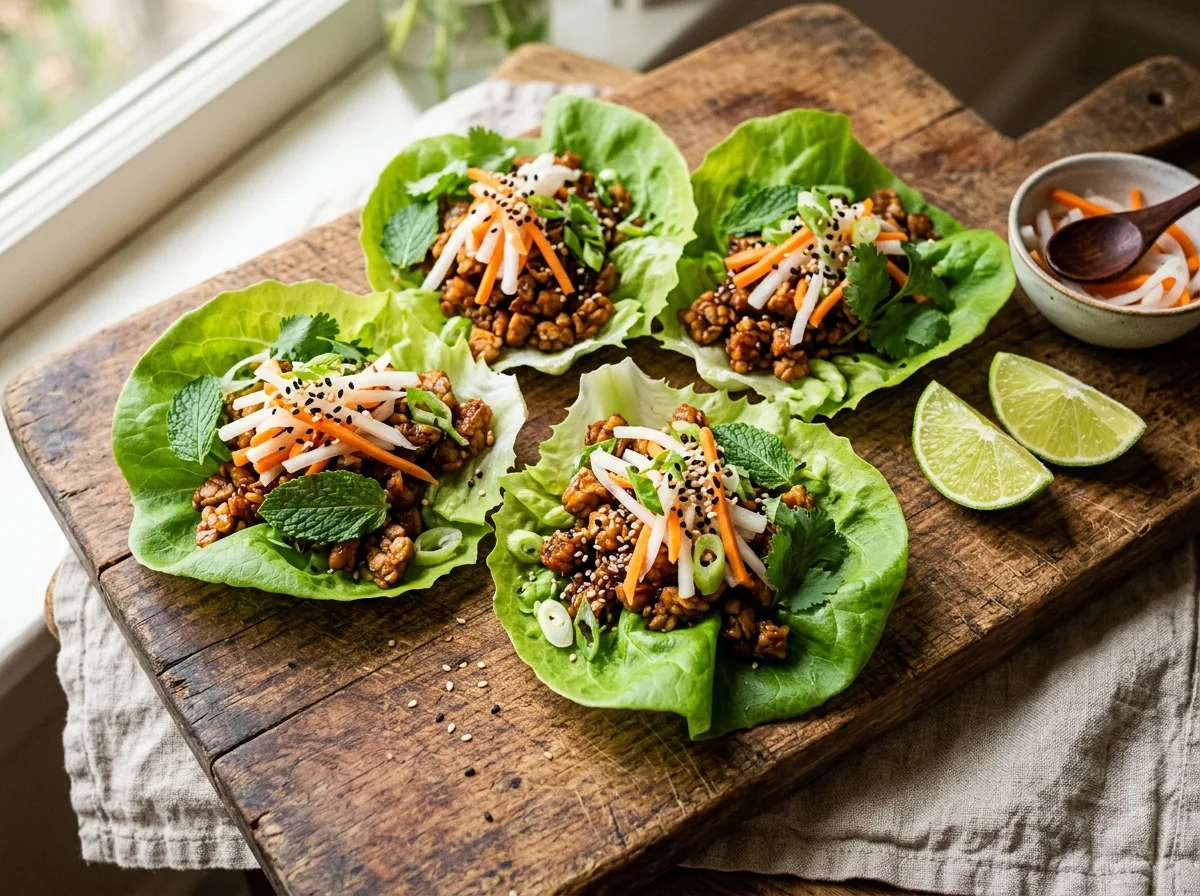
Vietnamese-Inspired Tempeh Lettuce Wraps with Pickled Daikon
Rate this recipe
~$4.80 CAD per serving (estimate)
Ingredients
- 200 gdaikon radish, peeled and julienned or cut into thin matchsticks
- 60 mlrice vinegar
- 1 tspgranulated sugar
- 0.5 tspfine salt
- 400 gtempeh, crumbled into rough 1 cm pieces
- 1.5 tbspghee
- 2 stalkslemongrass, tender inner core only, finely minced
- 4 clovesgarlic, minced
- 1red chili (such as Fresno or Thai), thinly sliced — seeds optional
- 3 tbsptamari (fish-free, gluten-free if needed)
- 1 tsptoasted sesame oil
- 1 tspgranulated sugar
- 1 headbutter lettuce, leaves separated and chilled
- 1 small bunchfresh mint
- 1 small bunchfresh cilantro
- 2green onions, thinly sliced
- 1 tbsptoasted sesame seeds
- 1lime, cut into wedges
Nutrition / serving
- Calories310 kcal
- Protein22 g
- Carbs18 g
- Fat16 g
- Fiber4 g
Cost Estimate
~$4.80 CAD per serving (estimate)
These wraps move fast and eat light — crumbled tempeh sautéed in ghee with lemongrass, garlic, and tamari until the edges catch and caramelize, then piled into cold butter lettuce cups with quick-pickled daikon and a fistful of fresh herbs. The pickling brine takes five minutes and the daikon is already in the fridge from the agedashi tofu. Eating with your hands is not a workaround — it's the point.
Instructions
Pickle the daikon
Combine the rice vinegar, sugar, and salt in a medium bowl and stir until dissolved. Add the julienned daikon, toss to coat, and set aside at room temperature for at least 20 minutes — it will soften slightly and turn pleasantly sharp. Drain before serving.
Crumble and dry the tempeh
Break the tempeh into rough 1 cm pieces directly into a dry non-stick or cast-iron skillet over medium heat. Toast without any fat for 3–4 minutes, stirring occasionally, until the surface looks matte and slightly dried out. This step drives off moisture so the tempeh browns rather than steams.
Sauté aromatics
Push the tempeh to the edges of the pan and add the ghee to the centre. Once it shimmers, add the lemongrass, garlic, and chili. Stir the aromatics in the fat for 60–90 seconds until fragrant and just starting to colour, then fold everything together.
Glaze and caramelize
Pour in the tamari, sesame oil, and sugar. Toss to coat and cook over medium-high heat for 2–3 minutes, stirring every 30 seconds, until the liquid reduces and the tempeh edges turn deep amber. The pan should look nearly dry and smell toasty-salty. Remove from heat.
Assemble and serve
Arrange the cold lettuce cups on a board or platter. Spoon the hot tempeh filling into each cup, top with drained pickled daikon, mint leaves, cilantro, and green onion. Scatter sesame seeds over the top and serve immediately with lime wedges alongside.
Chef's Cool Facts
Why tempeh browns better than tofu
Tempeh is a solid cake of whole fermented soybeans bound by Rhizopus mould mycelium. That dense, porous structure means far less free water than tofu, so it reaches the Maillard threshold — around 140 °C at the surface — quickly in a hot pan. The brief dry-toast step at the start accelerates this by evaporating any residual surface moisture before the fat goes in.
Lemongrass and its volatile oils
The citral compounds responsible for lemongrass's lemony-grassy aroma are volatile and fat-soluble. Mincing the tender inner core finely and cooking it briefly in ghee extracts and distributes those oils through the fat, which then coats every piece of tempeh — far more effective than adding lemongrass to a water-based sauce.
Quick pickling vs. fermented pickling
The daikon here is lacto-pickled in minutes with acid (vinegar) rather than over days with salt and wild bacteria. The result is bright and sharp rather than funky and complex. It does the same textural job — cutting through the richness of the sautéed tempeh — but fits a weeknight timeline.